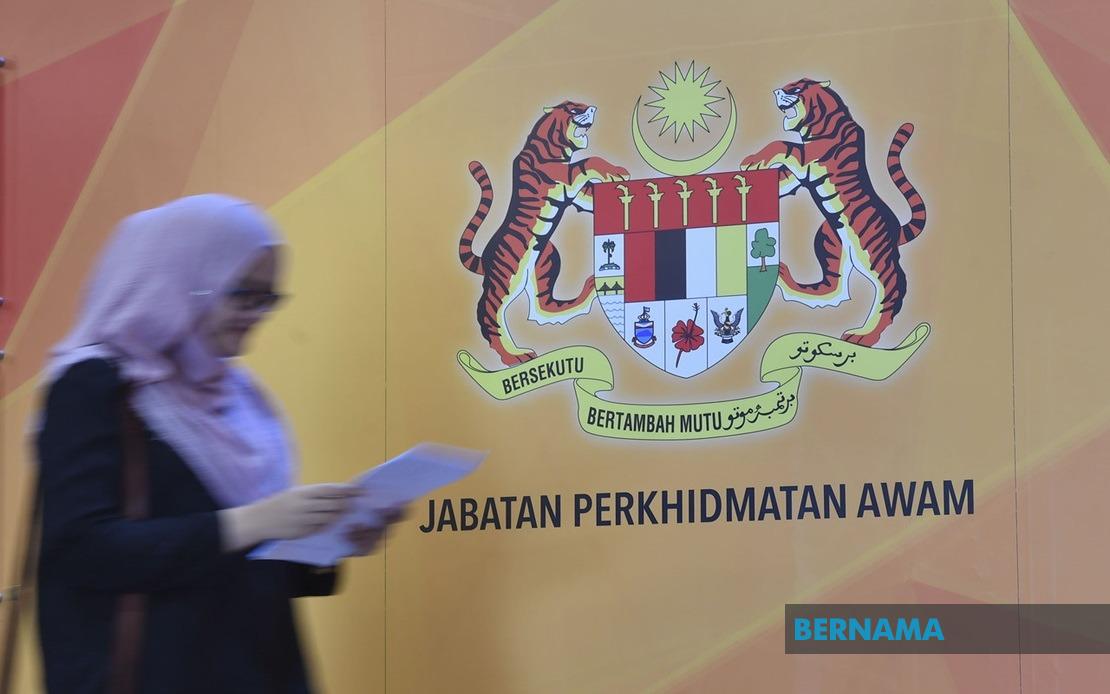
The Public Service Department (JPA) has unveiled a substantial scholarship initiative targeting the 2026 cohort of Sijil Pelajaran Malaysia (SPM) graduates, making available a combined 640 sponsorship slots across multiple streams. This move represents a strategic effort to cultivate skilled professionals who will contribute to Malaysia's economic development and global standing, aligning with the MADANI Government's broader vision of nurturing high-calibre human capital capable of meeting future workforce demands.
The sponsorship package encompasses four distinct programmes, each designed to serve different educational pathways and aspirations. The National Sponsorship Programme offers 30 positions, while the Special Programme dedicated to Japan, Korea, France and Germany allocates 140 slots for students interested in these specific destinations. A further 200 positions fall under the Special Programme for Domestic SPM Graduates, enabling talented Malaysians to pursue tertiary education within the country's university network. Completing the portfolio is the JPA-MARA Special Programme (PKJM), which represents the largest component with 270 available slots.
The scope of these scholarships extends across strategically important academic disciplines ranging from engineering and science to technology and social sciences. By investing in these fields, JPA aims to address skills gaps within the Malaysian economy whilst building expertise in areas critical to the nation's transformation agenda. Students accepted into these programmes gain access to premier institutions globally, with study options in the United States, Australia, Japan, South Korea, France, Germany, the United Kingdom and New Zealand, supplemented by Malaysia's own network of higher education providers.
A significant development accompanying this sponsorship announcement is the introduction of the Academic Merit-Based Convertible Loan (PBUA) scheme, formally launched by JPA in June 2025. Rather than traditional outright grants, successful scholarship recipients will receive funding through this innovative mechanism, which converts to a loan unless stringent academic performance benchmarks are maintained. This approach incentivises scholarly excellence throughout tertiary education, encouraging awardees to sustain high academic standards as a condition of retaining debt-free status.
The application timeline presented candidates with a defined window for results checking. Those who submitted their sponsorship applications were able to review outcomes online through JPA's designated portal, with results made available from 10 am on the announcement date through 5 pm on June 22. This transparent digital process reflects modernisation efforts within the civil service, enabling swift communication with applicants nationwide.
For Malaysian SPM graduates, this initiative carries substantial implications. Access to fully-funded tertiary education remains a critical pathway to upward mobility, and the expansion of sponsorship availability increases opportunity for academically gifted students regardless of family economic circumstances. International study options prove particularly valuable, exposing future professionals to global best practices whilst building Malaysia's diaspora networks of skilled expatriates who may return to contribute expertise domestically.
The distribution of slots across domestic and international programmes reflects JPA's dual strategic objectives: strengthening Malaysia's domestic university sector by directing talent towards local institutions, whilst simultaneously ensuring Malaysian graduates gain international qualifications and exposure. This balance supports both immediate national capacity-building and longer-term competitiveness in the global knowledge economy.
From a regional perspective, Malaysia's commitment to developing human capital through such initiatives contributes to broader Southeast Asian economic competitiveness. The emphasis on engineering, science and technology aligns with ASEAN's collective digital transformation agenda, positioning Malaysian professionals to participate in regional innovation ecosystems and cross-border collaboration networks.
Successful applicants now face critical decisions regarding their educational trajectories and preferred study destinations. The variety of international options—spanning East Asian economies, Western developed nations, and Oceania—reflects Malaysia's multilateral strategic partnerships whilst giving scholars flexibility to tailor their development according to career aspirations. Meanwhile, the substantial domestic allocation underscores confidence in Malaysian universities' capacity to deliver world-class education.
The PBUA mechanism represents an interesting policy evolution, balancing government investment with individual accountability. By tying debt forgiveness to academic performance, JPA creates incentives that extend beyond the selection process, potentially reducing dropout rates and encouraging sustained engagement with studies. This approach acknowledges that receiving scholarships creates mutual obligations between beneficiaries and the state.
For the broader education sector, this announcement signals sustained government commitment to investing in high-potential students despite fiscal pressures that constrain public spending across many domains. The specific allocation of 640 slots, whilst substantial, nonetheless represents selective sponsorship—emphasising that JPA continues targeting exceptional achievers rather than attempting universal tertiary coverage.
As results become known and selected graduates prepare for their educational journeys, this cohort will gradually populate Malaysia's professional landscape and international communities. Their success in tertiary studies will influence Malaysia's standing within global higher education rankings and the quality of talent entering the civil service and private sectors. Ultimately, JPA's sponsorship initiative represents an investment in Malaysia's future competitiveness and the individual aspirations of thousands of promising young Malaysians.

