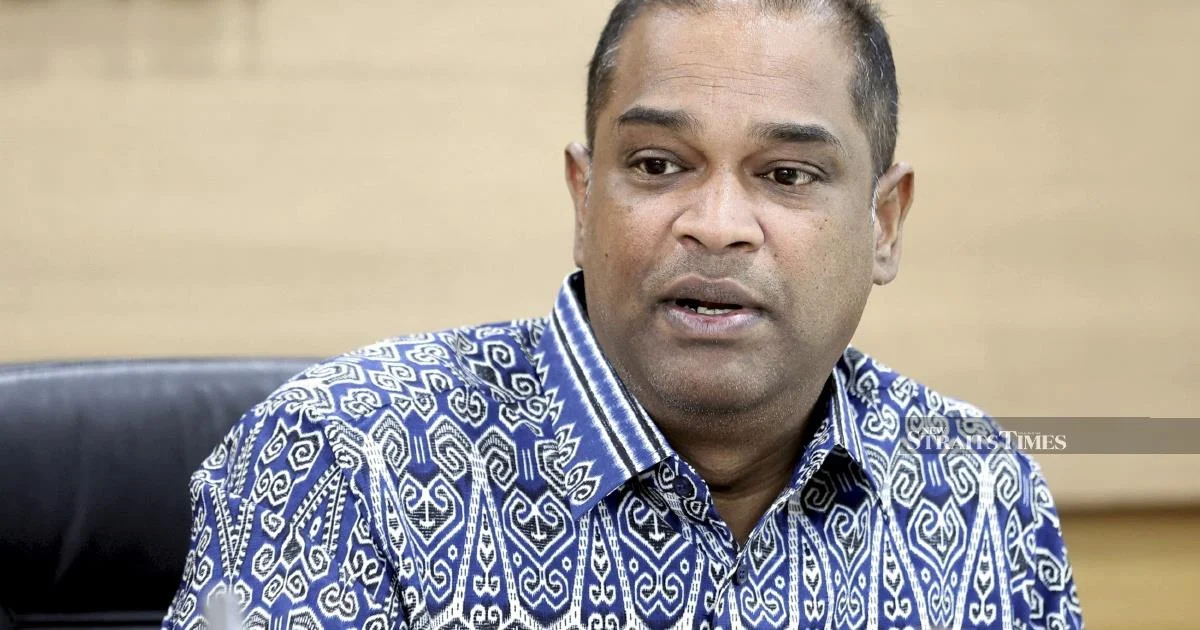
PKR vice-president Datuk Seri R. Ramanan has issued a sharp rebuke to political figures accused of weaponising the royal institution for electoral advantage in the lead-up to Johor's 16th general election, describing the practice as fundamentally incompatible with democratic principles and constitutional propriety.
Spoken in Johor Baru, Ramanan's remarks reflect growing unease within the opposition coalition about how the monarchy—traditionally positioned as an apolitical custodian of constitutional order—has become drawn into the factional disputes that characterise Malaysian electoral contests. The warning comes at a sensitive moment in Johor politics, where coalition dynamics and leadership ambitions have created space for constitutional conventions to be tested.
The deployment of royal imagery and institutional weight in election campaigns represents a troubling departure from established practice, according to Ramanan's intervention. By enlisting the Crown in partisan electoral narratives, political actors risk delegitimising both the institution itself and the broader constitutional framework that governs elections. This dynamic proves particularly corrosive in Johor, a state where the monarchy holds deep cultural and historical resonance among voters.
Ramanan's criticism suggests that specific incidents or campaign tactics have crossed established boundaries regarding acceptable engagement with the royal sphere. Malaysian political culture maintains an unwritten understanding that while sultans retain their constitutional prerogatives—including dissolution of state assemblies and ceremonial roles—their involvement should remain formal and detached from the rough-and-tumble of factional politics. When political actors invoke royal endorsement, real or implied, they compromise this carefully maintained separation.
The timing of this intervention carries strategic weight. With the 16th Johor election approaching, all coalitions face pressure to mobilise their voter bases and consolidate support. The temptation to leverage royal sentiment—particularly strong in a sultanate like Johor—proves almost irresistible for politically ambitious figures seeking to distinguish themselves from rivals. Ramanan's public statement signals that such temptation must be resisted to preserve institutional integrity.
For Malaysian readers observing this controversy, the underlying stakes extend beyond immediate election arithmetic. The relationship between constitutional monarchies and electoral democracy remains delicate, especially in Malaysia where the institution enjoys extraordinary reverence. When political players routinely drag the Crown into campaign messaging, they risk eroding public respect for constitutional restraint itself. Citizens may begin viewing the monarchy through a partisan lens rather than as a unifying, above-politics institution.
The Johor context amplifies these concerns. As Malaysia's southernmost peninsular state and home to one of the nation's most prominent sultanates, Johor elections draw disproportionate national attention. Campaign practices normalised in Johor tend to ripple outward, potentially establishing precedents that filter into federal politics and elections in other states. What happens during the 16th Johor election may thus shape democratic conduct patterns across Malaysia for years to come.
Ramanan's public warning also reflects internal PKR calculations. As an opposition party seeking to displace the incumbent, PKR must navigate between mobilising its supporters and maintaining the moral authority that comes from respecting constitutional norms. By explicitly cautioning against royal politicisation, Ramanan stakes a claim to institutional propriety—a valuable positioning when opposition credibility depends partly on voters believing they offer a cleaner, more principled alternative to ruling coalitions.
Setting aside partisan positioning, however, the substance of Ramanan's concern deserves serious consideration. Democratic systems worldwide struggle with how to preserve constitutional monarchies in genuinely competitive electoral environments. The tension between popular sovereignty and hereditary legitimacy creates ongoing friction. In Malaysia's context, where the sultan appoints the chief minister following assembly elections, questions about royal neutrality take on concrete constitutional weight.
The challenge lies in distinguishing between legitimate royal constitutional functions and illegitimate political partisanship. A sultan exercising discretionary appointment powers after elections operates within constitutional bounds, even if that exercise produces outcomes favoring one coalition. A politician campaigning by claiming special royal support or favour, by contrast, abuses institutional mystique for partisan gain. Ramanan's intervention attempts to police this boundary before it dissolves entirely.
As voters in Johor prepare for polling day, they should reflect on what kind of democracy they want. Electoral systems function best when all parties respect agreed-upon constitutional conventions, including the principle that some institutions remain above factional struggle. By calling out the politicisation of the royal institution now, Ramanan invites his political opponents to restore these conventions voluntarily—before external pressure or electoral necessity forces the issue.

