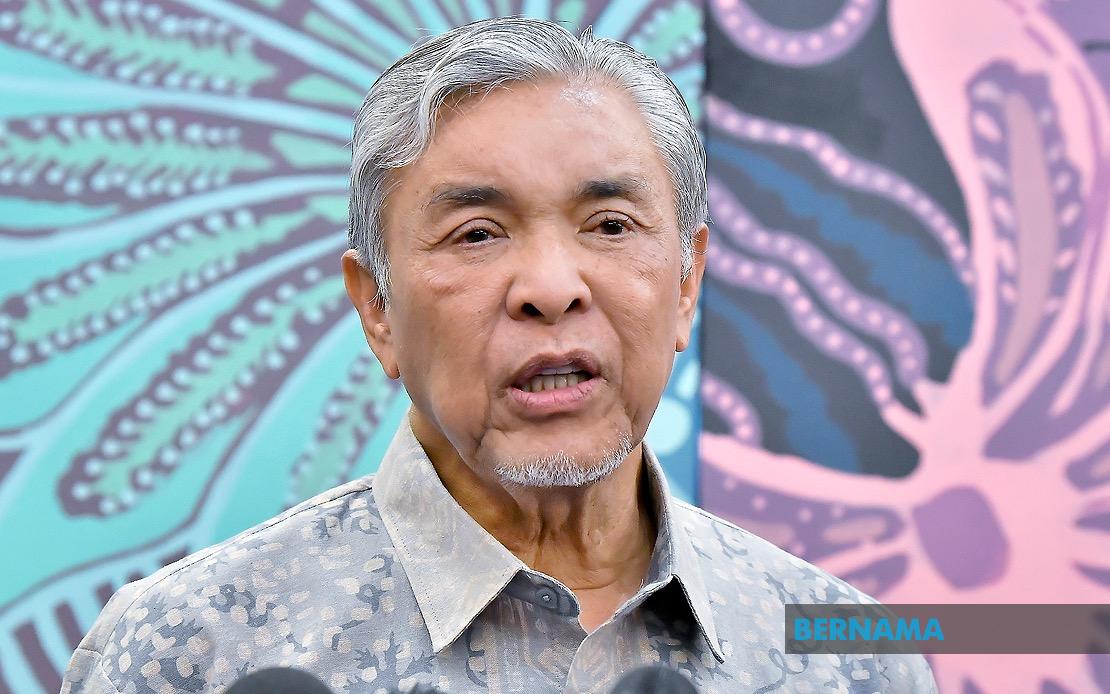
The South East Johor Development Authority's planned expansion into additional districts represents a coordination mechanism rather than a land acquisition scheme, Deputy Prime Minister Datuk Seri Dr Ahmad Zahid Hamidi emphasised while addressing public concerns about the initiative. Speaking at an awards ceremony in Kota Tinggi, Ahmad Zahid, who heads the Rural and Regional Development Ministry, sought to clear up misunderstandings suggesting that KEJORA intended to claim ownership of land across the expansion zones. His intervention signals the government's sensitivity to landowner anxieties in a region experiencing rapid economic transformation, where large-scale development projects have already prompted significant changes to the social and economic landscape.
The proposal's foundation rests substantially on KEJORA's demonstrated performance record, which the deputy premier highlighted as a primary justification for broadening the authority's mandate. With 98.3 per cent of implemented projects achieving their targets, the agency has established itself as an efficient delivery vehicle for regional development initiatives. This success rate distinguishes KEJORA within Malaysia's development administration landscape, where project slippage and cost overruns frequently undermine confidence in government programmes. The track record reflects both technical competence and institutional stability, factors that underscore why policymakers view KEJORA as the appropriate mechanism for accelerating growth across south-eastern Johor's emerging economic zones.
Pengerang emerges as the expansion's immediate focus, representing the most dynamic element of KEJORA's operational sphere. The district has experienced extraordinary growth propelled by major infrastructure and industrial projects alongside emerging tourism opportunities, creating demand for coordinated planning that extends beyond existing administrative boundaries. The expansion responds to these pressures by positioning KEJORA to harmonise development across multiple districts rather than operating in fragmented pockets. This regional approach addresses a fundamental challenge facing Malaysian economic planning: ensuring that rapid growth in specific localities generates spillover benefits for surrounding areas rather than creating isolated development islands.
Public reception to the expansion concept appears substantially positive, grounded in a survey KEJORA commissioned to gauge community sentiment. The polling exercise, which registered 96 per cent support among respondents, provides the government with public mandate documentation for proceeding with formal implementation steps. This threshold of approval distinguishes the KEJORA proposal from contentious development initiatives that face organised opposition, though such surveys warrant scrutiny regarding sampling methodology and question framing. Nonetheless, the strong backing suggests that residents and stakeholders within the proposed expansion zones perceive tangible benefits from broadening KEJORA's development coordination role.
Ahmad Zahid's explicit reference to requiring royal consent underscores the constitutional dimensions embedded in Malaysia's federal system. The proposal demands endorsement from His Majesty Sultan Ibrahim and Tunku Mahkota Ismail, the Regent of Johor, reflecting the substantive authority that Johor's monarchy retains over land and administrative matters within the state. This constitutional requirement introduces a deliberative layer that ensures Johor's traditional rulers maintain influence over developmental trajectories affecting their domains. The formal deference to royal prerogative, articulated publicly by the deputy premier, reinforces institutional hierarchies that remain central to Malaysian governance despite modernisation pressures.
The government's financial commitment to KEJORA expansion demonstrates concrete backing beyond rhetorical support. The Rural and Regional Development Ministry has allocated approximately RM138 million to fund development projects across KEJORA's operational territory, a substantial injection designed to translate coordination mandates into tangible infrastructure and services. This allocation sustains 107 programmes already underway whilst facilitating approximately 350 additional smaller-scale projects. The funding framework indicates that expansion represents not merely an administrative restructuring but a genuine resource commitment expected to generate visible benefits for populations across the targeted zones.
Parallel initiatives gaining ministerial backing extend beyond KEJORA's institutional remit, broadening the developmental agenda for south-eastern Johor. Datuk Seri Azalina Othman Said, Minister in the Prime Minister's Department and MP for Pengerang, has advanced proposals to elevate Pengerang to full district status while establishing new healthcare infrastructure adequate to serve the population surge underway. These complementary initiatives address specific bottlenecks: administrative fragmentation that constrains service delivery and healthcare capacity insufficient for rapid population growth. Azalina's proposals gain particular weight given her dual parliamentary and ministerial positions, indicating high-level governmental commitment to resolving Pengerang's governance and service delivery constraints.
The healthcare dimension warrants particular attention given Malaysia's experience with rapid urbanisation outpacing medical infrastructure expansion. Pengerang's ascendant trajectory through megaprojects and tourism development attracts workers, investors, and visitors whose healthcare requirements exceed existing facilities designed for smaller populations. A new hospital would address immediate medical service gaps whilst signalling government confidence in Pengerang's continued expansion. This infrastructure addition acknowledges that purely economic development divorced from social service provisioning generates community dissatisfaction despite rising employment and investment.
The KEJORA expansion initiative reflects broader patterns within Malaysian governance whereby development authorities assume expanded roles in coordinating growth across regions experiencing transformation. Rather than relying on fragmented district administrations, the government delegates authority to specialised agencies equipped with technical expertise and financial resources. This institutional approach prioritises efficiency and unified planning across traditional administrative boundaries. However, such delegation simultaneously concentrates developmental power within non-elected bodies, raising transparency and accountability concerns that merit public scrutiny even as improved project delivery generates tangible benefits.
For Malaysian stakeholders beyond Johor, the KEJORA model provides instructive lessons regarding managing rapid regional growth through institutional innovation. Southeast Asian economies increasingly confront similar challenges as specific zones experience accelerated development whilst surrounding areas face marginalization pressures. The emphasis on coordination rather than land ownership, combined with substantial public support documentation, suggests that transparent communication about development intentions can mitigate community anxieties. KEJORA's expansion thus represents not merely a technical administrative adjustment but a case study in reconciling ambitious growth objectives with public acceptance and constitutional proprieties that remain foundational to Malaysia's federal system.

