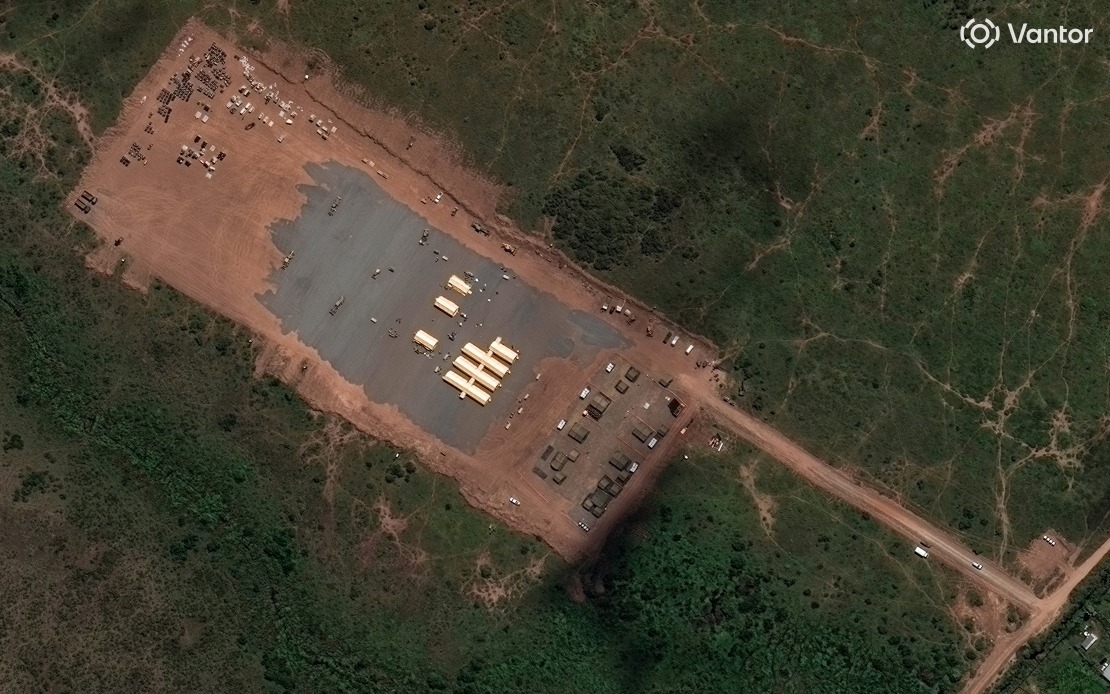
Kenya's Health Minister Aden Duale has been found guilty of contempt of court for continuing work on a US-backed Ebola quarantine facility despite explicit judicial orders to halt the project. High Court Judge Patricia Nyaundi issued the ruling on Monday, determining that Duale had deliberately disregarded suspension orders issued in late May and early June, maintaining oversight of construction activities at the Laikipia Air Base facility near Nanyuki even after the court intervened. The judge directed the minister to appear personally before the court on Tuesday to present mitigating circumstances and face sentencing for his breach of judicial authority.
The contested 50-bed isolation and quarantine centre lies approximately 200 kilometres north of Nairobi, within Laikipia County, and has become one of East Africa's most polarising public health projects. According to government statements, the facility would serve as a quarantine location for Americans who might have been exposed to Ebola during disease response operations tied to outbreaks in the Democratic Republic of the Congo and neighbouring regions. The strategic purpose reflects Kenya's position as a crucial hub for regional transport, diplomacy and commerce, creating what officials characterise as heightened epidemiological risk.
The project acquired additional political dimensions when President William Ruto publicly revealed that he had authorised the initiative following a direct request from United States President Donald Trump. This disclosure transformed what might have appeared as a routine public health infrastructure project into a contentious issue regarding national sovereignty, foreign influence and the proper balance between security partnerships and domestic public concern. The revelation that the facility had been approved at presidential level to accommodate American nationals intensified scrutiny from civil society organisations and political opposition groups.
The constitutional rights organisation Katiba Institute initiated the legal challenge that led to the court's suspension order, arguing that the project violated multiple constitutional provisions and public participation requirements. Their petition highlighted concerns regarding transparency, democratic accountability and public health safety standards, contending that citizens in the affected region and the broader public had not been adequately consulted on a facility that could have significant epidemiological implications. The High Court's initial decision to suspend the project reflected these constitutional principles, effectively placing the burden on the government to demonstrate compliance with proper legal and administrative procedures.
Government officials have steadfastly defended the facility as integral to Kenya's disease preparedness infrastructure, emphasising that regional disease risks justify the investment and location. They have maintained that the project strengthens Kenya's capacity to rapidly detect, isolate and contain Ebola cases, benefiting not only Kenya but the broader East African region. The United States Embassy in Nairobi has similarly insisted that the facility presents no hazard to surrounding communities, framing it as one element of a comprehensive capacity-building initiative aimed at enhancing regional health security.
Yet the courtroom proceedings have unfolded against a backdrop of sustained public opposition and street demonstrations within Laikipia County. Local residents have protested against the facility, expressing distrust of government assurances and insisting that their voices be heard in decision-making processes affecting their communities. Tensions have escalated to alarming levels, with police reports, witness testimonies and human rights groups documenting at least three deaths arising from protest-related violence, indicating profound community frustration with both the project itself and the perceived dismissal of their concerns.
The contempt finding exposes fundamental tensions within Kenya's constitutional order between executive action and judicial oversight. By continuing construction activities despite explicit court orders, the health ministry effectively challenged the authority of the judiciary to exercise its constitutional role of reviewing government decisions. This confrontation reflects broader questions about whether senior government officials consider themselves bound by court directives, a critical issue for any nation claiming to operate under the rule of law.
For Malaysian observers and regional analysts, the Kenyan dispute illuminates challenges that multiple Southeast Asian countries face when balancing public health preparedness with democratic governance. The tension between rapid disease response capacity and meaningful public participation, between partnership obligations to global powers and accountability to local communities, represents a recurring dilemma across the region. The case demonstrates how health security infrastructure—ostensibly technical and apolitical—becomes a flashpoint for questions of constitutional authority, foreign relations and popular sovereignty.
The contempt ruling and impending sentencing of the health minister will substantially constrain the government's ability to proceed with the facility in its current form. Even if sanctions prove relatively modest, the judicial intervention has established that Kenyan courts will enforce their orders against even senior ministerial officials, a precedent with implications beyond this particular project. The government must now determine whether to appeal, negotiate a compromise with the petitioners, or fundamentally redesign its consultation and transparency processes to satisfy the court's constitutional concerns.
For Kenya's regional standing and international partnerships, the dispute presents a delicate challenge. The United States has framed the facility within a collaborative health security partnership, yet Kenyan judicial processes are prioritising constitutional and democratic requirements that may require substantial modifications. How Kenya navigates this intersection—balancing genuine disease preparedness needs, legitimate community concerns, constitutional obligations and international partnership commitments—will establish important precedents for how East African nations manage similar situations.

