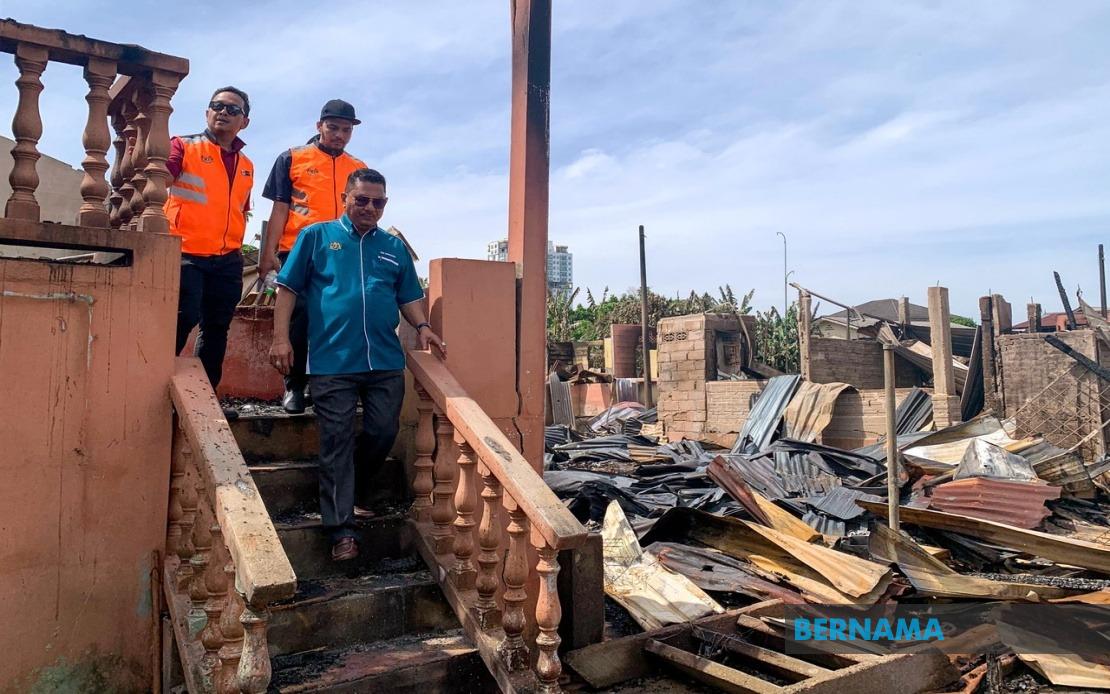
The devastating fire that swept through Kampung Gok Kapur in Kota Bharu on June 8, destroying 27 residential structures and rendering 110 villagers homeless, has been definitively traced to an unsafe burning practice conducted indoors, according to findings released by the Kelantan Fire and Rescue Department (JBPM). The investigation concluded that someone had intentionally set fire to a pile of papers directly in the kitchen of one house using an open flame source, an act of negligence that cascaded into one of the district's worst residential fire incidents in recent memory.
Director of the Kelantan JBPM, Farhan Sufyan Borhan, detailed the sequence of events that led to the catastrophic blaze during a statement made in Kota Bharu. The department's Fire Investigation Forensic Unit had meticulously examined the site and interviewed witnesses, piecing together how the incident unfolded. Physical evidence and witness testimonies converged on a singular cause: someone had applied a gas lighter directly to papers stacked in the kitchen, apparently intending to dispose of them through burning rather than through conventional waste disposal methods.
The mechanism of spread was straightforward yet devastating. Once the papers ignited, nearby combustible materials in the immediate kitchen area caught fire within moments. The flames then breached the confines of that single house, leaping to adjacent structures with alarming speed. The close proximity of homes in Kampung Gok Kapur, typical of traditional Malaysian village settlements, meant that fire encountered no natural barriers between properties. What began as a localized kitchen incident evolved into a conflagration that consumed property across an entire neighborhood, a pattern that has become grimly familiar in congested residential areas throughout Malaysia.
The investigation's determination of negligence rather than accident carries significant weight for accountability purposes. Farhan Sufyan Borhan emphasized that the department had confirmed through its analysis that the fire resulted from carelessness during the burning activity itself, not from some unavoidable equipment failure or unforeseen circumstance. This distinction matters considerably when the matter proceeds through official channels. The investigation report will now be transferred to police authorities or other relevant agencies that may pursue further action, potentially including criminal charges depending on applicable fire safety legislation and negligence statutes in Kelantan.
The human cost of this preventable incident extended well beyond property damage. The conflagration displaced 110 residents who suddenly lost their homes and belongings, forcing them into emergency accommodation at the nearby Mukim Banggol Mosque. While no fatalities occurred—a fact that should not obscure the trauma inflicted on the community—the psychological and material consequences for those 110 people will linger for months or years. Families had to abandon everything within minutes, with no time to salvage irreplaceable documents, heirlooms, or possessions of sentimental value. The evacuation center, however well-intentioned, offers only bare-bones survival shelter, not the security and comfort of home.
For Malaysian households, the lessons from Kampung Gok Kapur warrant serious reflection. Open-flame burning of household waste indoors or in adjacent areas represents a practice that persists despite modern alternatives. Some households resort to such methods out of habit, cost consciousness, or simple underestimation of risk. Yet the consequences can be catastrophic, as this incident starkly demonstrates. A single act of negligence—applying a lighter to papers in a kitchen—disrupted the lives of 27 families and prompted a full-scale disaster response involving emergency services, temporary shelter coordination, and what will likely be months of investigation and potential prosecution.
The Fire and Rescue Department's public advisory that emerged from this investigation bears repeating with emphasis: citizens must exercise extreme caution when using any open flame source, and burning activities should never occur inside homes or in close proximity to residential structures. These are not merely suggestions but expressions of hard-won knowledge earned through investigating fires that consumed properties and displaced families. In a tropical climate where monsoon seasons and dry spells create varying fire risk conditions throughout the year, vigilance must remain constant. The alternative—treating such warnings as optional—invites the kind of tragedy that struck Kampung Gok Kapur.
The incident also highlights the vulnerability of densely settled village communities where houses are built in close proximity with limited firefighting access in some cases. Once flames breach one structure, they find ready passage to the next. Rural fire prevention strategies must therefore emphasize both individual responsibility and community-level infrastructure improvements. Authorities should explore whether gaps exist in fire safety education, in the availability of safe waste disposal facilities, or in building codes that could reduce fire spread between neighboring homes.
As the investigation report moves through official channels and toward law enforcement, the broader imperative remains unchanged: public awareness campaigns must reach households across Malaysia, particularly in areas where informal waste burning practices remain common. This fire started in a single kitchen with a gas lighter and papers; it ended with 27 destroyed homes and 110 displaced people. That cascade from negligent action to neighborhood-scale devastation ought to concentrate minds on fire safety with new urgency.

