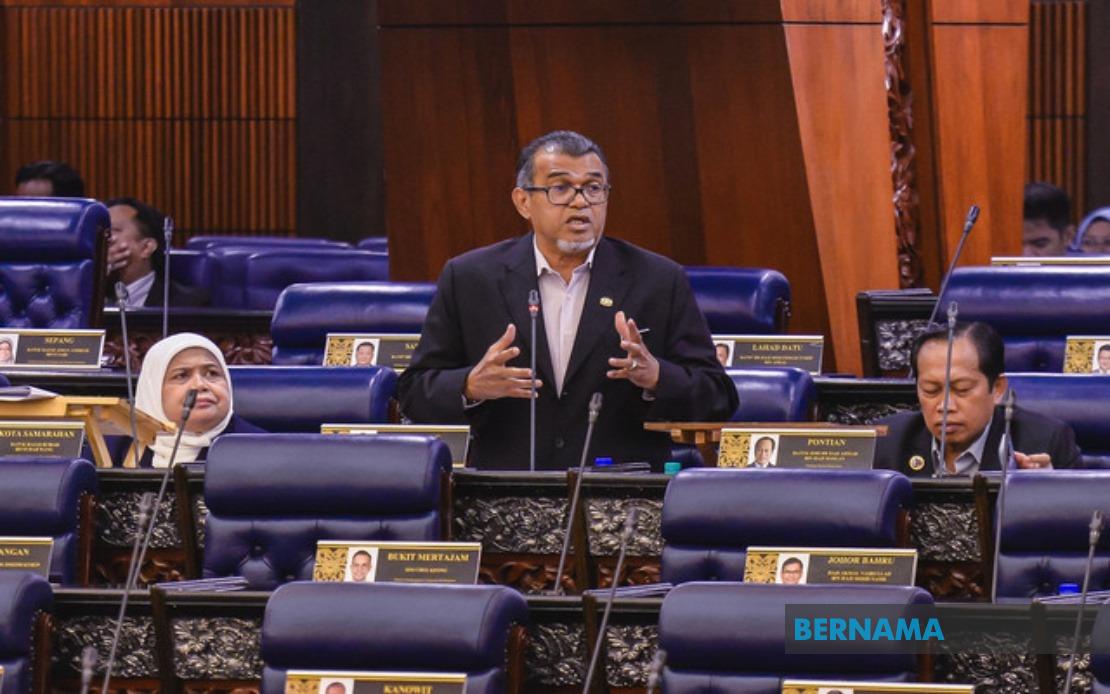
The expansion of Kota Kinabalu International Airport, budgeted at nearly RM500 million, cannot commence until outstanding land-related complications are addressed in coordination with the Sabah state government, Deputy Transport Minister Datuk Hasbi Habibollah told the Dewan Rakyat this week. Although the federal government has already greenlit the financing required for the modernisation project, several critical obstacles remain unresolved, including finalisation of land parcels needed for the work, determination of the actual expansion site, and clarification of buffer zones surrounding the existing runway infrastructure.
The timeline for the KKIA initiative contrasts sharply with progress at Tawau Airport, where construction activities are already underway as part of the same federal investment package. During parliamentary Question Time, Hasbi indicated that once Sabah authorities formally settle their position on the project's geographic scope and technical specifications, the Transport Ministry will be positioned to move forward with tender procedures and contractor engagement. The delay underscores the logistical complexities involved in coordinating infrastructure projects across state and federal jurisdictions within Malaysia's federal structure, where land administration remains largely a state responsibility.
This KKIA undertaking forms part of a broader RM2.3 billion airport modernisation initiative that Prime Minister Datuk Seri Anwar Ibrahim, who doubles as Finance Minister, unveiled during the Budget 2026 presentation last October. The comprehensive programme encompasses facility upgrades and expansions at four locations: Penang International Airport, Kota Kinabalu International Airport, Tawau Airport, and Miri Airport. The administration initially targeted completion of these projects by 2028, though the KKIA delays suggest this timeline may require recalibration. For Sabah in particular, investment in aviation infrastructure carries outsized significance given the state's geographic size, dispersed population centres, and dependence on air connectivity for tourism and business activities.
Parliament also heard discussion regarding smaller regional airports facing connectivity challenges. Responding to a separate inquiry about Pangkor Airport's future, Hasbi acknowledged that commercial aviation services on the island have remained suspended since May 2022, when charter operators Berjaya Air and SKS Airways ceased their Dash 7 aircraft operations. The government recognises that ferry services currently function as the primary transportation mode linking Pangkor to the peninsula, and transportation planners have determined that maritime routes remain the most viable option for both leisure visitors and island residents. However, the Transport Ministry has not entirely abandoned the possibility of restoring air services should viable commercial opportunities materialise.
The ministry's approach to regional aviation reflects pragmatism about airline operations economics. Any potential recommencement of commercial flights at Pangkor would necessarily depend on carriers undertaking their own viability assessments and determining whether passenger volumes and cargo demand justify service establishment. The Transport Ministry and Malaysia Airports Holdings Bhd maintain an open posture toward proposals from interested airlines, signalling receptiveness to revival initiatives provided they demonstrate sound commercial foundations. This stance recognises that government cannot subsidise economically unviable routes indefinitely, yet remains committed to supporting aviation development where market conditions permit.
Despite the suspension of scheduled passenger services, Hasbi clarified that Pangkor Airport, together with equivalent facilities on Redang Island and Tioman Island, have not been abandoned as non-functional assets. All three installations continue serving critical functions within Malaysia's aviation ecosystem. Private aircraft owners utilise these facilities for general aviation purposes, while military units maintain operational access for defence requirements. Emergency medical evacuations, helicopter transfer operations, and flying doctor services providing healthcare access to remote populations all depend on maintaining these infrastructure nodes. Malaysia Airports Holdings Bhd keeps personnel stationed at each location to ensure continued asset maintenance and operational readiness, preventing deterioration that would render resurrection prohibitively expensive.
The broader policy context reveals how Malaysia balances competing priorities in aviation development. Major hub airports like Kuala Lumpur International Airport and Penang International Airport require continuous expansion to accommodate international traffic growth and serve as regional connectivity centres. Simultaneously, regional facilities merit investment to support domestic tourism, distribute economic benefits beyond the Klang Valley, and maintain transport links to peripheral communities. The RM2.3 billion allocation reflects this dual commitment, though implementation challenges—particularly around land acquisition and stakeholder coordination—inevitably create bottlenecks that require patient resolution.
For Malaysian businesses and tourists, the KKIA delays represent a frustrating postponement of capacity improvements at a gateway airport serving East Malaysia's largest urban centre. Kota Kinabalu has experienced steady tourism growth, attracting visitors to Sabah's natural attractions and serving as a hub for business travellers accessing the wider region. Expanded terminal facilities and enhanced passenger processing infrastructure would improve operational efficiency and passenger experience while positioning the airport to capture additional regional traffic. The modernisation project thus carries implications extending beyond Sabah to the competitive positioning of Malaysian aviation within Southeast Asia.
The parliamentary exchange also illuminates how infrastructure development in federal systems requires alignment across multiple governmental levels. While the federal Transport Ministry controls aviation policy and funding allocation, Sabah retains authority over land matters within its territory. This institutional framework necessitates sustained coordination to translate budgeted allocations into completed projects. The KKIA situation demonstrates that securing funding represents only one hurdle; translating financial commitments into operational improvements requires navigating administrative processes across jurisdictional boundaries, which can prove time-consuming and require political will to achieve consensus between state and federal actors.

