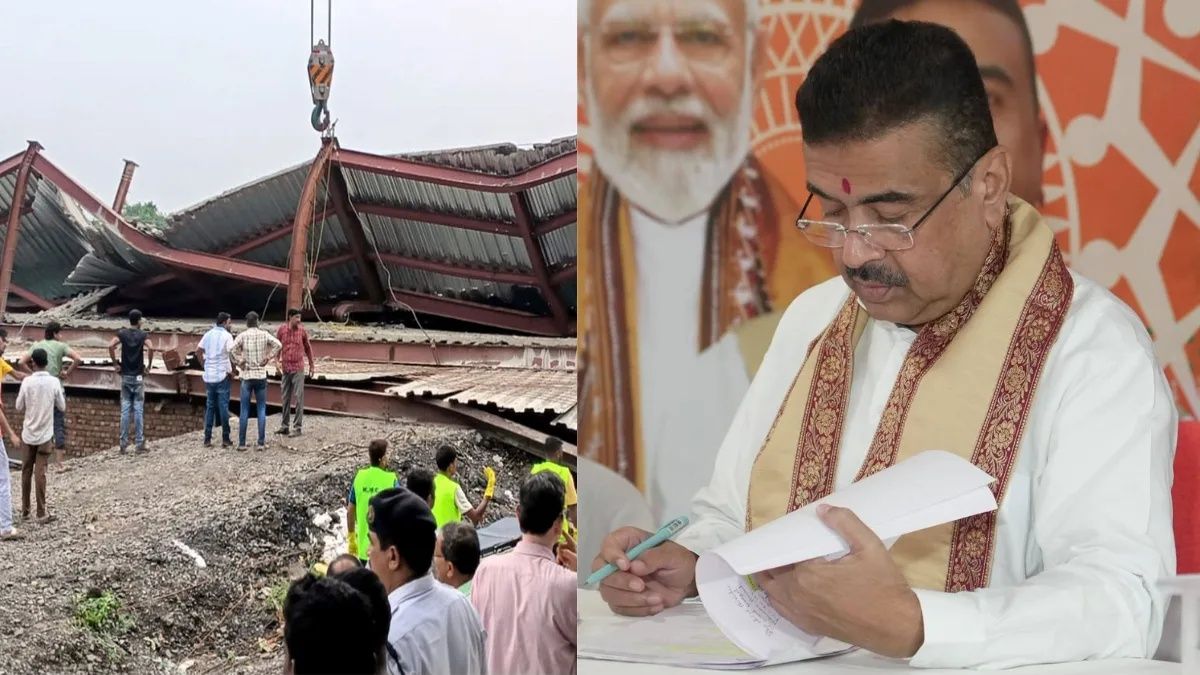
The recovery effort at the collapsed Taratala warehouse in Kolkata entered its second day on Thursday with the death toll rising to 11, as rescue personnel from the army, National Disaster Response Force, and other federal agencies worked to extract survivors from beneath tonnes of debris. Officials expressed serious concern that additional workers remain trapped in the wreckage, though the exact number cannot yet be confirmed. The latest fatality, whose identity remained unconfirmed, was transported to SSKM Hospital's Trauma Care Centre around midday, underscoring the grim pace at which rescue teams are recovering bodies from the site.
The structural failure has triggered a political firestorm in West Bengal, with Chief Minister Suvendu Adhikari using an assembly address to launch a comprehensive attack on his predecessor's administration. Adhikari alleged that the Taratala warehouse building plan had been approved despite containing fundamental structural defects, and presented documentary evidence to the legislature including approvals bearing the signature of former Kolkata Municipal Corporation Mayor Firhad Hakim. The chief minister characterised the approval process as corrupted by a system of unofficial payments, or "cut money," which he claimed had systematised the overlooking of safety violations.
Adhikari's remarks reflected a broader indictment of governance under the previous Trinamool Congress-led municipal authority. He suggested that the practice of extracting illicit payments from construction projects had created what he termed a "city of death," implying that safety standards across Kolkata had been systematically compromised to enable bureaucratic rent-seeking. The chief minister questioned the professional judgment and integrity of engineers and officials who had sanctioned the flawed design, indicating that accountability would extend beyond contractors to the regulatory apparatus itself.
Law enforcement has already moved swiftly, with five individuals taken into custody by Thursday. These include the construction company's site supervisor, the subcontractor responsible for fabricating the iron structural components, the person holding the land lease, a labour intermediary affiliated with a firm contracted for the project, and a broker involved in obtaining the original municipal approval. However, the person identified as the prime accused, Azgar, remains at large, and authorities have announced that locating him remains a priority in the investigation.
In response to the disaster, Adhikari announced an immediate and sweeping suspension of all non-essential construction activity across Kolkata and eight surrounding municipal areas including Rajarhat-New Town, Maheshtala, and Budge Budge. The four-week moratorium is designed to create space for a comprehensive reassessment of building safety protocols. During this period, every previously approved construction plan in the affected zones will undergo detailed technical review, representing an unprecedented intervention into the city's construction sector.
The audit has been entrusted to a high-level committee chaired by Additional Chief Secretary Rajesh Pandey, reflecting the state government's determination to signal this as a serious undertaking rather than performative oversight. The committee's composition is notably inclusive of technical expertise, bringing together senior civil servants alongside representatives from IIT Kharagpur, Rail India Technical and Economic Service, Indian Railway Construction Limited, and specialist departments including Fire Services and the Public Works Department. This multidisciplinary approach suggests the government recognises that structural safety failures often involve systemic lapses rather than isolated negligence.
For Malaysian and Southeast Asian observers, the Kolkata incident illuminates persistent vulnerabilities in rapid urbanisation across the region. As cities from Kuala Lumpur to Manila to Bangkok experience accelerated construction booms driven by economic growth, the Taratala collapse exemplifies how corruption and inadequate regulatory capacity can undermine safety standards even as formal approval mechanisms remain in place on paper. The fundamental problem—that construction approvals can be obtained despite documented structural defects through informal payment arrangements—reflects governance weaknesses that extend beyond India and should prompt reflection among regional policymakers about inspection integrity and whistleblower protections.
Adhikari's announced enforcement approach suggests a recognition that penalties must be severe enough to deter future corner-cutting. He stated that those found culpable would face imprisonment and potentially asset confiscation, with compensation to victims prioritised over leniency considerations. This hardline stance reflects political pressure stemming from the scale of the tragedy, yet it also represents a departure from the tolerance for regulatory violations that may have enabled the approval of a demonstrably unsafe structure in the first place. Whether sustained commitment to this enforcement posture will outlast immediate political attention remains to be seen.
The coordination between central Indian agencies—the army and NDRF—and state authorities has drawn praise from Adhikari, suggesting that political divisions have not impeded emergency response. This inter-governmental cooperation during the rescue phase may serve as a foundation for continued collaboration during the investigative and reform phases, though historical patterns in South Asian governance suggest that post-crisis reform momentum often dissipates as media attention fades. The four-week construction suspension and comprehensive audit represent meaningful interim measures, but sustaining improved oversight will require institutional reforms to inspection procedures, engineer liability standards, and mechanisms for reporting safety violations without fear of retaliation or bribes.
The tragedy also raises questions about worker protections and informal labour dynamics. The fact that exact numbers of missing workers remain uncertain hints at the precarity of informal construction workforce arrangements common throughout South and Southeast Asia, where labourers often lack formal documentation or grievance mechanisms. Any credible investigation into the Taratala collapse should account for how labour contractor arrangements may have enabled cost-cutting measures that compromised structural integrity, and whether workers had any capacity to raise safety concerns before the building failed.
Looking forward, the Kolkata incident will likely influence construction governance discussions across India and the broader region. Singapore, with its far more rigorous building inspection regime, demonstrates that South Asian countries are not inherently incapable of maintaining high safety standards, but rather that this requires genuine political will, adequate resource allocation to inspectorates, and cultural shifts that privilege safety over convenience or profit. Whether West Bengal's announced reforms will catalyse such a transformation, or remain a temporary response to a specific disaster, will depend on whether the government institutionalises improved oversight mechanisms and maintains enforcement consistency across economic and political circumstances.

