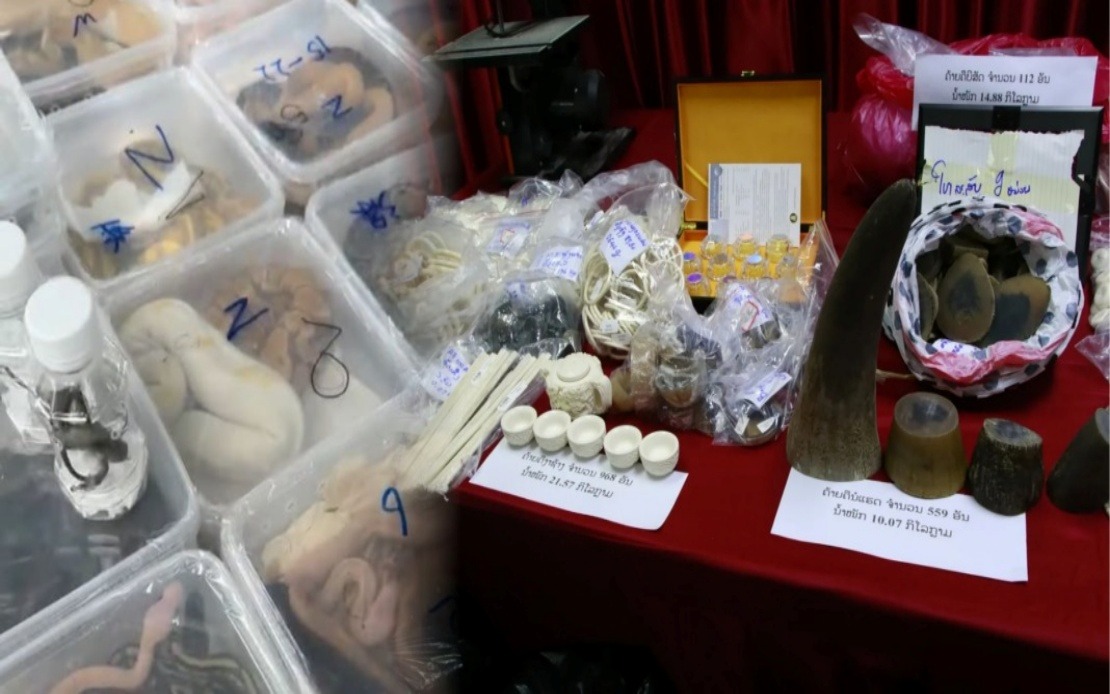
Authorities in Laos have exposed a sprawling wildlife trafficking network operating across the Mekong region, culminating in the rescue of nearly 300 animals and the confiscation of substantial quantities of illegal wildlife products. The coordinated operations, carried out by Lao enforcement agencies across multiple provinces last week, represent a rare and significant victory against an underground trade that has long plagued Southeast Asia's fragile ecosystems.
The initial breakthrough came in Luang Prabang, Laos's most visited tourist destination, where the Lao Wildlife Enforcement Network discovered 60 kilogrammes of suspected contraband during a routine inspection. The haul included a disturbing array of items: carved ivory-like objects, animal gallbladders extracted from endangered bears, pangolin scales stripped from one of the world's most trafficked mammals, and horns purportedly from rhinoceroses. Additionally, investigators seized boxes containing elephant skin powder, processed bear gallbladder derivatives, severed hornbill heads used in traditional medicine preparations, and herbal medicine tubes suspected of containing wildlife ingredients.
Four days after the Luang Prabang discovery, enforcement rangers achieved an even more dramatic result at the Vang Tao International Checkpoint in Champasak Province, which serves as a critical crossing point to Thailand's Ubon Ratchathani Province. Officers intercepted 294 live wild animals being transported across the border, a seizure representing one of the largest recent animal rescues in the region. The confiscated creatures included dozens of turtles, python snakes, green snakes, gold-ringed cat snakes, and various lizard species destined for illegal pet markets or pharmaceutical use.
These operations form part of an escalating pattern of enforcement action along the Thai-Lao border. Just weeks prior, Thai authorities arrested a woman operating a traditional medicine and souvenir shop in Nakhon Phanom, in Thailand's northeastern corner, after discovering more than 100 protected wildlife specimens in her possession that investigators believed had been smuggled from Laos. Earlier in May, international enforcement teams disrupted another smuggling attempt along the Thai-Lao frontier, seizing 130 kilogrammes of elephant ivory and animal remains from traffickers attempting to move their cargo across the border.
Laos's strategic geography makes it an inevitable focal point for regional wildlife trafficking. The nation shares borders with five countries—Cambodia, China, Myanmar, Thailand, and Vietnam—creating multiple cross-border routes that traffickers exploit to move contraband between source countries and end markets. This geographic vulnerability, combined with porous enforcement capacity in rural border areas, has transformed Laos into a critical transit zone where animals and products from across Southeast Asia pass through en route to wealthy consumers in China, Vietnam, and beyond.
The scale of the global illegal wildlife trade underscores why these Lao seizures, though significant, represent merely the tip of an enormous criminal enterprise. According to the United Nations Office on Drugs and Crime's World Wildlife Crime Report 2024, illegal wildlife trafficking generates approximately US$10 billion annually—a figure placing it on par with human trafficking, narcotics smuggling, and the global arms trade in terms of financial magnitude. This enormous economic incentive ensures that traffickers continuously adapt their methods and routes to evade enforcement.
The UNODC report emphasizes a sobering reality: despite two decades of intensified international cooperation and national-level enforcement initiatives, wildlife trafficking continues unabated and expands across ever more species. The report identifies corruption as a fundamental enabler of trafficking networks, suggesting that the animals and products seized represent only those caught at enforcement checkpoints where officials remained vigilant or incorruptible. Countless shipments likely pass through unmolested, suggests the grim calculus of an industry where enforcement budgets pale against traffickers' profits.
For Malaysia and other Southeast Asian nations, the Laos operations carry direct relevance. The region's pangolins—species native to Malaysia and highly valued in traditional medicine markets—feature prominently in trafficking networks that move contraband across Laotian territory. Similarly, elephant products, reptiles, and bird species destined for Malaysian buyers often transit through Laos. The exposure of these trafficking routes provides Malaysian enforcement agencies with valuable intelligence about smuggling methods and border vulnerabilities that inform regional strategies.
The animals rescued at Vang Tao checkpoint now face an uncertain future. Rehabilitation facilities across the region struggle with overcrowding as seizures increase faster than authorities can establish adequate care infrastructure. Many rescued reptiles and other species present particular challenges for long-term care, with some officials quietly acknowledging that humane euthanasia becomes necessary when rehabilitation and repatriation prove impossible. This grim reality underscores that enforcement victories, while essential, cannot substitute for demand reduction in end markets.
The timing of these operations reflects an emerging pattern in Southeast Asian enforcement: coordinated action during specific periods appears to yield results, suggesting that sustained resource allocation and cross-border cooperation produce measurable outcomes. However, maintaining momentum remains perpetually difficult, as enforcement agencies across the region face competing priorities and limited budgets.
The revelation of a trafficking network previously operating in relative obscurity raises inevitable questions about how many similar operations remain undetected across the Mekong basin. Laotian and Thai authorities' success in identifying this particular ring likely stemmed from specific intelligence tips or the happenstance of thorough inspection at transport hubs. The vast majority of cross-border contraband movement may continue undetected, particularly through unofficial checkpoints and remote rural routes that governments lack resources to monitor effectively.
Moving forward, the Laos crackdown demonstrates both the necessity and feasibility of regional enforcement cooperation. The operations involved multiple Laotian agencies and international coordination with Thai authorities and international organizations. Scaling such operations to address the entirety of the illegal wildlife trade would require unprecedented resource commitment and political will across Southeast Asia—a prospect that remains uncertain despite rhetorical commitments at international forums. Until demand among wealthy consumers in end markets diminishes or supply becomes genuinely difficult, enforcement alone will remain an insufficient deterrent.

