Efforts to regularise employment opportunities for refugees across Southeast Asia face formidable obstacles rooted in legal ambiguity and community resistance, according to prominent economist Yea Kim Leng, whose assessment highlights why previous attempts to integrate displaced populations into labour markets have stalled. The expert's analysis suggests that merely introducing refugees into formal employment structures requires far more than good intentions—it demands comprehensive legislative reform, stakeholder consensus, and lessons learned from initiatives that fell short of expectations.
Yea Kim Leng identifies the absence of coherent policy architecture as a fundamental challenge undermining refugee employment schemes. Many countries in the region lack clear legal definitions of who qualifies for work permits, under what conditions, and with what protections. Without such frameworks, employers remain wary of hiring displaced persons, fearing regulatory violations or sudden policy reversals. Governments, meanwhile, struggle to balance humanitarian obligations with domestic labour market concerns, often defaulting to restrictive stances that keep refugee employment firmly in the informal economy where workers face exploitation and minimal safeguards.
The failure of a 2017 pilot project stands as a cautionary marker in this landscape. Rather than serving as proof-of-concept for broader integration initiatives, the programme's collapse underscores systemic weaknesses that persist today. Understanding why that earlier effort faltered—whether through inadequate funding, insufficient coordination between agencies, weak monitoring mechanisms, or simply poor design—remains essential to crafting more resilient approaches. Without rigorous analysis of what went wrong, policymakers risk repeating the same mistakes with new resources and renewed optimism.
Local resistance compounds the challenge significantly. Communities in host countries often perceive refugee employment as competition for scarce jobs, wage suppression, or threats to social cohesion. These concerns, while sometimes exaggerated, reflect real anxieties about economic security and cultural change. Convincing residents that formalised refugee work programmes benefit entire economies—through tax contributions, entrepreneurship, consumer spending, and filling critical labour shortages—requires sustained dialogue, transparent communication about impacts, and visible success stories that address rather than dismiss local fears.
The economic case for refugee employment integration is theoretically strong. Displaced populations represent unutilised human capital; allowing them to work generates income, reduces dependency on humanitarian assistance, and expands tax bases. In sectors facing chronic labour shortages—healthcare, agriculture, domestic work, construction—refugees could fill genuine gaps while upskilling themselves for long-term economic participation. Yet converting this economic logic into political and social reality demands more than advocacy. It requires legal reform, institution-building, employer engagement programmes, and gradual community education.
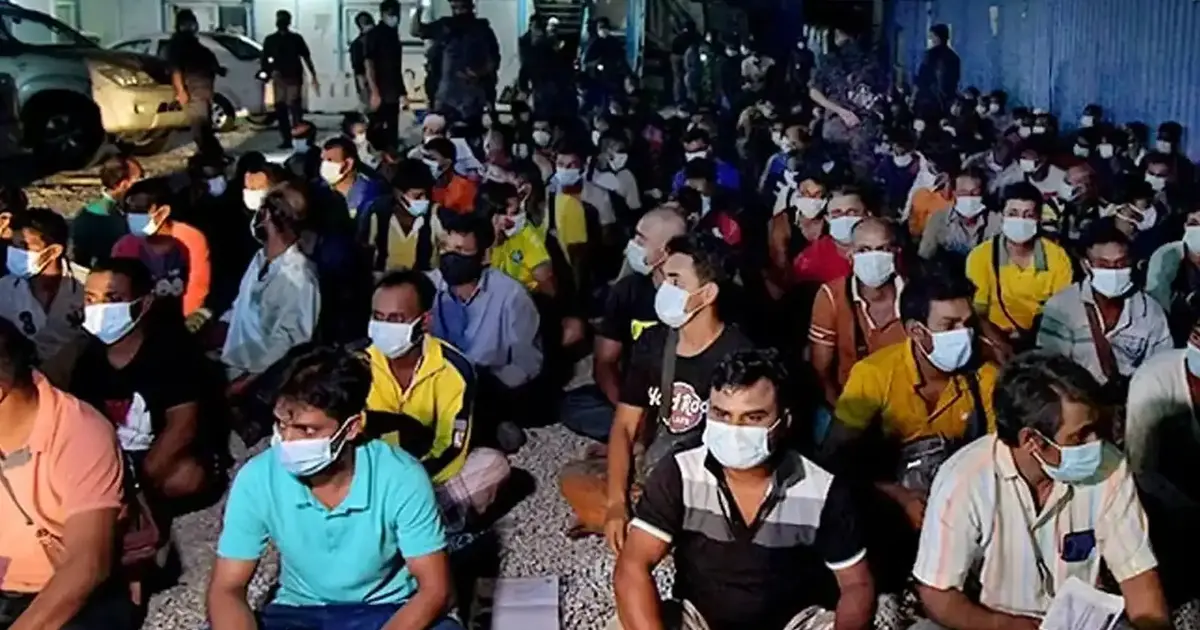
Malaysia, as a major refugee-hosting nation with nearly 200,000 registered asylum seekers, remains caught between humanitarian imperatives and restrictive employment policies. While refugees are technically prohibited from formal work, many labour in informal sectors anyway, generating neither tax revenue nor workplace protections. A formalised framework could redirect this workforce into regulated channels, benefiting both displaced persons and employers willing to participate in registered schemes. However, such a shift would require unprecedented political will and careful messaging to defuse public concerns.
Regional coordination presents another layer of complexity. Individual countries cannot solve refugee employment challenges in isolation. Without harmonised standards across Southeast Asia, migration pressures simply shift between borders, and businesses exploit inconsistencies for profit. A coordinated regional approach—setting common standards, sharing best practices, and creating accountability mechanisms—would strengthen all participants and prevent a race-to-the-bottom on worker protections.
Yea Kim Leng's emphasis on legal frameworks points toward necessary first steps. Any credible refugee employment initiative must begin with transparent, detailed legislation spelling out eligibility criteria, work permit processes, labour rights protections, dispute resolution mechanisms, and sunset clauses allowing periodic review. Legislation alone cannot overcome community resistance or ensure employer participation, but it establishes the foundation upon which other elements can build. Without it, programmes remain vulnerable to political reversals and vulnerable workers remain exposed to arbitrary treatment.
The 2017 pilot's lessons deserve deeper examination through independent evaluation. Did it fail because the approach was fundamentally flawed, or because implementation fell short of design? Were there early warning signs that were ignored? What would success have required? These questions matter because future initiatives will inevitably draw on whatever institutional memory survives from previous attempts. If that memory is vague or disputed, new programmes risk repeating errors rather than building on incremental progress.
Moving forward requires acknowledging that refugee employment formalisation is not simply an economic or humanitarian question—it is fundamentally a political challenge requiring coalition-building across multiple stakeholder groups. Employers need clarity and liability protection. Workers need legal recourse and wage standards. Communities need evidence that their economic interests align with integration rather than conflict with them. Governments need mechanisms for enforcement and accountability. Building consensus among these groups demands patient stakeholder engagement, pilot programmes designed rigorously for learning, transparent communication about both benefits and trade-offs, and political leaders willing to champion unpopular but necessary reforms. Yea Kim Leng's analysis suggests that without serious engagement with these political and legal preconditions, refugee employment will remain trapped in the informal margins where it currently exists, underutilising human potential while perpetuating vulnerability.

