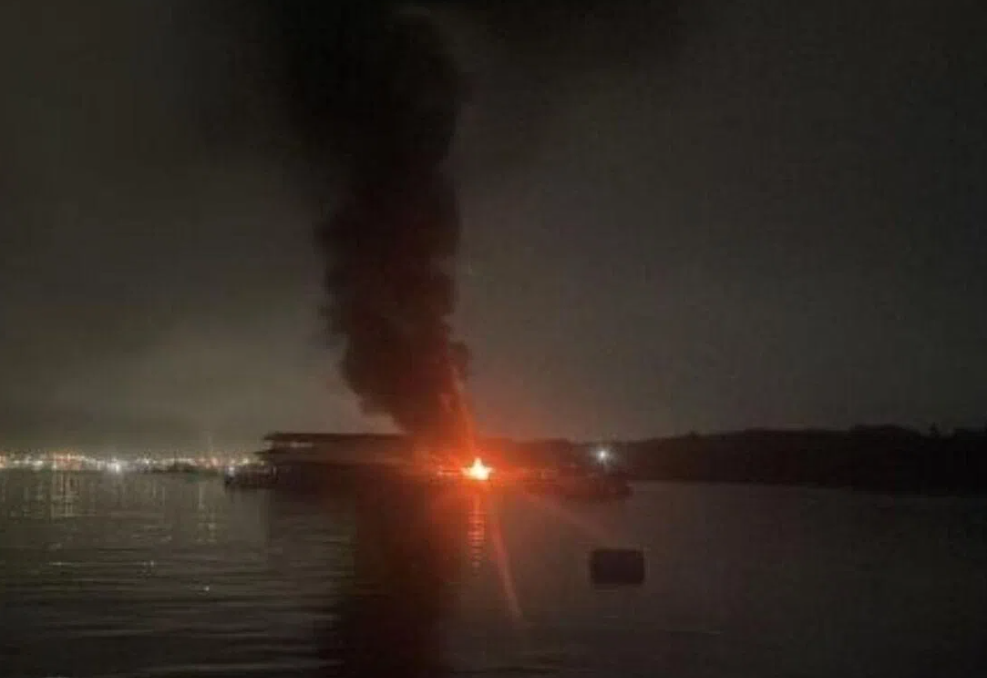
A devastating fire swept through at least two floating fish farms operating near Pulau Ubin on June 24 evening, with firefighters working for several hours to bring the blaze under control. The Singapore Civil Defence Force received the initial alert at approximately 8.10pm and mobilised resources to the affected facilities situated off the Lorong Halus jetty in the Pasir Ris area, close to both Pulau Ubin and Pulau Ketam. The incident marked another hazard for Singapore's aquaculture operations in waters that have become increasingly vulnerable to severe weather and environmental challenges.
Investigators believe the fire originated from a lightning strike that made direct contact with solar panel installations on the first farm, subsequently spreading to two neighbouring operations before emergency responders managed to extinguish the flames. The solar panels that caught fire are part of renewable energy systems deployed across these floating farms, highlighting the dual challenge of adopting green technology in an inherently risky marine environment. While solar power offers obvious economic and environmental benefits for operators seeking to reduce operational costs and carbon footprints, the coastal location and elevated structures of these installations make them particularly susceptible to electrical storms that regularly sweep across the region during monsoon seasons.
One farm owner facing total losses of approximately S$120,000 detailed the extensive damage inflicted by the fire. Beyond the solar panels themselves, the flames destroyed critical fishing equipment including generators that power daily operations, fish feed supplies essential for maintaining stock health, and multiple fish traps necessary for harvesting. A fishing boat stationed at the farm was rendered unusable, and the extensive network of fishing nets suffered significant damage. The cumulative effect proved catastrophic: at least half of the farm's entire fish stock escaped during the chaos, representing both an immediate financial loss and a potential ecological concern for the surrounding marine environment.
What compounded the damage was the absence of workers at the facility when the fire ignited. The farm owner highlighted this critical vulnerability, noting that on previous occasions when lightning had struck the solar panels, workers present on-site had immediately responded and prevented fires from developing into major incidents. This time, without personnel present to detect the problem early and implement containment measures, the fire had time to develop and spread unchecked to neighbouring operations. The incident underscores the operational realities and risks of maintaining isolated aquaculture facilities in challenging geographic locations where response times to emergencies remain inherently delayed.
The owner's inability to secure insurance coverage for the fire compounds the financial devastation. This protection gap suggests either that standard aquaculture insurance policies exclude weather-related incidents or that coverage for floating farms remains prohibitively expensive or difficult to obtain. Such circumstances leave operators bearing full responsibility for losses from natural disasters, creating significant barriers to the economic viability of marine farming operations and discouraging investment in the sector. For regional aquaculture entrepreneurs, the implications are sobering: operating floating fish farms requires absorbing catastrophic risks that traditional land-based agriculture can more easily mitigate through insurance products.
Response to the emergency demonstrated the coordination capacity of Singapore's maritime authorities. The Maritime and Port Authority of Singapore and Airport Emergency Service deployed marine vessels to the location, while nearby farm operators voluntarily assisted in firefighting efforts. This community response reflected both the interconnected nature of floating farm clusters and the informal safety networks that operate in these waters. However, the incident also exposed organisational vulnerabilities—the involvement of multiple agencies suggests that protocols for rapid emergency response to maritime agricultural incidents may require refinement to prevent or minimise damage to neighbouring operations.
The geographic location of these farms, positioned between two small islands in a busy coastal zone serving Singapore's port operations, presents additional complications. The proximity to Pulau Ubin and Pulau Ketam places these aquaculture facilities in an environmentally sensitive area where fishing activities must coexist with conservation efforts and maritime traffic. Any environmental contamination from the fire or escaped fish stock could have implications beyond immediate financial loss, potentially affecting local marine ecosystems and raising questions about environmental impact assessments for floating farm operations in sensitive waters.
For Singapore's aquaculture sector, the incident highlights ongoing challenges in maintaining agricultural productivity in constrained geographic circumstances. The floating farm model itself represents an adaptation to Singapore's limited land availability, allowing food production in previously underutilised marine space. However, this approach concentrates operations in areas exposed to typhoons, lightning storms, and other maritime hazards that land-based farms can largely avoid. The sector must therefore balance productivity goals against the inherent environmental and operational risks of marine farming.
Beyond immediate losses, the fire raises systemic questions about risk management, insurance frameworks, and emergency preparedness within Singapore's aquaculture industry. Authorities including the Singapore Food Agency and Fish Farmers Association will likely examine whether additional safety protocols, worker presence requirements, or equipment standards could prevent similar incidents. The availability of comprehensive, reasonably priced insurance for floating farm operations also warrants examination, as current gaps leave operators financially vulnerable to events beyond their control.
For the broader Southeast Asian region, Singapore's floating farm sector offers both an innovative model for food security in space-constrained environments and a cautionary example of the vulnerabilities inherent in concentrated aquaculture operations. As other regional economies explore marine farming to enhance fish protein availability and achieve food self-sufficiency targets, the experiences from incidents such as this fire provide valuable lessons about infrastructure resilience, emergency response capacity, and the true costs of aquaculture in challenging geographic and climatic contexts.

