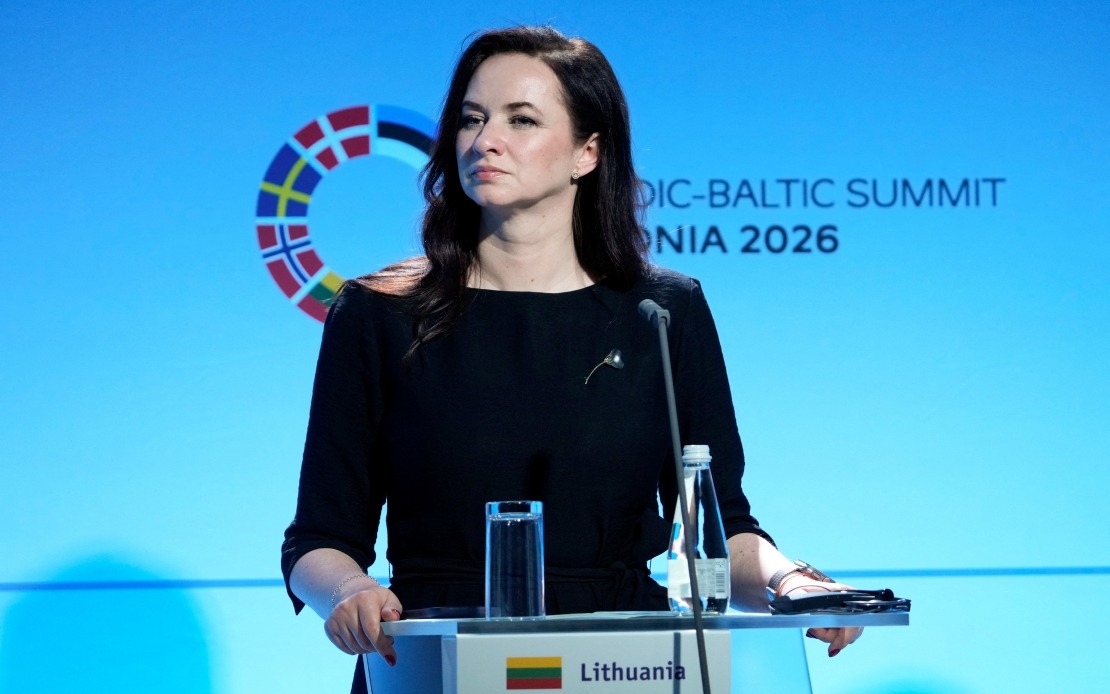
Lithuania's government has collapsed after just months in office, with Prime Minister Inga Ruginiene announcing the resignation of her entire Cabinet on Tuesday in Vilnius. The move sets in motion a formal constitutional process to establish a successor administration, continuing a pattern of political instability that has gripped the Baltic nation since parliamentary elections in late 2024. The resignation will redirect attention to coalition-building negotiations among Lithuania's fractious political parties, raising questions about governmental durability and policy continuity in a country grappling with security concerns and economic pressures.
Under Lithuania's constitutional framework, President Gitanas Nauseda possesses a 15-day window to nominate a candidate for the premiership, though the nomination itself carries no guarantee of success. The selected nominee must then secure parliamentary approval from the Seimas, Lithuania's legislative body, before proceeding with Cabinet formation. This staged process reflects constitutional safeguards designed to ensure broad political consensus, though it also creates extended periods of governmental uncertainty when coalitions are fragmented or unstable. The requirement that any new prime minister gain parliamentary backing underscores the consensual nature of executive power in Lithuania's parliamentary system.
Mindaugas Sinkevicius, who chairs the ruling Lithuanian Social Democratic Party, stands as the frontrunner to receive President Nauseda's nomination. Political observers and party insiders widely anticipate his selection, though formal confirmation awaits the President's decision. Should parliament approve his candidacy, Sinkevicius would face his own demanding timetable: 15 days to assemble a functioning Cabinet and articulate the government's policy priorities, followed by an additional 15-day period to submit the complete ministerial roster for parliamentary ratification. This compressed schedule leaves little room for extended coalition negotiations or policy refinement, placing considerable pressure on rapid institutional formation.
The succession of three distinct coalition governments within an eight-month span since the 2024 elections reveals troubling fragmentation within Lithuania's political landscape. The outgoing Ruginiene government itself represented only the second iteration of Social Democratic-led coalitions following last August's formation, when former Prime Minister Gintautas Paluckas's administration collapsed. This recurring instability raises serious concerns about whether Lithuanian parties can construct durable governing arrangements capable of addressing pressing national challenges, including defence modernisation in response to Russian aggression and economic management amid regional turbulence. For regional observers and international partners, the repeated governmental turnovers suggest underlying structural weaknesses in coalition-building discipline or ideological cohesion.
Ruginiene's Cabinet formally dissolved following a unanimous parliamentary resolution approved at the government's final meeting on Tuesday. The outgoing Prime Minister, while acknowledging the administration's achievements despite confronting formidable obstacles, did not publicly elaborate specific grievances that precipitated the resignation. This restraint in commentary differs from some governmental collapses elsewhere, where departing officials offer detailed recriminations or policy disputes. Nevertheless, the abrupt departure signals that coalition tensions had reached an irreparable threshold, compelling the Social Democrats to pursue restructuring rather than persisting with an arrangement they judged unworkable.
President Nauseda swiftly formalised his acceptance of the government's resignation and mandated that the outgoing Cabinet continue operating in caretaker capacity until successors are sworn in. This procedural arrangement, standard in parliamentary democracies, preserves institutional continuity and prevents a dangerous governance vacuum during the transition period. However, caretaker governments typically refrain from initiating major policy shifts or making consequential decisions, effectively placing Lithuania's executive apparatus in a holding pattern. For citizens and businesses requiring governmental action, this period often generates frustration and delays in service delivery or policy implementation.
The repeated governmental turnovers since the 2024 elections reflect deeper fragmentation within Lithuania's party system and coalition mathematics. No single party commands an outright parliamentary majority, obligating leaders to negotiate complex multi-party arrangements where divergent interests and ideological priorities frequently collide. The Social Democrats, despite their nominal leadership of successive coalitions, have struggled to maintain cohesive governing partnerships with junior coalition partners. These persistent instabilities compound existing challenges facing Lithuania, including defence expenditure requirements driven by heightened security concerns in Eastern Europe and the need for fiscal discipline amid global economic uncertainty.
For regional stakeholders and NATO partners, Lithuania's governmental instability carries broader implications. As a frontline Baltic state confronting Russian military threats and maintaining robust defence capabilities, political volatility can complicate strategic defence planning and international alliance coordination. NATO members depend on consistent Lithuanian participation in collective defence arrangements, intelligence sharing, and defence procurement initiatives. Extended periods of caretaker government, while constitutionally necessary, inevitably slow decision-making on defence modernisation and security cooperation matters where swift action often proves strategically advantageous.
The constitutional process now unfolding will determine whether Sinkevicius succeeds in assembling a more durable coalition than his predecessors achieved, or whether Lithuania faces yet another governmental collapse within months. The Social Democratic Party's success or failure in this effort will substantially influence Lithuanian political development over the coming parliamentary term. Should a third consecutive coalition government falter, pressure will intensify for fundamental institutional reform or electoral recalibration, potentially including calls for simplified coalition arrangements or enhanced majority thresholds designed to encourage larger, more stable governmental partnerships.
Meanwhile, international observers will closely monitor how quickly and effectively Lithuania's political leadership navigates this transition. The country's strategic importance to NATO and the European Union means that extended governmental paralysis generates concern among Western allies already preoccupied with broader Eastern European security challenges. Lithuania's capacity to form functioning, stable governments while maintaining effective security cooperation and policy implementation will substantially influence international confidence in Baltic leadership stability and regional security architecture.

