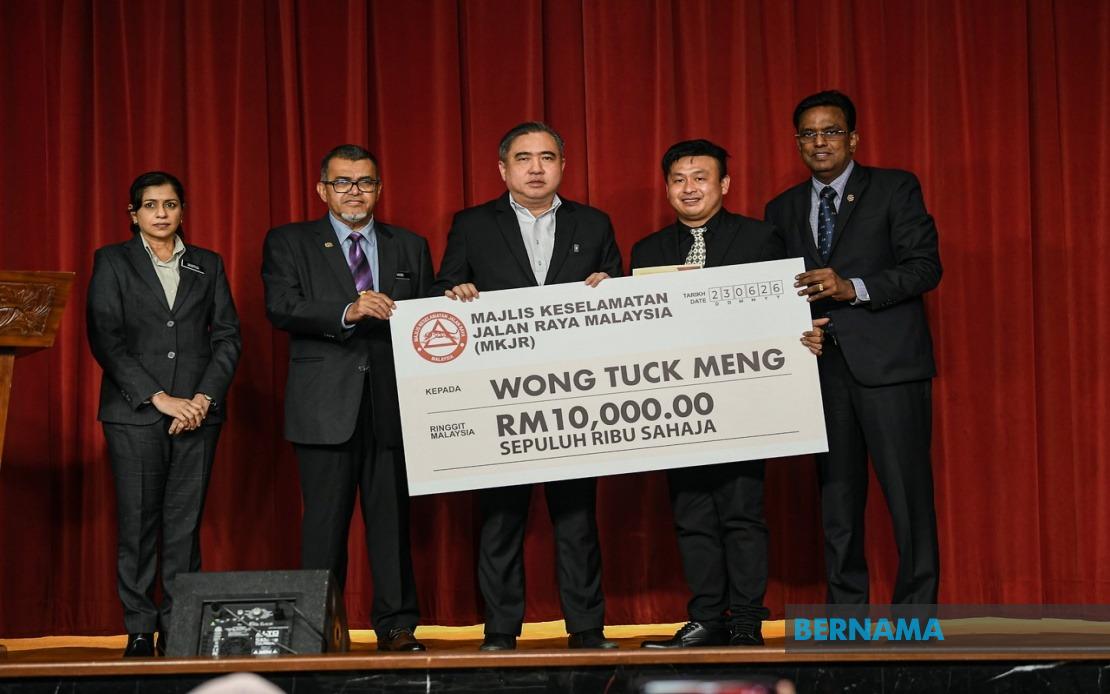
Wong Tak Ming, a lorry driver whose rapid response prevented a potential catastrophe on a highway near the Menora Tunnel in Perak, was honoured today by the Malaysian government with a Special Certificate of Appreciation and RM10,000 in recognition of his life-saving actions. The recognition ceremony took place at the Parliament building, marking official acknowledgment of an incident that unfolded on June 15 when a passenger coach lost control while descending a steep stretch of road.
Transport Minister Anthony Loke presented Wong with the award, which was funded by the Malaysian Road Safety Council (MKJR). Speaking at the formal appreciation event, Loke praised Wong as an exemplary individual whose courageous intervention averted what could easily have become a fatal collision involving the 21 passengers aboard the express bus. The minister emphasised that Wong's actions came despite considerable personal risk, underscoring the selfless nature of his response during those critical moments on the highway.
The sequence of events that led to the award unfolded when the express coach, which was travelling from Kedah toward Kuala Lumpur, encountered a mechanical failure while navigating the downhill section near the Menora Tunnel. As the bus lost traction and began careening out of control, Wong demonstrated exceptional presence of mind. Rather than attempting to manoeuvre away from the approaching vehicle, he strategically positioned his lorry to make contact with the rear of the bus, effectively using his heavier vehicle as a braking mechanism to reduce its dangerous velocity. He then steered both vehicles carefully toward the guardrail, ultimately bringing both to a controlled halt and preventing the catastrophic collision that might have resulted in multiple fatalities.
When asked about his decision-making during the incident, Wong downplayed his own heroism, attributing his actions to instinctive human concern rather than calculated bravery. He explained that his immediate priority was to prevent loss of life and to gain sufficient time for other motorists ahead to vacate the hazardous zone. Wong noted that the considerable distance between his lorry and the approaching bus provided him with a precious window to activate his horn, alerting vehicles further up the road to the emergency situation unfolding behind them. This additional warning system potentially prevented secondary collisions that could have compounded the tragedy.
The incident gained significant traction on social media platforms, with video footage of the dramatic intervention circulating widely across digital networks. Public response to Wong's actions was overwhelmingly positive, with countless commenters praising his quick reflexes, courage, and level-headedness in a situation that demanded split-second decision-making. The viral nature of the incident ensured that Wong's heroism received public recognition long before the formal government acknowledgment arrived, creating a groundswell of appreciation that ultimately influenced the decision to award him official honours.
Parliament formally recognised Wong's contributions to road safety and public welfare during proceedings surrounding the tabling of the Road Transport (Amendment) Bill 2025 for its second reading. Deputy Speaker Datuk Dr Ramli Mohd Nor conveyed the gratitude of the Dewan Rakyat, representing the formal expression of the nation's appreciation for Wong's selfless intervention. This parliamentary recognition reflects growing governmental awareness of the critical importance of individual citizens' actions in maintaining road safety standards across Malaysian highways.
The incident near the Menora Tunnel highlights persistent challenges surrounding vehicle safety on Malaysia's highway network, particularly on steep downhill sections where technical failures can rapidly escalate into life-threatening emergencies. Express coach operations, which ferry thousands of passengers daily across the country, represent a significant public transport artery. When mechanical failures occur on these routes, the consequences can be catastrophic given the large number of people aboard and the high speeds typically involved. Wong's intervention underscores how individual vigilance and quick thinking can mitigate risks that formal safety systems might fail to prevent.
The award of RM10,000, while modest in monetary terms, carries substantial symbolic weight in recognising contributions to public safety that transcend financial calculation. For Wong, the recognition validates a decision made in milliseconds under extraordinary pressure—a choice that prioritised the lives of 21 strangers over his own security. The media coverage and parliamentary acknowledgment extend this recognition far beyond monetary value, elevating Wong's actions as a model for the kind of civic responsibility and human compassion that societies depend upon during emergencies.
For Malaysian motorists and transportation sector stakeholders, Wong's example raises important questions about preparedness and responsibility on congested highways. While express coaches remain essential for intercity connectivity, incidents like the June 15 event demonstrate the critical importance of rigorous maintenance protocols, driver training in emergency procedures, and infrastructure design that accommodates safe deceleration. Wong's ability to respond effectively depended partly on fortunate timing and positioning, factors that cannot be relied upon in every potential emergency. Better preventative measures and emergency response systems remain necessary complements to individual heroism.
The recognition ceremony represents a rare moment in which Malaysian public institutions formally celebrate the kind of spontaneous, risk-bearing altruism that typically goes unrecognised. By honouring Wong publicly and awarding him through both monetary and ceremonial means, the government signals to Malaysian society that such actions are valued and worthy of emulation. In a nation where road safety remains a persistent challenge, with annual fatalities continuing at troubling levels, creating visible recognition of those who prevent tragedies may serve as an important cultural reinforcement of safety consciousness and community responsibility.

