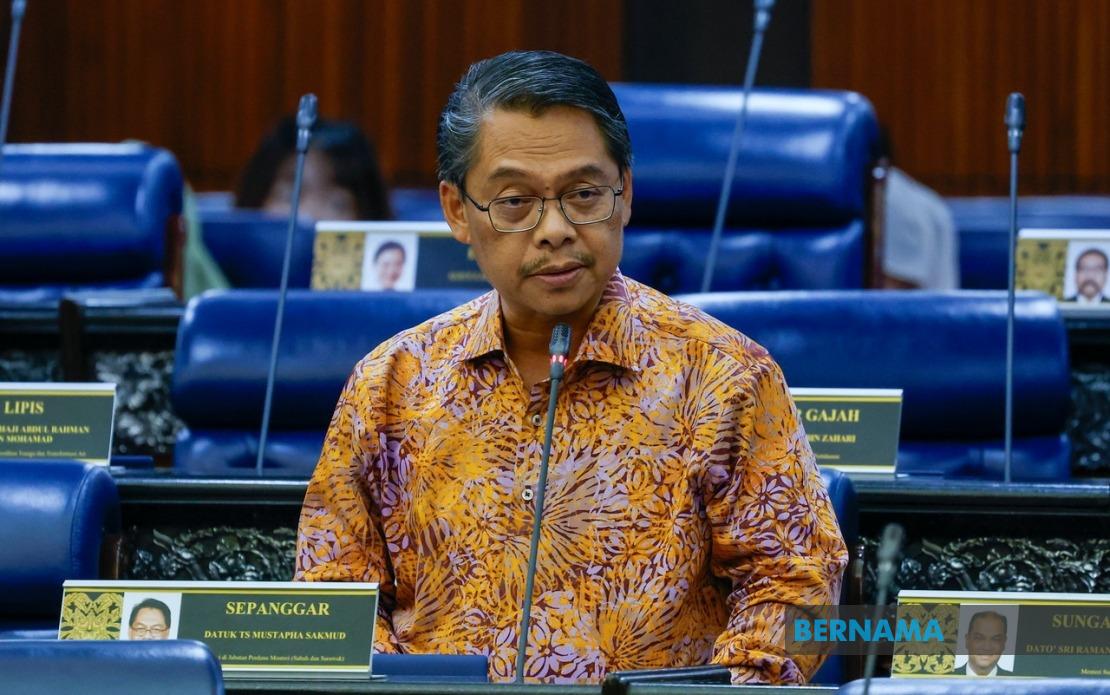
Malaysia's longstanding Malaysia Agreement 1963 (MA63) negotiations have advanced meaningfully, with nearly half of the disputed matters now formally settled, according to Datuk Mustapha Sakmud, the Minister in the Prime Minister's Department overseeing Sabah and Sarawak affairs. During parliamentary question time this week, Mustapha revealed that 13 out of 29 contentious issues under the official negotiation framework have achieved complete resolution following technical committee deliberations held in early March. This milestone reflects sustained engagement between federal authorities and the two East Malaysian states, though substantially more work remains on the remaining 16 points of contention.
Beyond the fully resolved matters, five additional issues have crossed an important threshold into partial or interim settlement status. These intermediate breakthroughs represent a pragmatic approach where complete agreement remains elusive but sufficient common ground has emerged to allow preliminary implementation or further structured discussions. The interim resolutions involve complex institutional and administrative matters that typically require phased approaches rather than immediate full execution. Among these partially settled items are questions concerning the expansion of state-level public service appointments under Article 112 of the Federal Constitution, an issue historically sensitive given the constitutional guarantees extended to Sabah and Sarawak at independence.
Health and education delivery in the two states constitute another pair of interim matters under negotiation, areas where federal and state competencies frequently overlap and occasionally conflict. The Borneonisation of federal public service positions in Sabah and Sarawak—essentially ensuring that federal government roles in these states are predominantly filled by East Malaysian citizens—forms the fourth interim category. This principle, while established, has required ongoing calibration to address recruitment bottlenecks and capacity constraints that federal agencies have periodically cited. The secretariat function, discharged by the Sabah and Sarawak Affairs Division under Mustapha's purview, continues systematic monitoring of all interim and outstanding matters in close coordination with relevant stakeholders across federal and state governments.
The eleven remaining unresolved matters remain actively monitored and constitute the focal point of ongoing negotiations. These outstanding issues encompass some of the thorniest constitutional and administrative questions inherent to Malaysia's federalist structure, particularly the balance between state autonomy and national uniformity. The negotiation process itself, now operating through established technical committees and regular engagement platforms, represents a marked improvement over earlier decades when MA63 implementation stalled amid political tensions and institutional inertia. Both Sabah and Sarawak administrations have invested considerable political capital in reviving these talks, viewing resolution as essential to cementing the federal compact and addressing accumulated grievances.
A particularly contentious issue receiving parliamentary attention concerns the call to increase parliamentary representation for Sabah and Sarawak to achieve a 35 percent quota within the Dewan Rakyat. This matter carries profound implications for electoral politics nationwide, as expanding East Malaysian seats would geometrically alter the balance of power in Parliament and reshape coalition mathematics. Mustapha explained that this demand remains unresolved and continues under discussion, a diplomatic formulation acknowledging genuine differences in position without foreclosing future compromise. The constitutional and procedural obstacles surrounding such redistribution are formidable. Electoral boundary adjustments can only proceed through the Election Commission following the expiration of an eight-year redistricting cycle, a mechanism designed to ensure stability but which simultaneously frustrates rapid changes.
More fundamentally, altering Dewan Rakyat composition requires constitutional amendment under Article 46 of the Federal Constitution, a process demanding two-thirds parliamentary majority—a threshold that has proven difficult to achieve even for less contentious measures. The Election Commission's mandate to oversee redistricting derives from the 13th Schedule and Article 113, legal provisions that circumscribe executive flexibility in this domain. These layered constitutional constraints mean that even if political consensus emerged around expanding East Malaysian representation, the mechanics of implementation would consume considerable time and require substantial political capital. For opposition members and civil society advocates who prioritise MA63 implementation, the absence of movement on parliamentary seats signals either lack of federal commitment or genuine institutional complexity—interpretations that diverge sharply along partisan lines.
The broader context for MA63 negotiations extends beyond technical administrative matters into questions of constitutional federalism and the original implicit bargain struck at independence. Sabah and Sarawak, while joining the federal arrangement in 1963, retained distinctive constitutional status and safeguards that set them apart from peninsular states. These provisions—ranging from immigration controls to religious administration to educational autonomy—were intended to preserve East Malaysian particularity within the wider federation. Successive federal governments have occasionally brushed against these guarantees, typically through bureaucratic action rather than overt constitutional challenge, generating accumulated resentments that the MA63 talks implicitly seek to address.
The negotiating framework itself represents a significant institutional innovation, formalising what might otherwise remain ad-hoc grievance management into systematic deliberation with defined outcomes and measurable progress. The March 2 technical committee meeting that generated these interim and resolved categories employed methodical assessment of each disputed matter, determining feasibility, constitutional compatibility, and implementation timeline. This structured approach contrasts with earlier periods when MA63 issues surfaced primarily through electoral cycles or during coalition negotiations, often treated as bargaining chips rather than substantive constitutional questions meriting genuine resolution.
For Malaysian readers and especially East Malaysian observers, the accumulating resolutions carry practical significance. Resolving health and education questions affects service delivery and professional mobility. Borneonisation progress influences employment prospects for local professionals and institutional capacity building. State service expansion determinations shape the fiscal relationship between federal and state treasuries. Collectively, these matters touch everyday governance in ways that abstract constitutional discussions often obscure. Yet the parliamentary seats question transcends such incremental technical progress, instead representing a demand for fundamental rebalancing of federal political structure—a fundamentally different category of claim with much broader implications for national politics.
The minister's carefully calibrated parliamentary responses reveal genuine complexity rather than mere diplomatic evasion. The distinction between fully resolved, interim, outstanding, and unresolved categories reflects authentic negotiation dynamics where some matters yield straightforwardly to technical solution while others involve deeper political choices about power distribution and constitutional amendment. Progress on thirteen matters demonstrates negotiating capacity and good faith engagement. Yet the persistence of eleven outstanding matters and the insolubility of parliamentary representation questions under current rules remind observers that institutional architecture sometimes constrains even well-intentioned political settlement. Moving forward, further MA63 progress will likely depend upon whether federal and state negotiators can frame remaining outstanding matters as technical challenges amenable to creative institutional solutions rather than zero-sum constitutional confrontations.

