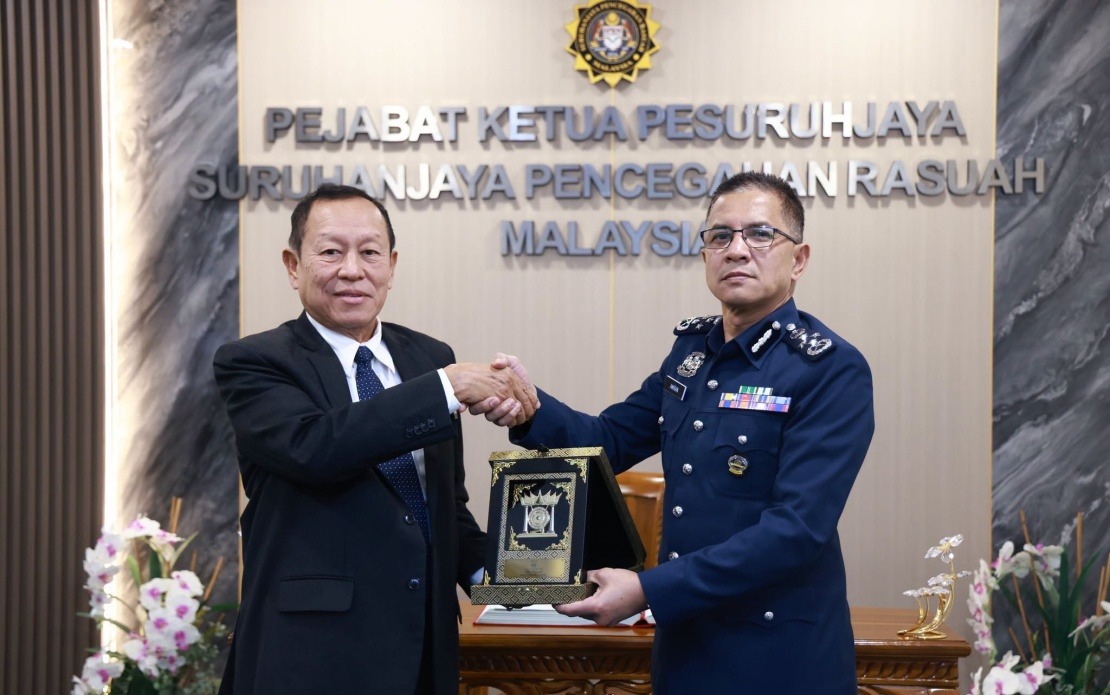
The Malaysian Anti-Corruption Commission (MACC) and the Royal Malaysian Customs Department (JKDM) are moving forward with plans to establish a specialised task force aimed at tightening enforcement operations and improving tax collection efficiency at the country's critical port facilities. The proposal emerged from discussions held at MACC headquarters in Putrajaya on July 15, during which JKDM director-general Datuk Amran Ahmad paid a courtesy visit to the anti-corruption body. This collaborative initiative reflects growing institutional recognition that complex border crimes require coordinated responses beyond the capacity of individual agencies operating in isolation.
MACC chief commissioner Datuk Seri Abd Halim Aman characterised the meeting as a strategic platform for addressing mutual challenges that both organisations confront in their enforcement mandates. The dialogue encompassed a wide range of operational difficulties, from streamlining customs inspection procedures to navigating bureaucratic obstacles that can impede rapid responses to violations. By pooling intelligence and operational frameworks, the two agencies aim to create a more seamless enforcement architecture that can respond swiftly to emerging smuggling tactics and revenue leakage at ports nationwide. The one-hour discussion proved sufficiently substantive to justify continued institutional engagement, with both leaders recognising that integrity in customs administration directly impacts Malaysia's revenue base and competitive standing in global trade.
Containerised cargo presents particular vulnerability to illicit activity, and JKDM has identified systematic leakages within container management protocols under its port supervision. These gaps in oversight create opportunities for organised syndicates to move contraband goods or undeclared merchandise through Malaysia's supply chains. The proposed task force would focus partly on mapping these vulnerabilities and implementing preventive measures that make compliance easier and violation riskier. Enhanced coordination would enable real-time information sharing when suspicious shipments are flagged, reducing the window during which criminally-inclined operators might exploit procedural delays or inter-agency communication gaps.
Syndicates employing increasingly sophisticated evasion methods present a mounting challenge for customs authorities. JKDM has documented deliberate misrepresentation of cargo value, falsification of shipping documentation, and creative manipulation of tariff classifications to reduce assessed duties. These are not casual oversights but calculated schemes designed to systematically defraud the government of legitimate revenue. By bringing MACC's corruption investigation expertise into dialogue with JKDM's technical customs knowledge, the task force can develop counter-strategies grounded in understanding how criminal networks exploit weaknesses in existing procedures and documentation controls.
Cash smuggling constitutes another significant revenue leak that has attracted serious official attention. Datuk Amran highlighted a particular modus operandi in which individuals declare cash entering Malaysia at substantially lower values than the amounts actually brought into the country. This practice not only evades potential taxation but also creates money laundering risks and undermines the integrity of Malaysia's financial reporting systems. Such schemes often involve multiple staged transactions and collusion among transportation and customs intermediaries, making detection and prosecution difficult without sustained inter-agency coordination and intelligence sharing.
The integrity component of this partnership carries significance beyond immediate enforcement outcomes. JKDM has explicitly welcomed MACC's capacity to promote anti-corruption cultural change among customs personnel themselves. Institutional integrity relies partly on robust external oversight but also fundamentally on values internalisation among frontline staff. When customs officers understand that both MACC and their own management take corruption prevention seriously, and when they receive regular anti-corruption education, they become less susceptible to bribery approaches from smugglers or corrupt officials. The presence of MACC Integrity branch head Azian Umar and MACC Investigation Division senior director Datuk Mohd Hafaz Nazar at the meeting underscores this dual focus on systemic reform and personnel development.
For Malaysian stakeholders, the policy implications are substantive. Businesses engaged in legitimate trade benefit from more transparent and consistent customs procedures. Exporters and importers operating within legal frameworks will experience smoother clearance processes once corruption-induced delays are eliminated. Conversely, criminal networks and corrupt officials face substantially elevated detection and enforcement risk. The reputational cost of association with smuggling syndicates increases when agencies demonstrate sustained capacity to penetrate these networks and prosecute participants at multiple levels.
Regionally, Malaysia's approach mirrors international best practice in port security governance. Singapore, Thailand, and Indonesia have similarly recognised that customs enforcement and anti-corruption efforts operate more effectively when formally integrated rather than compartmentalised. The Association of Southeast Asian Nations context includes shared vulnerabilities to regional smuggling networks that exploit jurisdictional gaps. When Malaysia strengthens internal coordination, it also contributes to regional capacity by making transnational smuggling routes less reliably profitable, thereby reducing incentives for criminal syndicates to operate in Southeast Asia more broadly.
The task force model also reflects lessons learned from previous attempts at inter-agency cooperation. Successful enforcement partnerships require clear operational protocols, regular communication mechanisms, and aligned performance metrics. Simply convening meetings without establishing concrete working procedures rarely produces sustained results. The fact that senior leadership from both MACC and JKDM are personally invested in this initiative suggests institutional commitment to moving beyond dialogue toward institutionalised collaboration with dedicated personnel and resources.
Looking forward, the effectiveness of this task force will depend on several factors: adequate budget allocation, clear delineation of responsibilities between agencies, training programmes that familiarise MACC and JKDM personnel with each other's operational methods, and explicit protection for whistleblowers and honest officials who identify corruption among colleagues. The task force will likely benefit from modern technology integration, including data analytics tools that identify suspicious transaction patterns across the vast volumes of port traffic.

