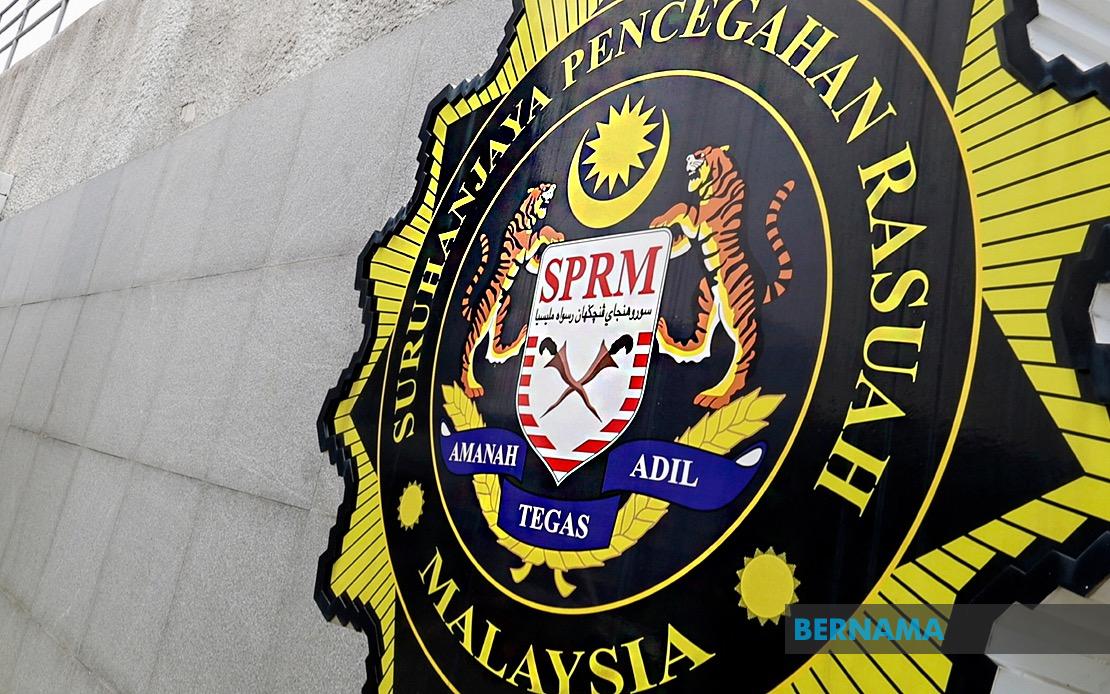
The Malaysian Anti-Corruption Commission has mounted a significant crackdown on procurement fraud, detaining thirteen individuals on suspicion of operating an organised bribery racket centred on a government agency in northern Malaysia. The operation, which concluded with the arrests on the evening of June 16, targets what investigators describe as a coordinated scheme to manipulate the allocation of public contracts through systematic corruption involving at least RM2.5 million in illicit payments.
Among those held are a sitting director and a former director of the northern agency, suggesting the scheme may have been operating across administrative transitions. The detained group comprises eight government employees and five members of the private sector, including business owners and contractors. Their ages span from the early thirties to the sixties, indicating involvement across multiple career stages and organisational levels. The MACC's Strategic Communications Division revealed that the alleged bribes were channelled to secure preferential treatment for companies affiliated with what officials characterise as a procurement cartel, allowing these firms to obtain direct-award and quotation-based government contracts without genuine competitive processes.
The investigation timeline reveals a concerning picture of sustained institutional corruption. Preliminary findings indicate the scheme operated continuously between 2024 and 2026, suggesting it may represent only a portion of a longer-running arrangement. Contractors allegedly faced systematic demands to surrender between ten and fifteen percent of contract values as bribes, with these payments funnelled through intermediaries directly to the agency's senior officials. This structure—using middlemen to obscure the chain of payments—represents a typical method employed by established corruption networks seeking to maintain operational security.
The enforcement action itself demonstrates the MACC's expanded investigative capacity. Operation Drain, launched simultaneously across Kuala Lumpur, Selangor, Pahang, and Perak, involved coordinated raids on twenty-five locations spanning homes, corporate offices, and government facilities. The geographical spread reflects the commission's assessment that the network extended beyond the primary affected agency, potentially implicating suppliers and officials across multiple jurisdictions. The raid's scale and coordination suggest months of preliminary investigation and intelligence gathering before the arrests.
The material seizures paint a telling picture of corruption's financial consequences. Authorities recovered approximately RM1.5 million in cash from various locations, alongside luxury watches, vehicles, motorcycles, and jewellery valued at around RM1 million. Such acquisitions often serve as tangible indicators of unexplained wealth accumulation among government servants, triggering deeper scrutiny into income sources. For Malaysian taxpayers, these seized assets represent stolen public resources that would otherwise have funded legitimate government operations or service provision.
The detention arrangements underscore the investigation's perceived seriousness. A magistrate approved remand periods of between two and five days depending on individual suspects. Three detainees—specifically two civil servants and one company director—are held for the shorter period ending June 19, while the remaining ten face extended custody until June 20. These differentiated timelines typically reflect prosecutors' assessment of flight risk, evidence-tampering potential, and the relative centrality of each suspect to the alleged conspiracy.
The legal framework governing the investigation carries significant weight. Authorities are pursuing charges under Section 17(a) of the MACC Act 2009, which addresses solicitation and acceptance of gratification in exchange for official favours. This provision carries substantial penalties, including imprisonment and asset forfeiture, making it among the commission's most powerful prosecutorial tools. The specific statute selection suggests investigators have gathered evidence of explicit quid pro quo arrangements rather than merely circumstantial indicators of wrongdoing.
This case illuminates persistent vulnerabilities within Malaysia's procurement system. Direct-award and quotation-based contracts, while sometimes administratively necessary for urgent or specialised acquisitions, create opportunities for favour-trading when oversight mechanisms prove inadequate. The scheme's longevity—operating across at least two years—raises questions about internal controls within the affected agency and across the broader northern Malaysian government structure. Why did procurement irregularities escape detection through routine internal audits or supervisory reviews? The answers matter not merely for accountability in this case, but for systemic reform preventing recurrence.
The operation also reflects broader regional governance concerns. Southeast Asia faces persistent challenges with institutional corruption, particularly within procurement systems where substantial public funds concentrate and officials exercise discretionary authority. Malaysia's willingness to pursue high-profile investigations involving serving government directors demonstrates commitment to accountability, yet the prevalence of such schemes suggests preventive measures require strengthening. Other ASEAN nations grappling with similar challenges may find Malaysia's investigative methodologies and enforcement strategies instructive.
For Malaysian businesses operating in government contracting, the investigation carries immediate implications. Legitimate companies face competitive disadvantage when rivals secure projects through corruption rather than merit-based evaluation. The MACC's action theoretically restores competitive fairness, though enforcement credibility depends on consistent prosecution and meaningful penalties. Companies engaging with government procurement should anticipate heightened scrutiny of contract awards, payment flows, and intermediary relationships as the anti-corruption commission intensifies oversight.
The investigation's trajectory remains fluid as interrogations progress and evidence collection continues. Investigators will likely pursue questions about the scope of the cartel's activities, whether additional agencies faced similar schemes, and whether the identified intermediaries facilitated corruption across other government sectors. The financial trail—particularly the RM2.5 million in identified bribes—will require forensic analysis to trace beneficiaries and identify any assets yet to be recovered. Asset recovery may ultimately prove as important as criminal convictions in demonstrating the scheme's material consequences.
Looking forward, this enforcement action represents both a tactical victory and a commentary on systemic vulnerabilities. While thirteen arrests disrupt one procurement cartel, the underlying conditions enabling such schemes—weak internal controls, inadequate competitive processes, and limited real-time oversight—likely persist elsewhere. Sustainable corruption reduction requires combining enforcement with institutional reform: mandatory competitive bidding procedures, real-time financial auditing, regular integrity assessments of procurement officials, and whistleblower protections encouraging internal reporting. The MACC's investigation provides an opportunity for comprehensive review of how Malaysian government agencies manage public contracting across the nation.