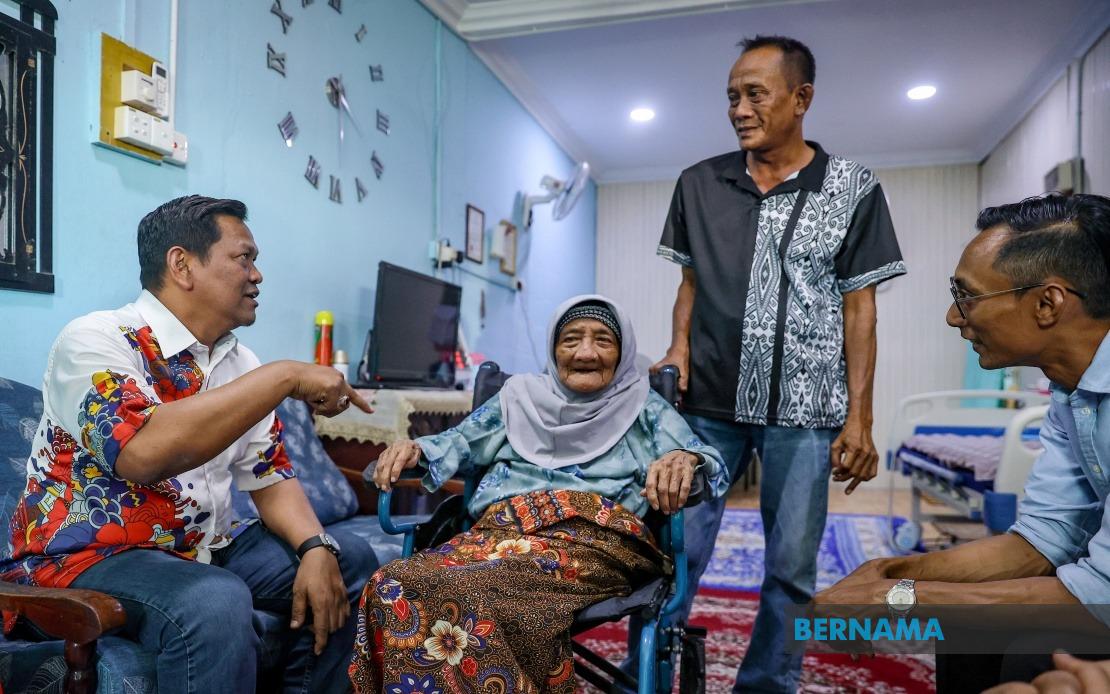
The MADANI administration has restated its resolve to sustain the Ziarah Kasih programme, a targeted initiative designed to provide hands-on support to disadvantaged communities across the country. At an outreach event in Mersing on June 23, officials underscored that this welfare mechanism remains central to the government's broader philosophy of placing citizen welfare at the heart of policy-making, reflecting the Malaysia MADANI vision that animates current governance priorities.
Abdullah Izhar Mohamed Yusof, political secretary to the Communications Minister, explained that the government channels resources through the Department of Information and Komuniti MADANI to identify and reach households confronting acute hardship. Rather than relying solely on bureaucratic applications or institutional intermediaries, this approach emphasises direct engagement with communities, allowing officials to assess needs on the ground and respond with appropriate material assistance. The model reflects a deliberate shift towards personalised service delivery in an era when many citizens feel disconnected from government machinery.
The Mersing visit illuminated how the programme operates in practice. Abdullah Izhar visited elderly residents managing severe health constraints, distributing financial assistance and medical equipment designed to enhance their daily functioning and reduce the strain on family caregivers. These encounters represent more than symbolic gestures; they demonstrate how targeted public investment can alleviate the cascading pressures faced by households where chronic illness or disability consumes savings and restricts earning capacity.
The situation of Hamdan Abd Latif, a 71-year-old bedridden resident, encapsulates the complex vulnerabilities that Ziarah Kasih aims to address. Following a fishing accident in 2011, Hamdan discovered he had a brain tumour requiring surgery. Although declared tumour-free post-operation, the underlying condition precipitated a gradual health decline culminating in a stroke triggered by a bathroom fall. His wife Meriam Abd Wahab, now 66, has become his full-time carer, abandoning her own income-generating activities including sewing work that previously supplemented household finances. For families like theirs, government assistance functions as a critical stabiliser, preventing financial collapse while preserving dignity.
Meriam's narrative reflects broader demographic pressures affecting Malaysian society. The transition from dual-income households to single-income arrangements, driven by caregiving obligations for ageing or chronically ill relatives, creates sudden and often irreversible financial stress. Healthcare costs, mobility aids, and the simple demands of sustaining a household with limited mobility compound the challenge. Without targeted interventions, such families face accelerating impoverishment, forcing impossible choices between medical care and basic necessities.
The experience of Zainon Ibrahim, a 91-year-old whose son Jamaluddin Ismail abandoned his supervisor role two years ago to provide full-time care, illustrates how dependency cascades through generations. Jamaluddin's decision to leave employment represents both a personal sacrifice and a rational family calculation that his mother's needs outweigh his earning potential. While siblings provide supplementary support, the primary caregiving burden falls heavily on one individual. Government assistance in such situations acknowledges that families cannot shoulder these obligations alone without institutional support, and that preserving elderly citizens' welfare depends on enabling adult children to prioritise caregiving without facing destitution.
The Ziarah Kasih approach aligns with Malaysia's evolving social safety net architecture. As the country's demographic profile ages and chronic disease prevalence rises, means-tested welfare programmes become increasingly vital for ensuring vulnerable populations maintain basic living standards. Southeast Asian nations generally spend considerably less on social protection than developed economies, creating pressure points where informal family systems strain under the weight of modern healthcare costs and urban living expenses. Malaysia's deliberate maintenance of programmes like Ziarah Kasih signals recognition that such investment constitutes essential infrastructure for social stability.
The identification mechanism through the Department of Information and Komuniti MADANI represents a meaningful distinction from purely centralised welfare administration. Ground-level officials develop intimate knowledge of community needs, enabling responsive allocation rather than rigid formulaic distribution. This decentralised intelligence network can identify households that might otherwise fall through bureaucratic cracks, particularly elderly individuals or persons with disabilities who lack capacity to navigate complex application procedures. For Malaysian policymakers, this model offers lessons in how government presence can be made more humanised and effective simultaneously.
The programme's emphasis on regularity suggests institutional embedding rather than ad-hoc charity. By committing to sustained implementation, the government signals that vulnerable citizens can anticipate reliable support rather than hoping for occasional interventions. This predictability matters enormously for household financial planning and psychological security. Families like Hamdan and Meriam's can factor some level of external support into their budgeting, reducing the paralyzing uncertainty that characterises poverty and illness.
For Malaysia and other upper-middle-income Southeast Asian nations navigating the transition toward ageing societies, Ziarah Kasih exemplifies how targeted welfare can function as both economic policy and social stabilisation tool. The programme recognises that economic growth alone does not automatically improve outcomes for vulnerable cohorts, and that deliberate redistributive mechanisms remain necessary. As healthcare costs escalate and family structures continue evolving, such initiatives acquire increasing importance for maintaining social cohesion and preventing the emergence of intergenerational poverty traps.
The government's reiteration of commitment to Ziarah Kasih comes amid broader conversations about Malaysia's welfare architecture and the adequacy of existing support systems for an ageing population. While the initiative cannot address all vulnerabilities or substitute for comprehensive healthcare reform and elderly care infrastructure, it represents a concrete acknowledgment that certain households require direct intervention. The recipients encountered in Mersing embodied this principle—their gratitude reflected not merely material relief but recognition that the state acknowledged their struggles and responded with tangible support, reinforcing bonds between government and citizens during periods of acute vulnerability.

