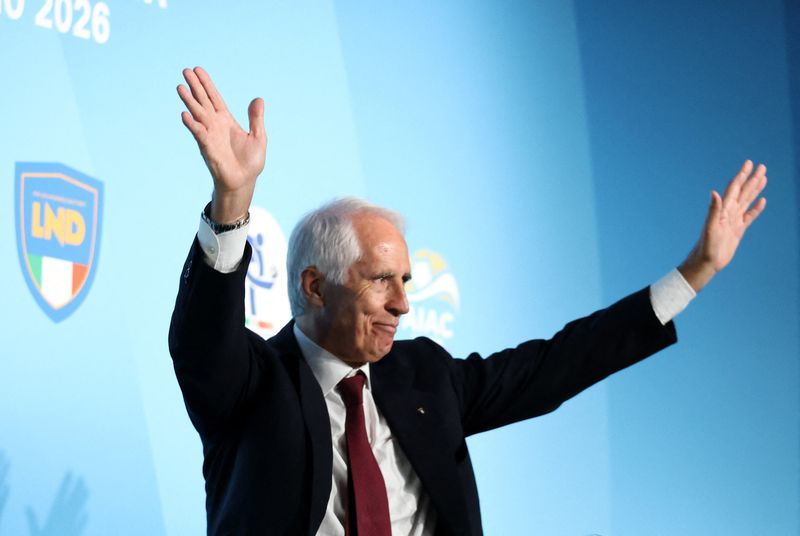
Giovanni Malago has assumed control of Italian football at perhaps its lowest point in four decades, taking the helm of the Italian Football Federation after the country's failure to reach a third consecutive World Cup sent shockwaves through the sporting establishment and sparked fury among supporters and political leaders alike. The 67-year-old businessman secured the federation presidency on Monday with 68.58 percent of the vote at an assembly in Rome, defeating rival Giancarlo Abete to replace Gabriele Gravina, who stepped down following April's devastating playoff elimination against Bosnia & Herzegovina.
Malago arrives in the role with a relatively recent track record of managing large-scale sporting institutions. He has just completed his tenure as chief executive of the organising committee for February's Milano Cortina Winter Olympics, an event that earned widespread acclaim for its efficient execution and smooth operational delivery. Before that appointment, he spent years leading the Italian National Olympic Committee, giving him deep experience navigating the political and administrative complexities of sporting organisations at the highest levels. A former futsal player himself, Malago brings both bureaucratic expertise and an understanding of athletic competition to a federation in crisis.
The scale of the challenge before him cannot be overstated. Italy's absence from the World Cup represents not merely a sporting disappointment but a national embarrassment for a country that has won the tournament four times and has historically ranked among the planet's elite football nations. The third consecutive failure to qualify—following missed tournaments in 2018 and 2022—has exposed systemic failures in youth development, tactical innovation, and overall strategic planning that have accumulated over years of neglect. The domestic football establishment has compounded this humiliation, with Italian clubs subsequently eliminated from European competitions, leaving the national game in its worst condition in generations.
Malago wasted no time articulating his vision for reform. In remarks following his election, he emphasised that the federation must transcend mere administrative function and become a transformative force within Italian society, given its position as the nation's largest sporting institution by reach and influence. He articulated a philosophy of treating the country's storied football heritage not as a source of comfortable nostalgia but as fuel for ambitious future ambitions. His statement that "our roots must not be a source of nostalgia or a burden; we must turn them into an incentive to look toward a new season" signals an intention to break with complacency and rebuild on the foundation of past achievement rather than resting upon it.
The immediate priorities confronting the new federation chief are both numerous and urgent. Foremost among these is the appointment of a new national team manager, a decision that will determine tactical direction and player selection for the foreseeable future. Following the resignation of Gennaro Gattuso in the aftermath of the Bosnia & Herzegovina defeat, the senior coaching position has remained vacant at a time when squad development and preparation are critical. Alongside this hiring, Malago must oversee a comprehensive restructuring of the youth academy system, an area where leading football nations have invested heavily in recent years but where Italy has fallen behind due to inadequate resources and outdated methodologies.
The federation also carries responsibility for co-hosting the 2032 European Championship alongside Turkey, a tournament that represents both an opportunity and a deadline. Successfully staging a major continental competition on home soil, combined with the prospect of fielding a competitive national team, could mark a turning point in Italian football's recovery. Conversely, another disappointing tournament performance in 2032 would signal that institutional change has failed to produce sporting results. Malago's timeline for reversing current trends is therefore compressed, with less than eight years to implement reforms and see them bear fruit in player performance.
Prior to his election, Malago had acknowledged the psychological weight of the responsibility. Speaking of the expectations surrounding his appointment, he noted both concern and clear-eyed awareness of what success would demand. His assertion that he is "not afraid but highly mindful of the responsibilities" recognises that the position carries genuine risk, with failure to deliver improvement in Italy's global ranking and tournament results likely to generate further demands for change. The federation itself contains figures and factions with differing visions for the future, making internal unity a prerequisite for external success.
The depth of Italy's football crisis extends beyond recent World Cup absences. Prominent former players, including legendary striker Roberto Baggio, have publicly warned that the national system for identifying and developing young talent has become fundamentally inadequate compared to structures operated by competing nations. This critique goes beyond temporary tactical failures or the bad fortune of playoff elimination; it identifies structural deficiency in the machinery through which talented young players are identified, trained, and integrated into elite football. Addressing these systemic problems requires not merely different personnel but potentially different processes, funding models, and philosophical approaches to player development.
Malago's election represents a decisive moment when Italian football leadership acknowledges that continuity is no longer viable. His predecessor Gravina, who led the federation since 2018, acknowledged before the assembly that he should have departed earlier, a tacit admission that his tenure extended beyond its useful point. The new president enters the role with no previous connection to specific football factions or entrenched interests within Italian football, potentially providing advantage in implementing wide-ranging reforms that might provoke resistance from those invested in existing arrangements.
The new federation chief has explicitly rejected the notion that he can achieve transformation through individual action, instead calling for comprehensive cooperation across the football establishment. His statement that "alone I can do nothing, together we can do everything" acknowledges both his own limitations and the necessity of broad institutional buy-in for meaningful reform. Success will require alignment between national team management, club owners, academy directors, and federation administrators—groups that do not always share identical objectives. Building consensus around priorities, budgets, and timelines represents perhaps Malago's most significant non-sporting challenge.
For Malaysian football observers and Southeast Asian sports enthusiasts, Italy's institutional crisis carries instructive lessons. Nations aspiring to football prominence must invest consistently in youth systems, maintain philosophical coherence across coaching changes, and avoid complacency that develops following historical success. Italy's fall from regular World Cup participation to three consecutive absences did not result from sudden collapse but accumulated failure across multiple institutional domains—a cautionary tale for regional federations seeking to build sustainable competitive advantage. Malago's mandate to rebuild Italian football extends beyond restoring a single national team; it represents an attempt to reconstruct the entire ecosystem supporting elite-level football in a major European nation.

