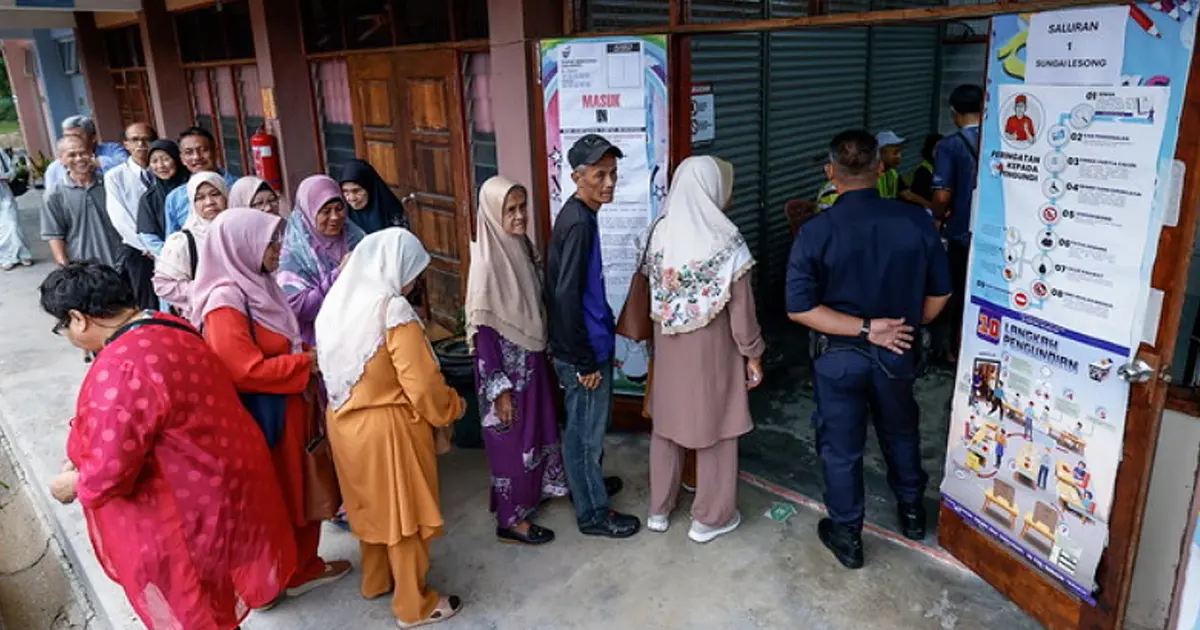
Political parties vying for Malay support may face an unexpected challenge: the gradual wearing down of voter interest through repeated debates on sensitive communal and identity-based issues. Awang Azman Pawi of Universiti Malaya cautions that sustained emphasis on 3R matters—a reference to contentious topics that dominate political discourse—risks inducing what he terms "emotional fatigue" among the electorate, a phenomenon that could reshape voting behaviour in ways parties have not fully anticipated.
The concept of emotional fatigue in politics reflects a genuine psychological phenomenon where voters become exhausted by constant exposure to divisive messaging and identity-focused campaigns. Rather than deepening commitment to particular narratives, repetitive engagement with emotionally charged themes can paradoxically lead to disengagement, apathy, or sudden swings toward alternative priorities. For Malaysia's political landscape, where identity politics has historically proven powerful, this observation carries significant weight. If Malay voters begin to experience fatigue from endless cycles of the same debates, the traditional gravitational pull of these issues may weaken considerably.
Azman's analysis suggests that electoral success increasingly depends less on who shouts loudest about identity-related grievances and more on which parties demonstrate concrete capacity to govern effectively. This pivot away from pure sentiment-driven politics would represent a meaningful shift in how Malaysian politics operates. Voters, particularly those in the Malay-Muslim demographic, are beginning to expect that their political representatives address bread-and-butter concerns with the same passion and focus applied to cultural and religious matters. The proliferation of 3R rhetoric without corresponding solutions to everyday challenges leaves room for competitor parties to capture dissatisfied voters by offering practical alternatives.
The rising cost of living stands as perhaps the most glaring example of governance issues that parties cannot afford to neglect. Malay households, like their counterparts across Malaysia, face mounting pressure from inflation affecting food prices, fuel costs, and housing expenses. When political discourse remains trapped in repetitive debates about identity while supermarket prices climb and household budgets tighten, the disconnect becomes obvious to ordinary voters. They begin to question whether their chosen leaders are genuinely invested in improving their material circumstances or merely using familiar rhetoric to maintain political positions. This scepticism, once planted, tends to grow and can translate into electoral punishment.
The analyst's warning also carries implications for coalition-building and party strategy. If emotional fatigue sets in among Malay voters, parties cannot rely on mobilising their traditional base through identity-based appeals alone. Instead, they must compete on substantive policy grounds: which coalition offers clearer pathways to job creation, affordable housing, better education, and improved healthcare? This competition on fundamentals would represent a healthier political environment but would require parties to shift resources from rhetoric to actual policy development and implementation capacity. Many established parties may lack either the expertise or the inclination to make such transitions smoothly.
The timing of this observation is particularly relevant given Malaysia's current political trajectory. Several coalitions are jockeying for advantage, each believing that dominance among Malay-Muslim voters remains the key to federal power. Yet if this demographic's patience with endless identity discourse is genuinely wearing thin, the assumptions underpinning such strategies may prove outdated. Parties that fail to recognise this shift will continue investing heavily in messaging that generates diminishing returns while remaining vulnerable to competitors who reframe electoral competition around economic performance and governance capability.
Regional comparisons offer useful context for understanding this phenomenon. Across Southeast Asia, voters in other Muslim-majority nations have shown willingness to abandon long-standing political alliances when those parties fail to deliver on economic expectations. The lesson is not that identity politics disappears—it rarely does in plural societies—but rather that it cannot indefinitely substitute for demonstrable progress on material living standards. Malaysian political parties would be wise to internalise this pattern as they plan their campaigns and governance priorities.
For Malay voters themselves, the potential emergence of emotional fatigue from 3R debates represents an opportunity to reclaim political space focused on their genuine needs and aspirations. Beyond identity and communal concerns lies an expansive agenda encompassing economic mobility, educational quality, environmental sustainability, and institutional accountability. When voters experience exhaustion from one dimension of politics, they often become more receptive to alternative frameworks that address neglected areas. Smart parties will recognise this opening and pivot accordingly.
The sustainability of Malaysia's political system may ultimately depend on how successfully parties navigate this transition. Awang Azman Pawi's analysis suggests that the current equilibrium—where identity politics serves as the primary driver of electoral competition—cannot persist indefinitely without adaptation. Parties that continue mechanically deploying 3R rhetoric while neglecting economic governance will find themselves increasingly out of step with voter preferences. Conversely, coalitions that integrate serious economic policy platforms with thoughtful engagement of cultural and religious concerns may discover more durable and resilient support bases. The question facing Malaysian politics is whether parties will recognise and respond to this emerging voter sentiment before electoral consequences force uncomfortable reckonings.

