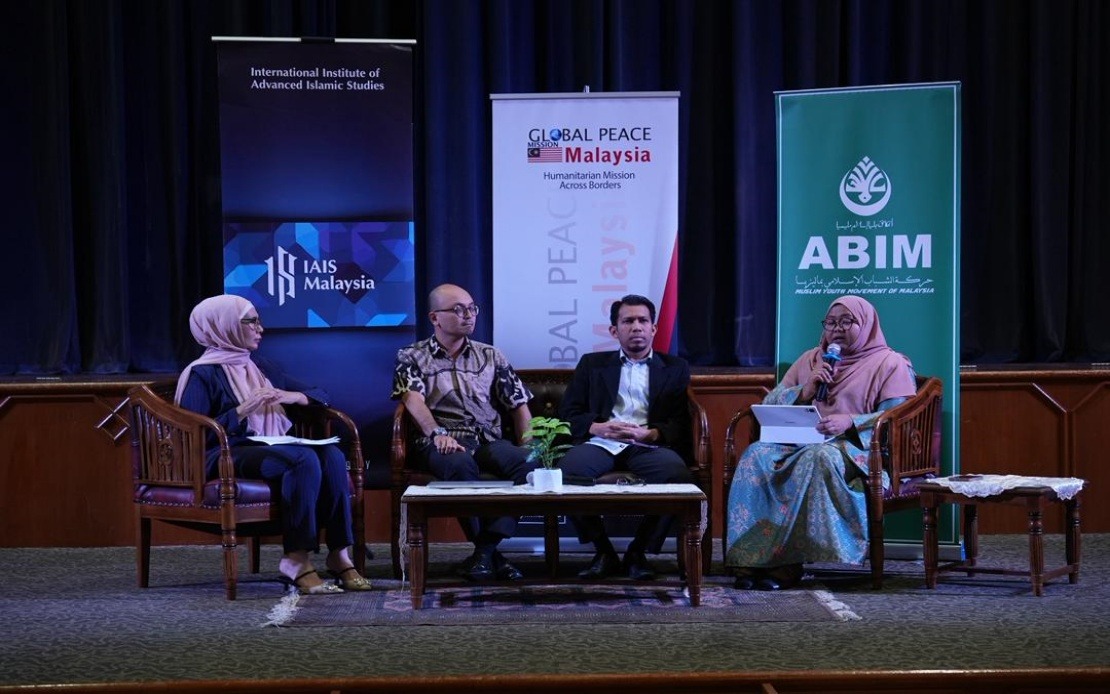
Civil society leaders, academic experts and humanitarian advocates gathered in Kuala Lumpur on June 20 to present ten resolutions demanding comprehensive government action on refugee management, seeking to shift public discourse away from xenophobic narratives that have intensified in recent years. The Kuala Lumpur: Solidarity with Refugees Conference brought together representatives from non-governmental organisations, universities, international bodies and community groups at the International Institute of Advanced Islamic Studies (IAIS) Malaysia, signalling a coordinated effort by Malaysia's civil sector to influence policy development on a subject that remains politically sensitive and often contested.
The resolutions emerged from sustained engagement with refugee communities on the ground, according to Ahmad Fahmi Mohd Samsudin, president of Angkatan Belia Islam Malaysia (ABIM), one of the conference organisers. He emphasised that the ten-point framework reflects authentic experiences documented by NGOs working directly with displaced populations rather than theoretical prescriptions. These organisations have accumulated substantial practical knowledge managing humanitarian crises involving Vietnamese, Syrian, Bosnian and Palestinian refugees, experience that Ahmad Fahmi argues should inform more sophisticated policy responses than currently prevail in public debate.
A critical dimension of the resolutions addresses the gap between Malaysia's de facto refugee hosting role and its formal legal position. Although Malaysia has not ratified the 1951 Refugee Convention, the country hosts one of Southeast Asia's largest refugee populations, placing it in an awkward institutional position that hampers systematic data collection and protection mechanisms. The conference participants called for strengthened collaboration with the United Nations High Commissioner for Refugees (UNHCR) to establish more rigorous registration and documentation systems, recognising that orderly management serves both humanitarian and security objectives—a framing designed to appeal to government officials concerned about border integrity.
Among the substantive resolutions was an unequivocal rejection of hatred, discrimination and dehumanisation targeting refugees and asylum seekers, coupled with a sophisticated acknowledgment that legitimate public anxieties around security, law enforcement and community stability warrant serious engagement rather than dismissal. This dual framing attempts to bridge the polarised discourse that has characterised Malaysia's refugee debate, where humanitarian advocates and security-focused officials have largely talked past one another. By validating both dimensions of concern, the conference sought common ground that might facilitate productive dialogue with policymakers.
The resolutions further emphasised the need for robust public education and media literacy initiatives to counter xenophobic narratives that have proliferated on social platforms. Conference participants recognised that misinformation and hate speech targeting refugees risk normalising prejudice that could subsequently extend to other vulnerable groups, a concern reflecting Malaysia's complex religious and ethnic composition. This forward-looking analysis suggests that how society treats refugee populations signals broader commitments to pluralism and tolerance that extend well beyond displacement issues alone.
Of particular significance was the call for establishing formal mechanisms to support NGOs, activists and humanitarian workers facing online harassment, defamation campaigns and coordinated disinformation efforts. Such protective infrastructure has become essential in Malaysia's digital environment, where organised networks have increasingly targeted civil society actors working on refugee issues. By documenting these attacks and providing institutional support, the proposed mechanisms would create accountability while strengthening the capacity of grassroots organisations to continue their advocacy work without fear of personal or professional repercussion.
Ahmad Fahmi indicated that the conference organisers—Global Peace Mission (GPM) Malaysia, ABIM and IAIS Malaysia—plan to circulate the resolutions among Members of Parliament and other key stakeholders to catalyse further discussion. More ambitiously, he signalled intentions to engage directly with the Home Ministry and the National Security Council (MKN), institutions that have traditionally exercised considerable authority over refugee policy without systematic consultation with civil society perspectives. This approach suggests a strategic shift toward institutionalising dialogue channels that might produce more evidence-based and humanised policy frameworks.
The timing of this conference, coinciding with World Refugee Day on June 20, underscores a deliberate effort to reposition refugee issues within global human rights discourse rather than purely as security or social welfare matters. By anchoring the resolutions to an international observance, organisers sought to elevate Malaysian discussions to regional and global standards of refugee protection while grounding advocacy in local realities and constraints. This dual positioning reflects sophistication in recognising that purely domestic arguments have failed to shift policy, while purely international rhetoric often appears disconnected from Southeast Asian contexts.
Beyond the formal resolutions, the conference represented a notable attempt to combat what organisers characterised as a deteriorating public narrative around refugee populations. Ahmad Fahmi's concern that anti-refugee sentiment, if unaddressed, could metastasise into broader social prejudice reflects anxiety among civil society leaders that Malaysia's historically pragmatic approach to humanitarian crises is eroding. The conference thus functioned partly as a counter-narrative intervention, seeking to remind policymakers and public audiences that Malaysia's stability and moral standing depend partly on how it treats those most vulnerable to exploitation and marginalisation.
The ten resolutions collectively construct an argument for policy sophistication that acknowledges both humanitarian imperatives and legitimate governance concerns. Rather than advocating for Malaysia to ratify the Refugee Convention—a position that would face insurmountable political resistance—the resolutions seek incremental improvements in data systems, inter-agency coordination, public understanding and protection mechanisms. This calibrated approach reflects realistic assessment of Malaysia's current political economy while maintaining principled commitment to refugee dignity and rights.
Looking forward, the resolutions and accompanying declaration will now enter Malaysian policy discourse at multiple levels, from parliamentary committees to international forums. Whether the government heeds these recommendations will indicate whether Malaysia's civil society has successfully reframed refugee issues as integral to national development and stability rather than purely as humanitarian charity or security threat. The conference thus marks a beginning rather than an endpoint in what promises to be sustained advocacy over coming years.

