The Ministry of Housing and Local Government (KPKT) has committed RM200 million to a four-year maintenance programme for non-Muslim places of worship across Malaysia starting in 2023, signalling the government's undertaking to extend development benefits beyond any single religious or ethnic group. The Non-Muslim Houses of Worship (RIBI) Maintenance Initiative encompasses churches, gurdwaras, Hindu temples, Buddhist temples and various community associations, framed by the ministry as concrete evidence of equitable governance under the MADANI administration.
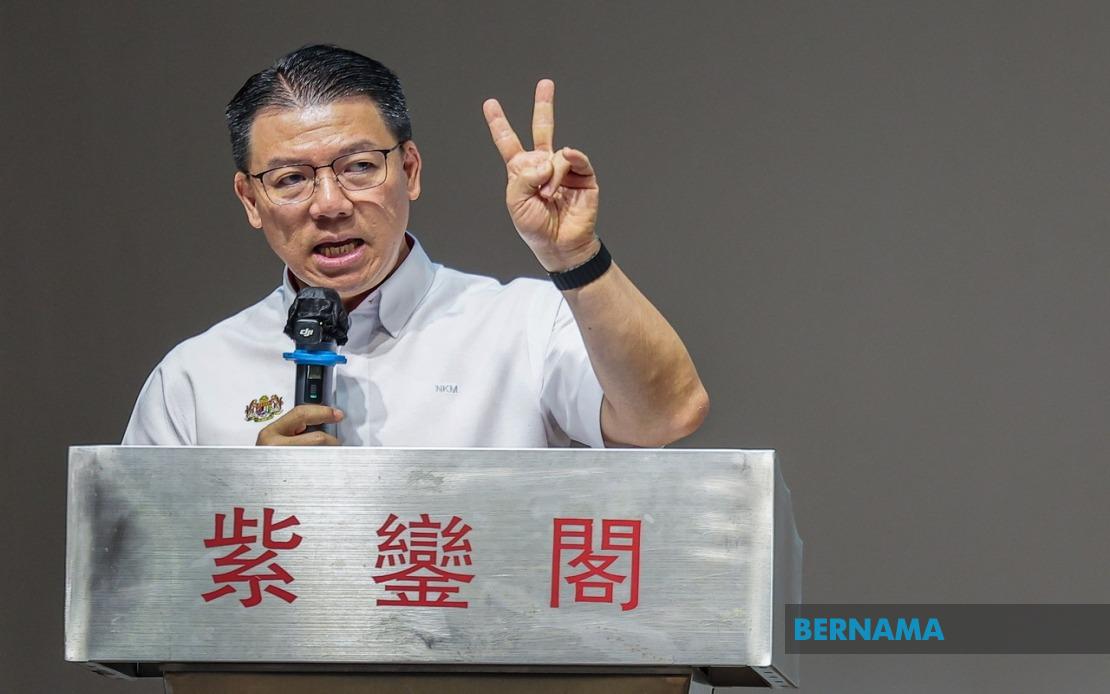
Housing and Local Government Minister Nga Kor Ming outlined the initiative's scope during a handover ceremony in Kluang, Johor, emphasising that the funding represents a departure from development models that prioritise certain communities over others. He articulated this commitment as integral to the government's foundational principle of inclusivity, stating that Malaysia's diversity constitutes a unifying strength rather than a source of division. This messaging carries particular significance in Malaysia's complex social landscape, where perceptions of equitable resource distribution carry substantial weight in inter-community relations and broader national cohesion.
The scale of demand for the programme underscores genuine infrastructure needs within religious minority communities. Since launch, the e-RIBI System has fielded 1,478 applications with a combined value exceeding RM279 million, substantially exceeding the initial RM200 million allocation. This disparity between available funding and applications received highlights the backlog of deferred maintenance across non-Muslim worship spaces, many of which serve ageing facilities requiring urgent structural attention. The mismatch also suggests that communities view this initiative as a legitimate channel for addressing long-standing infrastructure deficits.
Johor state demonstrates the programme's tangible impact at ground level. The state has received RM18.75 million in total allocations from 2023 through May 2026, benefiting 154 individual religious institutions. For the current year, the ministry announced a supplementary RM3.14 million directed toward 27 Johor-based RIBIs, supporting renovation, maintenance, emergency repairs and new construction projects. This sequential funding approach allows the ministry to manage implementation capacity while responding to priority applications, though it also means many applicants remain in queues awaiting approval.
The initiative operates within Malaysia's distinct constitutional and administrative framework governing religious affairs. Unlike many federal programmes, the RIBI maintenance scheme requires close coordination with state authorities, as Islamic affairs fall under state purview while the federal ministry must navigate sensitivities surrounding state-level religious governance structures. This complex jurisdictional landscape means implementation success depends not merely on budget availability but on sustained intergovernmental cooperation and alignment of priorities across different administrative levels.
Nga's public statements position the maintenance initiative within a broader narrative of national unity and inclusive development. He contrasted bridge-building approaches with divisive rhetoric, framing the RIBI programme as instrumental to economic stability and investor confidence. This framing reflects contemporary understanding among Malaysian policymakers that communal tensions directly impact macroeconomic indicators, currency valuation and foreign direct investment flows. By explicitly connecting religious community support to ringgit strength and job creation, Nga embedded the initiative within economic arguments likely to resonate across constituencies.
Governance transparency emerged as a stated priority, with the ministry committing to professional monitoring of approved projects and verification that allocations reach genuinely deserving organisations. This emphasis responds to persistent concerns about fund leakage and misallocation in government programmes. The e-RIBI System itself represents an attempt to digitise application processes, theoretically reducing discretionary decision-making and creating auditable records. However, the system's actual effectiveness in preventing political patronage or ensuring merit-based allocation remains contingent on implementation rigour across federal and state levels.
For Malaysian religious minorities, the RIBI initiative represents both tangible progress and persistent gaps. While RM200 million over four years acknowledges maintenance needs, the programme's scope remains defined by religious infrastructure rather than broader community services or educational facilities that many worship spaces operate. Furthermore, the four-year funding horizon creates planning uncertainty for larger renovation projects, which may require phased approaches or substantial co-investment from religious organisations themselves. Communities accustomed to limited government support for their institutions must balance appreciation for new funding against realistic assessments of whether allocations match actual infrastructure deficits.
The programme's regional significance extends beyond Malaysia's borders. Southeast Asian governments increasingly confront questions about managing religious and ethnic diversity, particularly as development accelerates and resource competition intensifies. Malaysia's RIBI initiative offers a case study in how centralised funding for minority religious infrastructure can be structured and administered, though whether this model succeeds depends substantially on implementation outcomes rather than announced intentions. Sustained funding and equitable distribution will determine whether the initiative becomes embedded in long-term government practice or remains a time-limited political initiative.
Looking forward, several implementation challenges merit attention. The application backlog suggests future funding tranches should substantially exceed the current allocation to address accumulated maintenance needs comprehensively. Geographic distribution requires monitoring to ensure rural and less politically-connected communities access funding proportionately. Maintenance standards and quality assurance mechanisms must prevent installations from deteriorating rapidly after completion, requiring follow-up monitoring. Finally, clear communication about application procedures and timelines would reduce community frustration and reinforce perceptions of institutional transparency.
The RIBI maintenance initiative ultimately reflects contemporary Malaysian governance approaches attempting to reconcile constitutional secularism with state engagement in religious community support. Rather than leaving worship space maintenance entirely to communities or restricting government involvement, the MADANI administration positioned itself as an enabler of infrastructure preservation across religious lines. Whether this model proves sustainable through multiple electoral cycles and budgetary cycles remains uncertain, but the programme currently stands as the most substantial federal commitment to non-Muslim worship space maintenance in recent Malaysian history.

