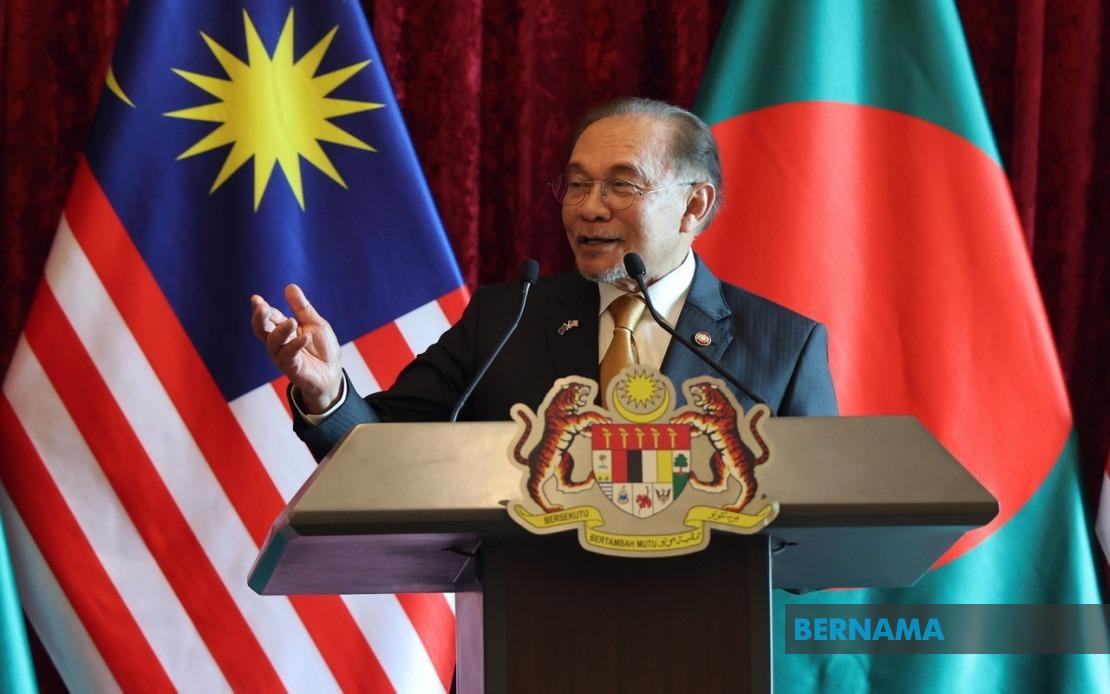
Prime Minister Datuk Seri Anwar Ibrahim and visiting Bangladesh Prime Minister Tarique Rahman have signalled a decisive shift in their countries' bilateral engagement, committing to resurrect dormant political forums that have languished without formal meetings. The two leaders, meeting in Putrajaya during Tarique's two-day official visit, identified the resumption of the Joint Commission Meeting and Bilateral Consultations as urgent priorities, recognising that institutional mechanisms form the backbone of sustained diplomatic relationships in the region.
The timing of this renewed commitment carries significance for Malaysia's foreign policy objectives in South Asia. With Bangladesh serving as a key partner in regional forums and a major source of migrant workers to Malaysia, revitalising these channels addresses a governance gap that has hindered coordinated responses to transnational issues. The joint statement emphasises that regular high-level dialogue has demonstrably improved cooperation across multiple domains, suggesting that periods of institutional dormancy had constrained both nations' abilities to address emerging challenges systematically.
Labour mobility emerged as a central concern in the bilateral discussions, reflecting the substantial presence of Bangladeshi workers across Malaysian industries. The two governments acknowledged that this expatriate community contributes significantly to Malaysia's economic development while simultaneously fostering people-to-people connectivity that underpins broader diplomatic ties. This framing represents a strategic recalibration, positioning migrant workers not merely as economic units but as cultural ambassadors reinforcing bilateral bonds.
Bangladesh's formal proposal regarding increased worker recruitment forms part of the ongoing negotiation over labour quotas. However, Malaysia's response signals a measured approach, with officials emphasising that approvals for new foreign worker quotas operate through a rigorous case-by-case assessment mechanism. This reflects Malaysia's broader labour policy framework, which balances economic needs against concerns about labour market saturation and job creation for Malaysian citizens. The emphasis on sectoral ceilings and verified employer requirements indicates that any expansion will be carefully calibrated to sectoral demands rather than representing a blanket increase.
A pivotal development is the establishment of a dedicated Joint Working Group focused specifically on migration governance. This specialised body will undertake the substantial task of evaluating the existing Memorandum of Understanding governing worker recruitment while simultaneously drafting updated provisions that address contemporary migration realities. The emphasis on crafting a new MoU reflects acknowledgement that previous agreements may not adequately address current labour market dynamics, regulatory requirements, or worker protection standards in either country.
The stated commitment to transparent, fair, and non-discriminatory recruitment processes carries particular weight given longstanding concerns about labour trafficking and exploitative practices in South Asian migration corridors. By explicitly binding both nations to utilise only credible and qualified recruitment agencies, the governments are attempting to establish clearer accountability mechanisms and reduce opportunities for unscrupulous intermediaries. For Malaysian employers and Bangladeshi workers alike, such provisions theoretically create a more regulated and predictable labour market.
This bilateral engagement also reflects broader regional trends in how Southeast Asian nations are managing relationships with South Asian neighbours. Bangladesh, as a major regional economy with over 170 million people, represents both a source of skilled and semi-skilled labour and an increasingly important diplomatic actor in Indian Ocean affairs. Malaysia's prioritisation of renewed engagement with Dhaka signals recognition that dormant relationships risk ceding influence to other regional powers and missing opportunities for coordinated responses to transnational challenges.
For Malaysian policymakers, the timing of Bangladesh PM Tarique's visit comes at a moment when labour policy remains contested domestically. The government's emphasis on strict quotas and employer verification reflects attempts to balance business sector demands for access to affordable labour against political pressure to prioritise employment for Malaysian citizens. By establishing multilayered consultation mechanisms and creating the JWG, Malaysia creates formal channels through which labour concerns can be addressed diplomatically rather than through ad hoc arrangements.
The commitment to ensure "mutually beneficial" migration also carries implications for how Bangladesh perceives its nationals' treatment in Malaysia. Remittances from Malaysian-based workers constitute meaningful foreign exchange earnings for Bangladesh, creating incentives for Dhaka to maintain smooth labour flows. Simultaneously, Bangladesh has legitimate interests in ensuring that its citizens abroad receive fair wages, safe working conditions, and access to dispute resolution mechanisms—concerns that updated MoUs can address more comprehensively than outdated frameworks.
Looking forward, the Joint Working Group's work will likely face practical challenges in harmonising Malaysian labour market requirements with Bangladeshi development objectives. Malaysia's sectoral ceilings may not align with Bangladesh's preferences regarding which industries should access Bangladeshi workers, potentially creating negotiating friction. Additionally, both nations must grapple with how to incorporate contemporary issues such as digital skills training, returnee reintegration, and protection against labour rights abuses into the new MoU.
The broader diplomatic context suggests that this renewed engagement extends beyond labour issues, encompassing security cooperation, trade facilitation, and regional forum coordination. By reactivating institutional mechanisms now, both governments position themselves to address future challenges more systematically. For Malaysia's standing in South Asia and Bangladesh's integration with Southeast Asia, this commitment to regular dialogue establishes frameworks through which bilateral relationships can weather periodic strains and maintain momentum.
The practical success of these initiatives will ultimately depend on implementation fidelity and whether both governments allocate sufficient resources to the JWG and reconstituted dialogue forums. Regular high-level visits, while symbolically important, require substantive agendas and decision-making authority to produce tangible outcomes. The explicit commitment to transparent recruitment processes and credible agencies, if genuinely enforced, could establish a model for ethical labour migration that influences broader regional standards and demonstrates that bilateral cooperation can yield worker protections alongside economic benefits.

