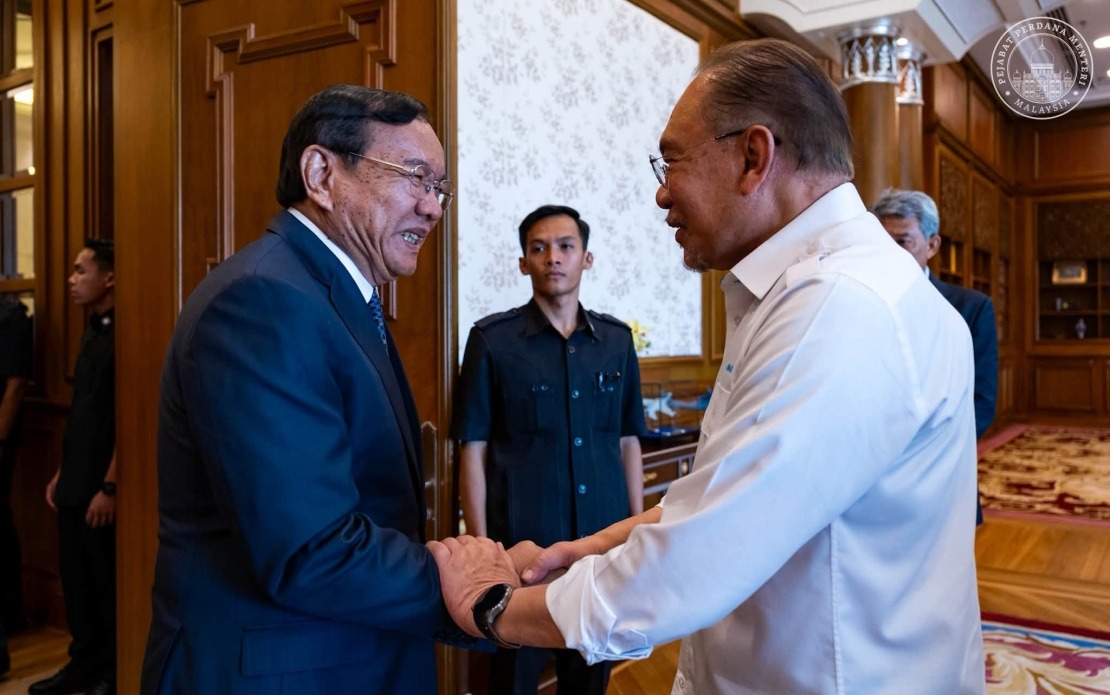
Malaysia and Cambodia have reaffirmed their commitment to strengthening bilateral strategic cooperation across multiple economic and social sectors, according to Prime Minister Datuk Seri Anwar Ibrahim. The pledges were made during a courtesy call by Cambodian Deputy Prime Minister and Minister of Foreign Affairs and International Cooperation Prak Sokhonn, who arrived in Malaysia for a two-day official visit on August 3. The discussions signal deepening engagement between the two neighbouring nations on issues ranging from cutting-edge technology to traditional industries and regional security.
The scope of cooperation outlined by Anwar encompasses several priority areas that reflect contemporary development challenges and opportunities. Digital economy initiatives and artificial intelligence advancement represent forward-looking investments that both nations view as essential for future competitiveness. The halal industry, where Malaysia holds particular regional expertise and market leadership, offers Cambodia a pathway to tap growing Muslim-majority markets across Southeast Asia and beyond. Food security cooperation carries practical urgency for the region, particularly given global supply chain vulnerabilities and the importance of agricultural self-sufficiency for both nations' populations.
Beyond economic metrics, the two countries have identified human capital development as a strategic pillar. This commitment suggests structured programmes in education, vocational training and professional exchange that will build institutional linkages between Malaysian and Cambodian institutions. Such people-to-people initiatives historically prove more durable than transactional trade agreements, creating lasting networks of professionals, academics and entrepreneurs invested in bilateral success.
Cross-border crime prevention represents a security dimension that underscores practical realities of the Malaysia-Cambodia relationship. The two nations share porous land and maritime boundaries through which contraband, human trafficking and organised crime networks operate. Enhanced cooperation in law enforcement, intelligence sharing and judicial coordination addresses threats that impact citizens in both countries. This functional cooperation often proceeds with less fanfare than trade announcements but generates substantial tangible benefits for communities near border regions.
Prak Sokhonn's visit culminates in the Third Malaysia-Cambodia Joint Commission for Bilateral Cooperation meeting scheduled for August 4. This formal institutional mechanism provides structured forums for government ministries to coordinate policy, review progress on previous agreements and establish new initiatives. The JCBC format, common among ASEAN nations, typically produces memoranda of understanding and action plans that translate diplomatic commitments into operational frameworks.
The timing of this engagement carries particular symbolic weight as the two nations approach their 70th diplomatic anniversary in 2027. Malaysia formally recognised Cambodia in 1957 as it gained independence, establishing ties that have weathered regional conflicts, economic transformations and shifting geopolitical alignments. The approaching milestone provides psychological momentum for leaders to deepen institutional relationships and position their nations as exemplars of Southeast Asian stability and pragmatic cooperation.
Both countries function as ASEAN member states navigating complex regional dynamics. Anwar's reference to this shared ASEAN membership highlights how bilateral relationships strengthen the broader regional architecture. Malaysia and Cambodia's commitment to preserving peace and strengthening regional unity directly supports ASEAN's core mission of non-interference, conflict avoidance and consensus-building. Their cooperation contributes to the collective effort toward realising ASEAN Community Vision 2045, an ambitious framework seeking deeper economic integration, political cooperation and social progress across all ten member states.
Cambodia's economic trajectory and development stage differ substantially from Malaysia's more advanced economy, creating complementary rather than directly competitive dynamics. Malaysian capital, expertise and technology transfer initiatives can support Cambodian development while creating market opportunities for Malaysian firms. Cambodia's natural resources and agricultural potential offer Malaysian investors diversification and supply chain opportunities. This asymmetry, properly managed through equitable partnerships, often produces more stable bilateral relations than situations where nations occupy identical competitive positions.
The halal industry warrants particular examination given Malaysia's regional leadership. As a Muslim-majority nation with sophisticated halal certification infrastructure and established supply chains, Malaysia has invested decades building credibility in halal standards. Cambodian participation through Malaysian technical assistance creates value for both parties—Cambodia gains access to certification systems and global halal markets, while Malaysia expands the ecosystem supporting its halal industry champions. This sectoral cooperation demonstrates how Malaysia can leverage its comparative advantages while facilitating partner development.
Digital economy and AI cooperation reflects both nations' recognition that technological advancement shapes future prosperity. Malaysia's more developed digital infrastructure and tech sector expertise position it as a natural knowledge partner for Cambodia. Structured technology transfer, joint research initiatives and capacity building in emerging fields like artificial intelligence create pathways for Cambodia to leapfrog conventional development stages. Such cooperation also attracts regional and global tech investment, benefiting both economies.
For Malaysian stakeholders, enhanced Cambodia cooperation opens commercial opportunities across multiple sectors. Malaysian construction firms, financial institutions, telecommunications companies and agricultural exporters all stand to benefit from closer ties and reduced trade barriers. Cambodian stability and development directly benefits Malaysia's regional environment—economically prosperous, secure and peaceful neighbours reduce risks and create positive externalities for Malaysian businesses operating throughout Southeast Asia.
Anwar's emphasis on creating "more opportunities for mutually beneficial cooperation" reflects diplomatic language that nonetheless carries substantive meaning. Mutually beneficial frameworks prove more durable than arrangements benefiting one party disproportionately. Institutionalising cooperation across diverse sectors—rather than concentrating it in single industries—distributes benefits across broader constituencies in both nations, building political support for sustained engagement across government transitions.
The Malaysia-Cambodia relationship exemplifies how Southeast Asian nations navigate a complex geopolitical landscape by deepening practical cooperation on shared challenges and opportunities. As larger powers vie for regional influence, bilateral partnerships grounded in economic interdependence, institutional mechanisms and people-to-people connections provide stability and autonomy. The current high-level engagement signals both nations' commitment to this collaborative approach as they advance toward their diplomatic milestone.

