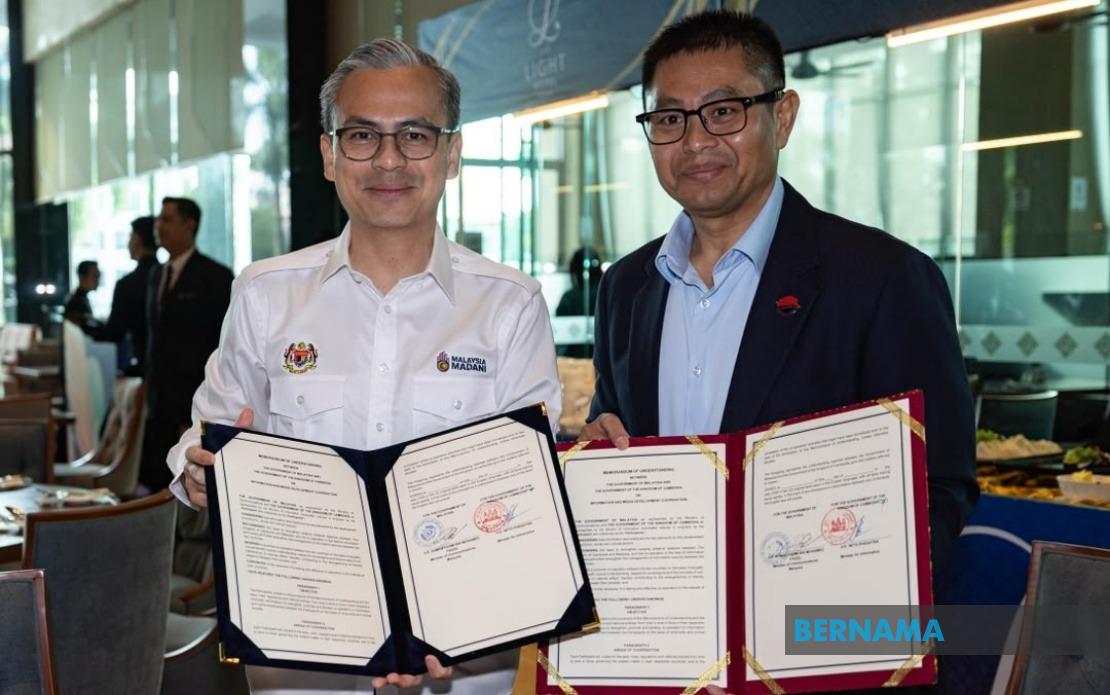
Malaysia and Cambodia have deepened their bilateral relationship through a significant agreement centred on information and media cooperation, signed during ceremonies in Butterworth on June 20. The memorandum of understanding, executed by Communications Minister Datuk Fahmi Fadzil alongside Cambodian Information Ministry's Under Secretary of State Prak Thaveak Amida, represents an important diplomatic milestone for both Southeast Asian neighbours and signals their commitment to collaborative growth in the communications sector.
The framework established through this accord addresses multiple dimensions of modern media and communications, creating structured pathways for bilateral engagement that extend well beyond traditional news sharing. Both nations have identified specific areas—including radio and television broadcasting, print and digital publishing, human resource training, and cinema production—as central pillars of their partnership. This comprehensive approach reflects an acknowledgment that contemporary media landscapes require multifaceted cooperation strategies that encompass both legacy and emerging platforms.
One notably significant dimension of the agreement concerns media cybersecurity and information policy harmonization. As digital transformation accelerates across Southeast Asia, both Malaysia and Cambodia recognize the critical importance of developing coordinated approaches to online threats and misinformation. By establishing shared protocols and regulatory frameworks, the two nations position themselves to better protect their respective information ecosystems while building regional resilience against coordinated disinformation campaigns—a growing concern throughout the ASEAN bloc.
The MoU also emphasizes human capital development, committing both countries to facilitate knowledge exchange and expertise-sharing among media professionals. This provision carries particular significance for Cambodia, where media infrastructure development remains an ongoing priority. Malaysian media organizations and training institutions will have formal channels through which to engage Cambodian counterparts, potentially accelerating professional capability-building across the border and strengthening newsroom standards in the region.
The timing of this agreement at the National Journalists' Day (HAWANA) 2026 celebration underscores the cultural and professional dimensions of this partnership. With roughly 1,000 media practitioners from Malaysia and abroad gathering under the theme "Media Integrity Strengthens Credibility," the MoU signing sends a powerful message about institutional commitment to professional journalism standards. Prime Minister Datuk Seri Anwar Ibrahim's scheduled keynote appearance lends additional weight to the initiative, positioning media cooperation within broader strategic dialogue between the two governments.
For Malaysian media organizations, this arrangement opens pathways for content partnerships, co-production opportunities in documentary and film development, and expanded regional market access. Cambodian information platforms gain reciprocal benefits through enhanced technology transfer and access to Malaysian media expertise. Such bilateral frameworks increasingly matter for smaller Southeast Asian economies seeking to develop competitive media sectors capable of competing within the digital age.
The agreement also reflects a pragmatic understanding of how modern communications transcend national boundaries. Innovation in broadcasting and media technology does not respect borders, and neither do challenges related to digital transformation, audience fragmentation, and platform economics. By establishing formal cooperation mechanisms, Malaysia and Cambodia create institutional structures through which to collectively address shared problems—from spectrum management to digital copyright protection to platform regulation.
This partnership must be contextualized within broader ASEAN dynamics. As the regional bloc increasingly emphasizes digital economy cooperation and technology development, bilateral media agreements serve as building blocks for eventual regionwide frameworks. Malaysia's relatively advanced media infrastructure and Cambodia's emerging market position create complementary advantages. The MoU thus functions simultaneously as bilateral cooperation and as incremental progress toward enhanced ASEAN-wide information sharing and professional standards.
The presence of key stakeholders—including Bernama Chairman Datuk Seri Wong Chun Wai, Penang Chief Minister Chow Kon Yeow, and top media executives—signals institutional depth of Malaysian commitment to implementation. Successful execution will require sustained engagement beyond ceremonial signing, with regular working-group meetings, professional exchange visits, and concrete collaborative projects that deliver tangible value to both nations' media sectors.
However, the agreement's ultimate impact will depend upon how effectively both governments translate its broad principles into actionable cooperation mechanisms. Media regulation, editorial independence, and information access remain sensitive political matters across Southeast Asia. Both nations will need to navigate carefully between promoting professional standards and respecting legitimate differences in national information policy. The success of this partnership will hinge upon commitments to substantive professional collaboration rather than purely governmental coordination of messaging.
Looking forward, this MoU establishes a foundation upon which Malaysia and Cambodia can build increasingly sophisticated media partnerships. As digital technologies continue reshaping information distribution and consumption, bilateral arrangements like this become essential infrastructure for professional journalists, broadcasters, and publishers seeking to maintain credibility and reach across national boundaries. The agreement positions both nations to better serve their populations through enhanced information quality and regional cooperation that strengthens rather than compromises editorial integrity.

