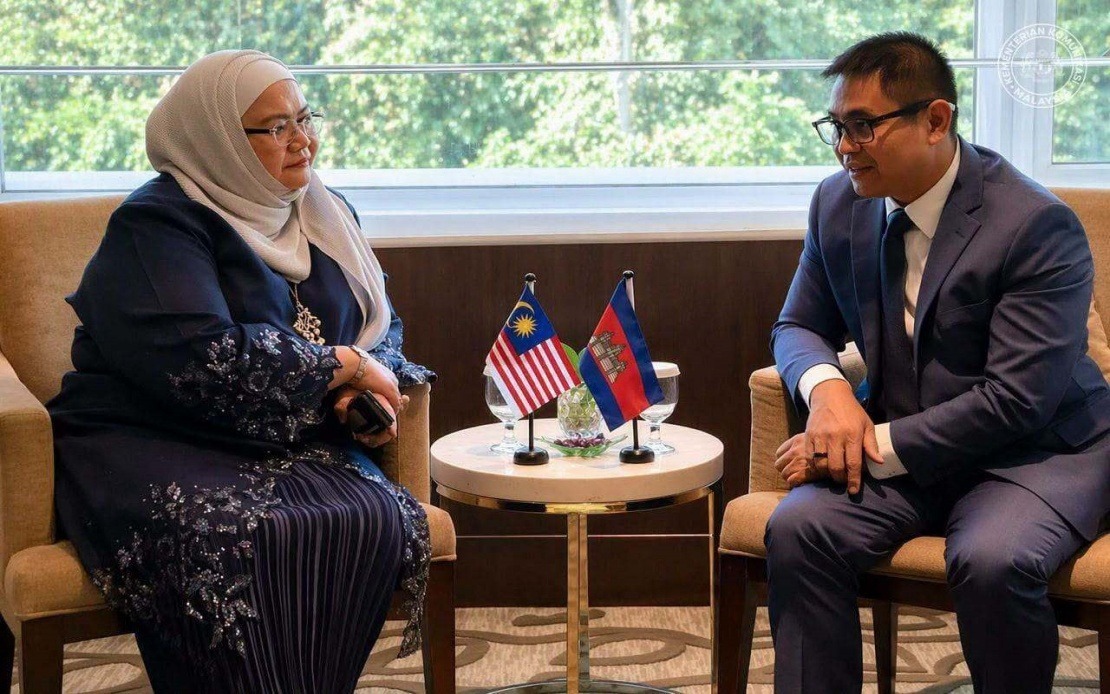
Malaysia and Cambodia have moved forward with implementing their recently signed Memorandum of Understanding on Information and Media Development, marking a significant step in deepening bilateral relations across the media and communications sector. The two countries held a dedicated bilateral meeting to discuss operational details and strategic priorities under the agreement, signalling strong political commitment from both governments to making the partnership productive and substantive.
The meeting took place on the sidelines of the 23rd ASEAN Senior Officials Responsible for Information (SOMRI) Meeting in Bandar Seri Begawan, Brunei, providing a natural platform for the two nations to align on implementation strategies. Malaysia's delegation was led by Datuk Bahria Mohd Tamil, Deputy Secretary-General for Strategic Communications and Creative Industry at the Ministry of Communications, while Cambodia fielded Secretary of State of the Ministry of Information Prak Thaveak Amida. The high-level representation from both sides underscores the importance placed on this cooperation framework at governmental level.
The underlying MoU was formally signed on June 20 at the sidelines of the National Journalists' Day (HAWANA) 2026 celebration in Penang, with Communications Minister Datuk Fahmi Fadzil and Amida affixing their signatures ad referendum on behalf of Cambodian Information Minister Neth Pheaktra. This timing during a major journalism-focused event reflected the media and communications sector's centrality to the agreement. The MoU covers extensive ground in media-related cooperation, establishing a comprehensive framework for bilateral engagement that extends beyond traditional information exchange into modern communication challenges.
During their Bandar Seri Begawan discussions, both delegations concentrated on several interconnected areas of mutual interest. Information exchange emerged as a foundational element, enabling both countries to share best practices, news stories, and editorial experiences that enrich their respective media ecosystems. Beyond simple information sharing, the two nations outlined plans for coordinated media development initiatives that would raise professional standards across the sector in both countries. The discussions acknowledged that sustainable media cooperation requires deliberate capacity-building efforts and knowledge transfer between institutions.
Digital transformation featured prominently in the bilateral conversation, reflecting the rapid technological shifts reshaping journalism and media production worldwide. Malaysia and Cambodia recognised that navigating the digital landscape requires coordinated strategy, particularly as both nations balance modernisation with the need to maintain journalistic integrity and public trust. The rapid proliferation of digital platforms, streaming services, and social media distribution channels has created new opportunities and challenges that neither country can adequately address in isolation. By pooling expertise and resources, the two nations aim to develop more resilient digital media sectors capable of adapting to future technological changes.
Information integrity and combating media misinformation stood out as critical shared concerns in the bilateral discussions. Both Malaysia and Cambodia face ongoing challenges related to the spread of false information, particularly through social media channels, which can undermine public confidence in legitimate news sources and distort public understanding of important issues. The two countries identified this as an area requiring coordinated responses, potentially including joint research initiatives, training programmes for journalists and fact-checkers, and collaborative content-verification mechanisms. This focus reflects growing regional and global recognition that combating misinformation demands multi-stakeholder cooperation.
The Malaysian Ministry of Communications emphasised that the nation remains deeply committed to strengthening its partnership with Cambodia through strategic initiatives designed to advance both the information and media sectors simultaneously. This dual focus—on sectoral advancement while deepening bilateral friendship—reflects the understanding that media cooperation extends beyond technical or professional matters into the realm of people-to-people understanding and diplomatic relations. Media partnerships often serve as subtle but effective channels for building trust and mutual understanding between nations.
For Malaysia, this cooperation framework with Cambodia holds particular relevance given the two countries' shared membership in ASEAN and their mutual interest in regional information security and media standards. Cambodia's significant role in Southeast Asian media dynamics and its growing digital economy make it a logical partner for Malaysia's communications sector. The bilateral arrangement also potentially positions both countries for future multilateral initiatives within ASEAN on media development and digital governance.
The implementation phase will likely involve establishing working groups focused on specific domains such as training and capacity-building, technical standards, content exchange protocols, and joint research on emerging media challenges. Both nations will need to navigate practical questions about resource allocation, institutional responsibilities, and monitoring mechanisms to ensure the MoU delivers tangible benefits to their respective media industries. The success of such bilateral frameworks often depends as much on sustained implementation effort and regular high-level engagement as on the initial diplomatic agreement itself.
Looking ahead, this Malaysia-Cambodia partnership may serve as a model for expanded cooperation within ASEAN on information and media matters, particularly as member states increasingly recognise the strategic importance of coordinated approaches to digital transformation and information integrity. The initiative reflects a broader regional trend toward formalising media partnerships, moving beyond ad-hoc collaboration to structured, long-term cooperation frameworks that can deliver sustained benefits across multiple dimensions of the media ecosystem.

