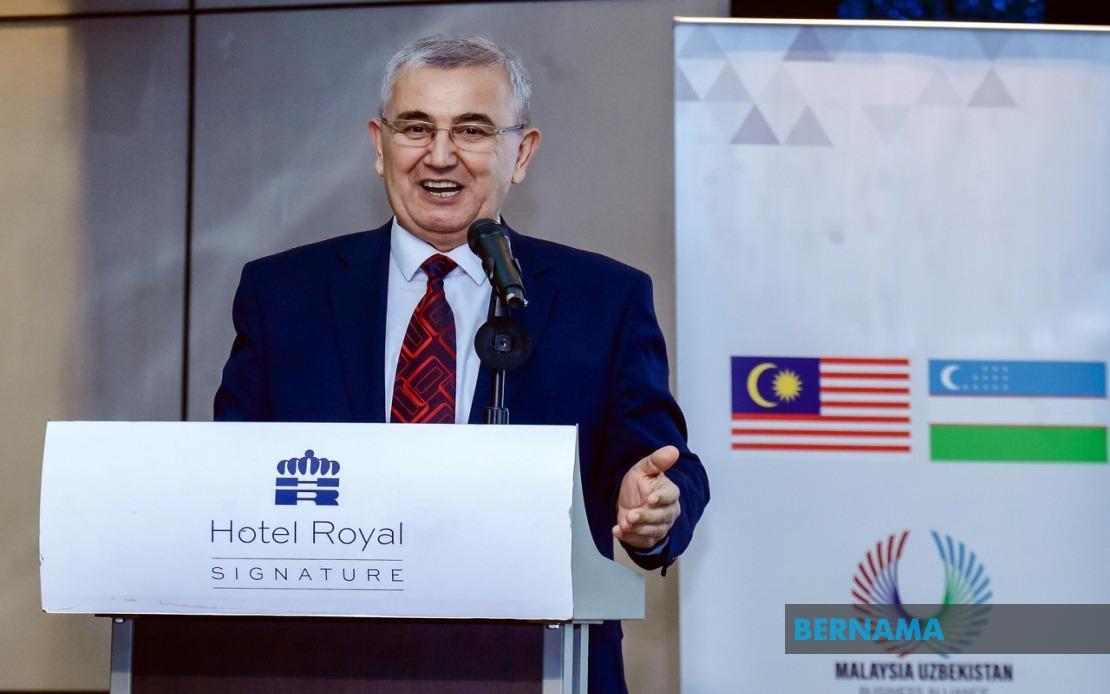
Malaysia and Uzbekistan are preparing to substantially expand their agricultural engagement by combining technological innovation with complementary production capabilities, marking a significant shift in how Central Asian and Southeast Asian nations approach food security and farming efficiency. The strategic alignment emerged during recent high-level exchanges between the countries, including Malaysian Prime Minister Datuk Seri Anwar Ibrahim's visit to Uzbekistan in May 2024 and a subsequent ministerial-level visit by Agriculture and Food Security Minister Datuk Seri Mohamad Sabu, according to Uzbekistan Ambassador to Malaysia Dr Karomidin Gadoyev.
The partnership recognises that agriculture occupies a central position in both nations' development agendas, reflecting broader acknowledgment across Asia that food production systems must evolve rapidly to meet demographic pressures and climate challenges. Uzbekistan Ambassador Dr Karomidin Gadoyev underscored that agricultural cooperation has consistently figured in dialogues between both countries' leaders, particularly during President Shavkat Mirziyoyev's February visit to Malaysia, indicating sustained political commitment beyond routine diplomatic courtesy. This recurring emphasis signals that stakeholders view the agricultural sector as foundational rather than peripheral to bilateral relations.
The complementarity between the two nations' capabilities presents unusual scope for mutual benefit. Malaysia brings considerable expertise in paddy production systems, aquaculture operations, fisheries management, precision farming methodologies, and agricultural research infrastructure through institutions like the Malaysian Agricultural Research and Development Institute (MARDI). Uzbekistan conversely possesses advanced competencies in irrigation technology designed for energy efficiency, horticultural production systems, and agri-food processing capabilities suited to Central Asian conditions. Rather than competing directly, each nation offers solutions that address the other's gaps, creating genuine interdependence rather than transactional exchange.
Digital transformation and artificial intelligence represent the intellectual foundation for deepened cooperation. Both countries recognise that conventional farming approaches cannot sustainably meet the demands of growing populations and climate variability. Smart technologies, automation systems, and data-driven agricultural management offer pathways to enhance yields while optimising resource consumption. Uzbekistan has explicitly signalled interest in integrating Malaysian expertise and experience in these domains, viewing technology adoption as critical for increasing agricultural productivity and building resilience against supply chain disruptions.
The practical manifestation of this technological partnership is already visible. Malaysian agricultural technology company Miracule has established the first agricultural drone showroom in Uzbekistan, marking initial commercialisation of Malaysian innovations in Central Asia. Beyond demonstration phases, both nations envision scaling drone utilisation across Uzbek agricultural fields, with future assembly of advanced agricultural drone systems potentially occurring in-country. This progression from import to domestic manufacturing reflects ambition to build enduring technological capacity rather than perpetual dependence on foreign equipment.
Aquaculture emerges as a particularly promising collaboration domain, driven by Uzbekistan's geographical and demographic realities. As a double-landlocked nation with a population approaching 40 million inhabitants, Uzbekistan faces structural constraints on seafood access that traditional fishing cannot remedy. Malaysia's demonstrated proficiency in biofloc technology addresses this constraint with concrete economic benefits. The biofloc system reduces feed costs by up to 30 per cent while simultaneously increasing productivity and lowering overall production expenses, making it particularly attractive for landlocked regions seeking aquaculture viability. Malaysian enterprises have already commenced preliminary investigations into shrimp farming and fisheries ventures across Uzbekistan, indicating commercial confidence in the market potential.
Trade volume substantiates the growing economic dimension of this partnership. Agri-food commerce between Malaysia and Uzbekistan generated over RM338 million in 2025, with palm oil and palm-derived products constituting Malaysia's primary export category. However, both nations view current figures as substantially underutilising available potential. Gadoyev projected possibilities of doubling or even tripling bilateral agri-food trade within a five to ten-year timeframe, contingent on strategic investments and institutional support. Malaysia's potential to establish processing hubs within Uzbekistan for crude palm oil destined for Central Asian distribution represents one promising avenue, whilst Uzbek premium fresh fruits and processed food products could access Southeast Asian markets through Malaysian trading networks.
The geographic positioning creates multiplicative opportunities beyond bilateral exchange. Uzbekistan occupies a strategic location for accessing Central Asian markets, which constitute a substantial consumer base numbering hundreds of millions. Malaysia's established processing infrastructure, logistics networks, and commercial relationships throughout Southeast Asia offer Uzbek producers gateways to dynamic Asian markets. This mutual access to regional distribution systems converts the partnership from simple two-country cooperation into a mechanism for broader regional agricultural integration, potentially reshaping food supply patterns across multiple nations.
Institutional frameworks are solidifying this partnership beyond diplomatic pronouncements. MARDI's involvement in exploring agricultural innovations demonstrates that research-level engagement complements commercial initiatives. Malaysia's invitation to Uzbekistan to participate in MAHA 2026 signals institutional integration into Malaysia's premier agricultural marketplace. Gadoyev characterised this participation as critically important for introducing Uzbek agricultural products and processed foods to Malaysian business enterprises and consumers, effectively transforming MAHA from a domestic showcase into a bilateral platform for ongoing commercial relationship development.
The partnership's success depends ultimately on overcoming conventional obstacles constraining agricultural cooperation in developing economies. Technology transfer requires not merely equipment supply but comprehensive capacity building, training infrastructure, and ongoing technical support. Both nations must establish quality assurance mechanisms ensuring that adopted technologies perform reliably within different climatic and soil conditions. Supply chain coordination between Malaysia and Uzbekistan necessitates standardised protocols, certification systems, and logistics arrangements currently underdeveloped between Central Asian and Southeast Asian agricultural producers.
Looking forward, the Malaysia-Uzbekistan agricultural initiative represents a template for how geographically distant regions with complementary capabilities can construct mutually beneficial partnerships that transcend conventional North-South development dynamics. Rather than Malaysia simply exporting finished technologies or products, the framework emphasises collaborative innovation where Uzbekistan's agricultural experience informs technological adaptations and Malaysian expertise accelerates modernisation. This reciprocal approach to agricultural development offers a model potentially replicable across Southeast Asia, Central Asia, and beyond, particularly for landlocked nations seeking sustainable food security solutions through strategic partnerships.

