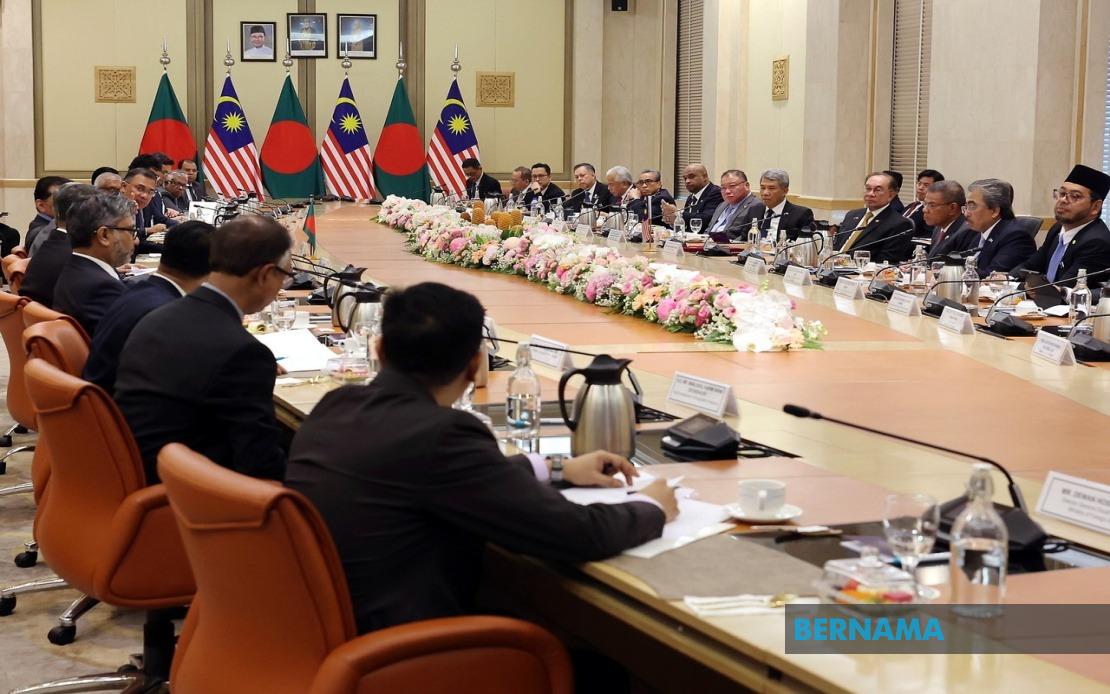
Prime Minister Datuk Seri Anwar Ibrahim has signalled a strategic shift in Malaysia-Bangladesh relations, calling for both nations to move beyond traditional agricultural ties and venture into high-technology sectors that will define economic competitiveness in coming decades. Speaking at a joint press conference in Putrajaya on June 22, Anwar emphasised that while investment and trade remain fundamental to the bilateral relationship, the two countries must now deliberately pursue partnerships in artificial intelligence, energy solutions, semiconductor manufacturing, and the digital economy.
The timing of this announcement reflects broader regional trends in Southeast Asia, where governments increasingly recognise that traditional comparative advantages in agriculture and low-cost manufacturing are insufficient for sustained development. By positioning AI and semiconductors as priority areas, both Malaysia and Bangladesh are acknowledging that technological innovation and advanced manufacturing capabilities will determine their economic trajectories over the next two decades. For Malaysia, which hosts significant semiconductor and electronics manufacturing clusters, such cooperation offers opportunities to diversify supply chains and strengthen relationships within a growing South Asian market. For Bangladesh, increasingly focused on industrial diversification beyond garments, access to Malaysian expertise in semiconductor assembly and testing represents a pathway toward higher-value manufacturing.
During the visit of Bangladesh Prime Minister Tarique Rahman, both leaders formalised their commitment through multiple bilateral instruments. A Memorandum of Understanding on Cultural Cooperation was exchanged, alongside two Exchanges of Notes addressing Counter-Terrorism Research and Investment Promotion and Facilitation. These agreements reflect a comprehensive approach to deepening ties—not merely transactional commercial arrangements but frameworks addressing security concerns and institutional capacity that underpin sustainable economic partnership.
Anwar's specific mention of the semiconductor sector carries particular significance for Malaysia's regional position. The country has long served as a crucial node in global semiconductor supply chains, hosting design, manufacturing, and testing operations for leading international corporations. By inviting Bangladesh into this ecosystem, Malaysia demonstrates confidence in collaborating with a neighbouring economy on high-tech production, potentially creating new opportunities for joint ventures and technology transfer. The semiconductor industry remains strategically important given ongoing global discussions about supply chain resilience and reducing dependency on single manufacturing hubs, particularly in light of geopolitical tensions affecting Asia-Pacific technology infrastructure.
The energy cooperation component reflects another critical priority. Both Malaysia and Bangladesh face energy security challenges and are exploring renewable energy transitions. Malaysia, with established expertise in liquefied natural gas and offshore petroleum infrastructure, can share technical knowledge with Bangladesh as it develops its own energy security strategy. Conversely, Bangladesh's investments in renewable energy projects and experiences managing energy demand in a large, densely populated nation offer lessons relevant to Malaysian policymakers. Joint research and development initiatives could accelerate both countries' pathways toward sustainable energy systems.
Artificial intelligence stands out as perhaps the most forward-looking area of cooperation. Neither Malaysia nor Bangladesh currently leads global AI development, but both nations recognise that AI adoption will reshape industrial processes, service delivery, and competitive advantage across all sectors. By establishing collaborative frameworks now, the two countries position themselves to build indigenous AI capabilities rather than remaining passive consumers of foreign technology. This could include joint research institutions, talent exchange programmes, and coordinated approaches to AI governance—areas where Malaysia's more established tech infrastructure and regulatory frameworks could complement Bangladesh's growing tech talent pool and innovation ambitions.
The digital economy emphasis reflects recognition that digital transformation encompasses far more than individual technologies. It includes e-commerce ecosystems, fintech development, digital payment infrastructure, and the human capital required to operate sophisticated digital systems. Bangladesh, with over 170 million people and a rapidly expanding middle class, represents a significant market for digital services and solutions. Malaysia, with higher digital infrastructure maturity, can serve as a testing ground and development partner for innovations that might subsequently scale across South Asia.
Anwar's statement that these emerging sectors should complement rather than replace agricultural cooperation is diplomatically important but also economically sensible. Agriculture remains significant for both nations, particularly for rural employment and food security. However, the recognition that agricultural sectors alone cannot absorb growing labour forces or generate the wealth needed for middle-income and high-income status drives the strategic pivot toward technology-intensive industries. This approach mirrors development trajectories in Vietnam and Thailand, which have successfully layered advanced manufacturing and tech sectors atop agricultural foundations.
The bilateral agreements on counter-terrorism research deserve attention beyond their immediate security implications. Terrorism and organised crime remain transnational challenges affecting Southeast Asia and South Asia alike. By formalising research cooperation in this domain, Malaysia and Bangladesh create institutional frameworks for sharing intelligence, best practices, and technology relevant to counterterrorism efforts. This builds trust and interoperability between security and research communities, creating positive spillovers for broader economic and technological cooperation.
For Malaysian businesses, the Bangladesh market presents significant opportunities. With a population exceeding 170 million and growing manufacturing costs pushing some production out of China, Bangladesh attracts foreign investment in textiles, electronics, and light manufacturing. Malaysian companies with semiconductor expertise, digital solutions, or energy technology could find receptive partners and markets. Similarly, Bangladesh's substantial diaspora in Malaysia and historical people-to-people connections provide foundations for business networking and cultural exchange that facilitate commercial relationships.
The visit by Prime Minister Rahman to Malaysia occurs within the context of Bangladesh's broader regional engagement strategy. Bangladesh maintains important relationships with China, India, and Japan, but deliberately cultivating closer ties with Southeast Asian nations, particularly Malaysia, reflects its recognition of shared interests in maritime security, regional prosperity, and balanced great-power relations. For Malaysia, deeper engagement with Bangladesh strengthens its profile as a serious economic and technological actor within Asia, rather than primarily serving as a bridge between South Asia and Southeast Asia.
Moving forward, these announced areas of cooperation will require substantive follow-up through government agencies, research institutions, and private sector participation. The success of Malaysia-Bangladesh technology partnerships will depend on translating diplomatic statements into concrete joint ventures, research projects, and investment flows. Both nations possess educated workforces and government support for technology development, but execution will be crucial. Regular high-level dialogue, dedicated working groups, and perhaps establishment of bilateral technology funds could accelerate progress beyond the current memoranda stage.

