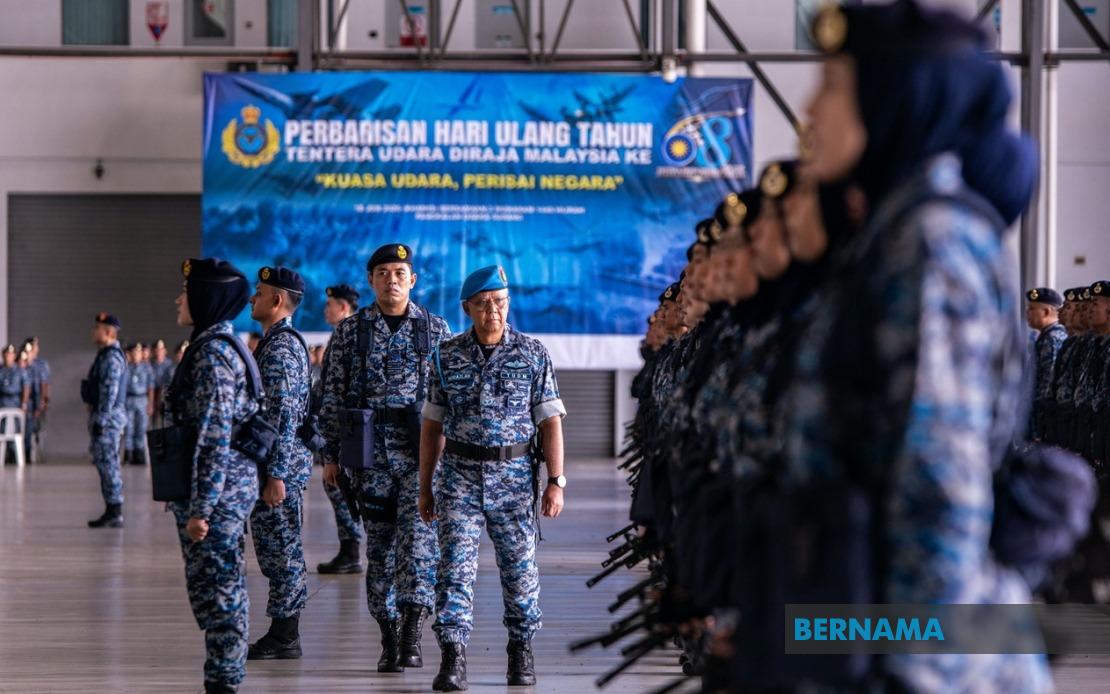
The Royal Malaysian Air Force is undertaking a significant modernisation drive to strengthen its detection and monitoring abilities, establishing sophisticated radar installations at multiple locations nationwide as part of a long-term capability enhancement strategy. General Tan Sri Muhamad Norazlan Aris, the force's chief, unveiled the initiative during the RMAF's 68th Anniversary Parade in Subang, announcing that air defence radar systems are being positioned in Bintulu in Sarawak, Bukit Puteri in Terengganu, and Bukit Lunchu in Johor. Additionally, an air surveillance radar is being constructed on Pulau Layang-Layang in the South China Sea, extending Malaysia's monitoring reach into one of the world's most contested maritime regions.
These installations represent a critical response to gaps in Malaysia's current airspace surveillance architecture. By deploying detection systems across geographically dispersed locations, the RMAF aims to establish comprehensive early warning coverage that identifies potential airborne threats before they penetrate deeper into national territory. The timing reflects growing recognition among defence planners that effective air domain awareness requires layered detection networks rather than isolated radar sites. For a country with Malaysia's vast territorial expanse and complex geography spanning the peninsula and East Malaysia, such distributed capabilities are essential to maintaining situational awareness across multiple sectors simultaneously.
The radar projects constitute the opening phase of the RMAF Capability Development Plan 2055, an ambitious roadmap designed to ensure the air force remains technologically competitive and operationally prepared to confront emerging security challenges throughout the coming decades. Rather than pursuing piecemeal upgrades, this strategic framework establishes a coherent pathway for integrating advanced platforms, weapons systems, and command infrastructure. The 2055 horizon reflects recognition that military modernisation demands sustained commitment spanning multiple government administrations and budget cycles, particularly for a developing economy managing competing resource demands across multiple sectors.
The air force chief framed the initiative within a broader regional security context shaped by geopolitical volatility and the precarious status of critical maritime passages. He specifically referenced ongoing conflicts in West Asia as instructive for Malaysia, highlighting how regional instability can rapidly escalate into challenges affecting distant economies. The disruption to shipping through the Strait of Hormuz, he noted, extends far beyond the Middle East, destabilising global energy markets and triggering cascading effects through international supply chains and financial systems. Malaysia, deeply integrated into global trade networks, faces heightened exposure to such disruptions, underscoring why the nation requires robust defence capabilities.
Malaysia's own maritime security environment presents distinctive challenges demanding heightened vigilance. The Strait of Malacca, one of the world's most economically vital waterways through which roughly one-quarter of global maritime trade passes, remains vulnerable to various threats ranging from piracy to potential state-level interference. The South China Sea, where Pulau Layang-Layang sits as a disputed territory, involves competing territorial and maritime claims among multiple nations, creating an environment where enhanced surveillance capabilities serve both defensive and deterrent functions. By establishing radar coverage over these critical chokepoints, Malaysia strengthens its ability to monitor activities affecting its economic interests and national sovereignty.
The new radar systems will fundamentally alter the RMAF's operational picture, enabling faster detection and response to airspace incursions or anomalous activities. Early warning detection operates as the critical first element in any air defence system, providing the temporal window necessary for command structures to assess threats, coordinate responses, and deploy interceptor assets. Modern air defence radars can simultaneously track multiple targets across vast areas, feeding real-time information into integrated command and control networks. This technological capability translates into tangible national security advantages, as decision-makers receive advance notice of potential threats rather than responding reactively after incursions occur.
The positioning of installations reflects strategic geographic logic. Bintulu's location in central Sarawak provides coverage over Malaysian Borneo's airspace and adjacent maritime zones. Bukit Puteri in Terengganu extends surveillance across the peninsula's eastern flank and portions of the South China Sea. Bukit Lunchu in southern Johor offers similar coverage for the peninsula's southern regions and maritime approaches to the Strait of Malacca. The Pulau Layang-Layang installation extends Malaysian detection capabilities into more distant maritime zones, enhancing awareness of activities affecting territorial waters and exclusive economic zones. Together, these four sites establish overlapping coverage patterns that eliminate blind spots and enable continuous tracking across multiple altitude bands.
The investment reflects evolving RMAF priorities within constrained defence budgets. Rather than attempting to acquire large numbers of advanced combat aircraft at enormous per-unit costs, modernisation increasingly emphasises force multipliers like surveillance systems that enhance the effectiveness of existing assets. Radars enable more efficient deployment of fighter aircraft by directing them toward genuine threats rather than requiring continuous aerial patrols. This approach stretches limited defence resources further, delivering enhanced capability without proportionally inflated expenditures. The strategy aligns with broader regional trends as Southeast Asian nations seek sophisticated defence capabilities while managing fiscal pressures.
The ceremony in Subang also served commemorative purposes, with General Muhamad Norazlan presenting commendation certificates and service medals to 17 personnel recognised for contributions to air force operations and professionalism. The parade itself featured 288 participants representing diverse RMAF specialisations, from the elite special forces unit PASKAU to the ground defence force HANDAU and dedicated women's flight components. This inclusive representation underscores the RMAF's evolution toward integrated operational structures that recognise specialised capabilities beyond traditional pilot roles. The presence of former air force chiefs highlighted institutional continuity and the organisation's connection to its historical development.
Looking forward, the RMAF's capability development ambitions extend well beyond these radar installations. The 2055 plan encompasses broader modernisation encompassing aircraft, weapons systems, logistics infrastructure, and personnel training. Radar deployments serve as foundational investments upon which other systems depend, as comprehensive air domain awareness underpins effective air defence operations. For Malaysian strategic planners, these radar systems represent tangible progress toward maintaining air superiority and defensive capability in an increasingly complex regional security environment where technological advantage confers significant military and political advantages in disputes over sovereignty and maritime resources.