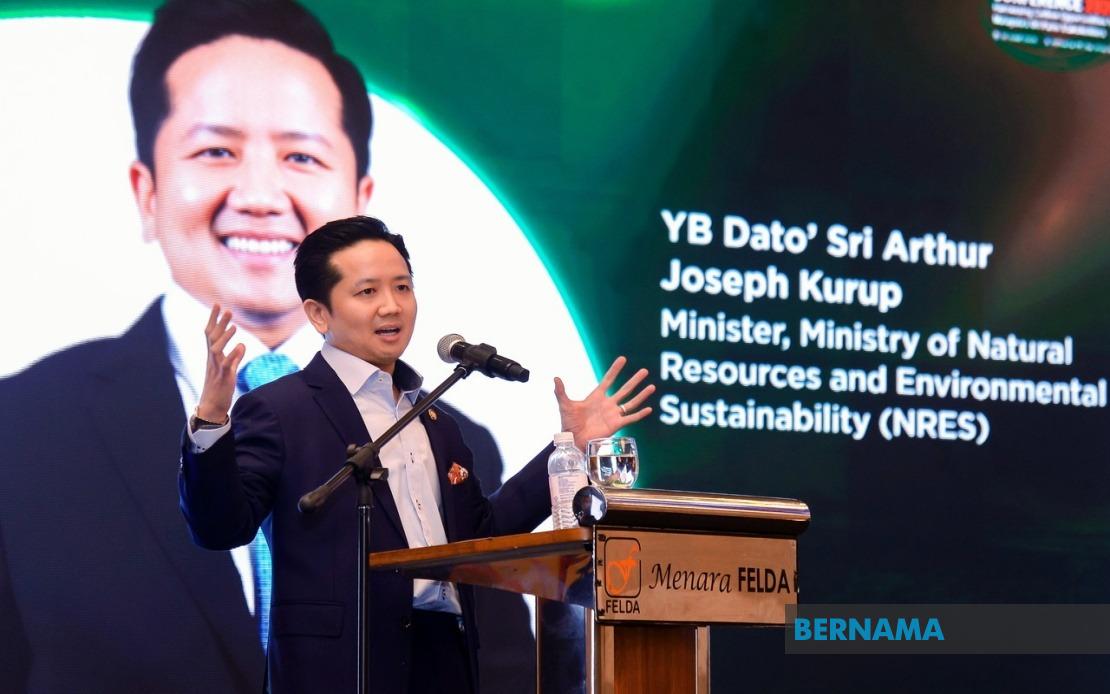
Malaysia's approach to implementing a carbon tax remains in flux as the government deliberates the precise timing and mechanics of the policy, Natural Resources and Environmental Sustainability Minister Datuk Seri Arthur Joseph Kurup indicated at the Malaysia Palm Carbon Conference 2026 in Kuala Lumpur. The administration is committed to introducing the levy, but only after ensuring adequate preparation across the economic sectors expected to bear the burden, and once the supporting policy architecture is firmly in place.
The government's cautious stance reflects recognition that hasty implementation could create friction with industries already navigating volatile commodity prices and uncertain energy supplies. Arthur emphasised that decisions on when to roll out the carbon tax would be made after careful assessment of sector readiness, signalling that the timetable remains negotiable rather than set in stone. This flexibility contrasts with earlier expectations that the mechanism would be introduced during 2024, indicating a shift in urgency as global circumstances evolved.
Crucially, policymakers are framing the carbon tax not as a punitive instrument designed to penalise heavy emitters, but rather as an economic signal intended to guide businesses towards cleaner technology and lower-carbon production methods. This distinction matters significantly for Malaysian manufacturers, particularly those in energy-intensive sectors like steel, cement and construction, which were originally identified as priority targets for the levy. By positioning the tax as an incentive rather than a penalty, the government seeks to maintain industry competitiveness while pursuing climate objectives.
The deliberative approach also reflects assessments made in April, when Arthur publicly noted that the government would reassess carbon tax implementation given the energy supply pressures and geopolitical uncertainties affecting global markets. Those concerns persist, and they continue to weigh on timing calculations. Officials recognised that introducing new production costs on Malaysian industries during periods of supply-side stress could trigger unwanted economic pressures on both manufacturers and downstream consumers.
Beyond the implementation timeline, the government is examining how to deploy revenues generated by the carbon tax once collection begins. Several proposals are under consideration, with strong emphasis on channelling funds into climate adaptation initiatives, forest conservation programmes and sustainable land management projects. This revenue recycling approach aims to ensure that money collected from emitters is reinvested in activities that build national climate resilience and address vulnerability to environmental shocks.
The strategy reflects international best practice, where carbon revenues are often returned to economies in ways that offset the initial cost imposed on businesses and households. In Malaysia's case, directing funds towards forest conservation and sustainable agriculture has particular relevance given the country's extensive palm oil industry and forested regions. By linking carbon tax revenue to environmental restoration, policymakers can demonstrate that the levy serves a circular purpose: reducing emissions while financing ecosystem protection.
Arthur also highlighted the imminent tabling of the National Climate Change Bill in the Dewan Rakyat before year's end, describing it as essential scaffolding for Malaysia's climate governance architecture. This legislative framework will establish the formal institutional and policy foundation upon which tools like the carbon tax operate. The bill represents a broader governance ambition to strengthen Malaysia's ability to address the global climate crisis through comprehensive, coordinated policy instruments rather than ad hoc measures.
For Malaysian businesses, particularly exporters, the carbon tax carries implications that extend beyond domestic policy. As trading partners and major markets implement or tighten their own carbon pricing mechanisms, including border carbon adjustment taxes, Malaysian manufacturers face pressure to demonstrate emissions management across their value chains. The domestic carbon tax can serve as proof of climate commitment and may help Malaysian exporters navigate increasingly stringent environmental requirements in international markets.
The palm oil sector, represented at the conference by Federal Land Development Authority chairman Datuk Seri Ahmad Shabery Cheek, stands at the intersection of these policy trends. As a significant land-use industry with global visibility on environmental issues, the sector faces particular scrutiny. Strategic deployment of carbon tax revenues into sustainable palm cultivation and forest conservation could help the industry demonstrate climate credentials while supporting smallholders to adopt greener practices.
Regionally, Malaysia's measured approach to carbon taxation offers a model of pragmatic climate policy that acknowledges economic constraints without abandoning climate commitments. Southeast Asian neighbours monitoring Malaysia's implementation decisions will likely calibrate their own carbon pricing timelines accordingly. A successful rollout that balances environmental outcomes with industrial competitiveness could encourage regional coordination on emissions pricing, potentially creating a more coherent climate policy environment across the Association of Southeast Asian Nations.
The government's emphasis on industry readiness and carefully designed revenue mechanisms suggests officials understand that carbon taxation succeeds only when stakeholders perceive legitimacy in the policy design. By investing time in consultation and refinement now, authorities hope to build broader acceptance once implementation commences. This patient approach contrasts with some regional jurisdictions that have implemented carbon pricing more rapidly, sometimes encountering political backlash from affected sectors.