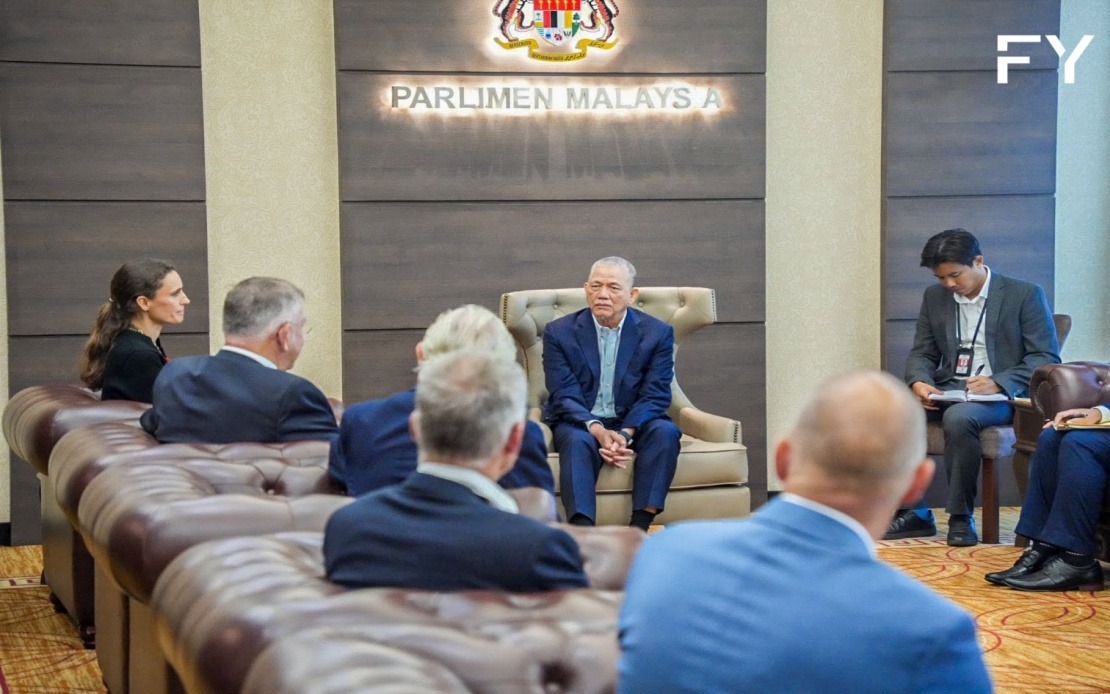
Malaysia is positioning itself as an attractive destination for German small and medium enterprises looking to expand into Southeast Asia, with particular emphasis on investments in green technology and sustainable development sectors. During a parliamentary meeting with German Ambassador Silke Riecken-Daerr and a delegation from the German SME Business Association, Deputy Prime Minister Datuk Seri Fadillah Yusof articulated the government's commitment to channelling foreign investment toward initiatives aligned with the country's long-term sustainability objectives.
The strategic overture reflects Malaysia's broader shift towards becoming a hub for clean technology and environmental solutions in the region. By specifically targeting German SMEs rather than large multinational corporations, Malaysian policymakers are recognising the agility and innovation capacity that characterise smaller enterprises, particularly those from Germany's renowned industrial sector. The focus on renewable energy and water treatment technologies addresses two critical infrastructure challenges that Malaysia faces as it balances rapid economic development with environmental stewardship.
Germany already maintains a substantial economic footprint in Malaysia, with over 800 companies currently operating across diverse sectors from mechanical engineering to manufacturing technology. This existing commercial presence establishes crucial supply chains, technological partnerships, and cultural understanding that facilitate market entry for new German investors. The depth of this bilateral relationship underscores why Malaysian officials are cultivating deeper connections with German business communities at this particular moment, when global capital is increasingly directing resources towards sustainability-focused enterprises.
Fadillah emphasised that Germany's advanced mechanical engineering and manufacturing expertise positions it as a natural partner for Malaysia's industrial transformation agenda. The Deputy Prime Minister's comments signal that Malaysia views German investment not merely as capital infusion but as a mechanism for transferring cutting-edge technology and operational excellence to Malaysian enterprises. This transfer-of-knowledge approach represents a sophisticated economic strategy that extends beyond simple foreign direct investment metrics.
A significant dimension of the bilateral engagement concerns vocational and technical education cooperation. Germany's globally recognised TVET system has consistently produced workforces with exceptional practical skills and adaptability to changing industrial demands. Malaysia's government recognises that sustainable competitive advantage requires not just infrastructure and technology, but human capital equipped to operate and innovate within sophisticated manufacturing and green technology environments. By potentially adopting or adapting German vocational training frameworks, Malaysia could substantially enhance the capabilities of its workforce to meet the requirements of advanced industries.
The convergence of investment promotion and skills development represents integrated economic thinking. Malaysian policymakers understand that attracting German SMEs to establish operations or joint ventures in the country creates direct employment but also generates demand for high-quality technical training. Conversely, improving vocational education makes Malaysia a more attractive destination for enterprises requiring skilled labour, creating a virtuous cycle of investment and human capital development.
Fadillah's confidence in strengthened bilateral relations reflects genuine complementarity between the two economies. Germany requires reliable overseas manufacturing bases and supply chain partners as it transitions toward decarbonisation and circular economy models. Malaysia offers geographical advantages for serving Asian markets, competitive labour costs, and increasingly sophisticated infrastructure. For Malaysia, German technology and expertise prove invaluable for accelerating its own sustainability transition while maintaining industrial competitiveness.
The emphasis on water management and treatment technology addresses an often-overlooked aspect of sustainable development. As Malaysia's urban centres expand and industrial activity intensifies, water security becomes an increasingly critical concern. German companies specialising in water treatment, recycling, and management technologies can contribute significantly to addressing these pressures while creating commercial opportunities. This sector particularly suits SME participation, as it typically involves localised implementation and customisation rather than large-scale centralised infrastructure projects.
From a broader Southeast Asian perspective, Malaysia's active courtship of German SME investment sends market signals about the region's commitment to environmental standards and technological upgrading. Other ASEAN nations competing for foreign investment will likely intensify their own efforts to attract German enterprises, potentially creating a regional dynamic of competition in sustainability innovation. Malaysia's explicit policy positioning in this space provides competitive advantage in sectors where environmental credentials increasingly influence investment decisions.
The parliamentary setting for this diplomatic engagement underscores the high-level political support for deepening Malaysia-Germany economic cooperation. Such visibility ensures that government agencies and policy institutions coordinate effectively in facilitating German investment, from regulatory streamlining to industry-specific incentives. This institutional backing can prove decisive when German companies evaluate competing Southeast Asian locations for expansion or new operations.
Looking forward, the success of this investment initiative will depend partly on translating diplomatic goodwill into concrete mechanisms that reduce barriers to entry for German SMEs. This may involve establishing dedicated investment facilitation units, providing technical assistance in navigating Malaysian regulations, or creating special economic zones with infrastructure tailored to green technology enterprises. The government's evident enthusiasm suggests such practical support mechanisms may already be under development.
The dialogue also reflects Malaysia's recognition that future competitiveness lies in specialisation rather than competition for high-volume, low-value manufacturing. By actively pursuing German expertise in advanced technologies and premium manufacturing practices, Malaysia positions itself within global value chains that offer superior margins and growth prospects. This strategic repositioning, supported through targeted foreign investment attraction, represents an important evolution in Malaysia's industrial policy and international economic engagement.

