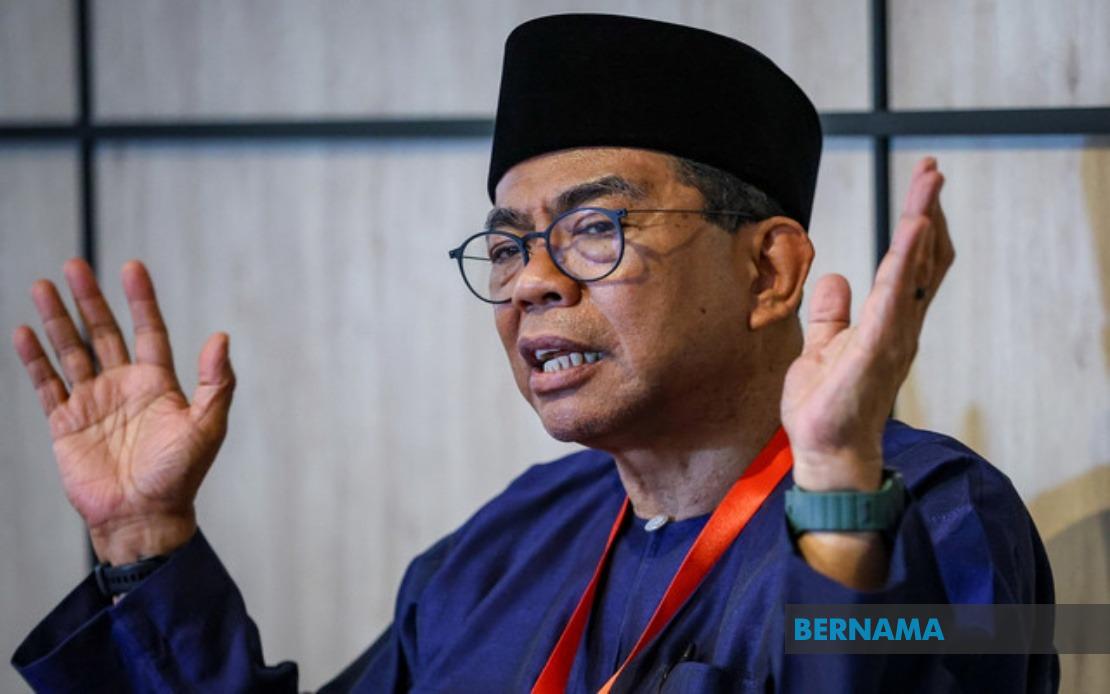
Malaysia's Defence Minister Datuk Seri Mohamed Khaled Nordin has robustly defended the government's decision to expel Israeli nationals, characterising the enforcement action as a natural extension of the country's longstanding refusal to recognise Israel as a state. Speaking to reporters in Johor Bahru on July 25 following the opening of the Pasir Gudang UMNO division delegates meeting, Mohamed Khaled stressed that Malaysia's position remains immovable and that all administrative measures taken flow directly from this foundational policy principle.
The expulsion of Israeli nationals, according to Mohamed Khaled, was undertaken to prevent any involvement by Israeli citizens in the Network School project, which emerged as a focal point of controversy in Forest City. Rather than characterising this as a punitive measure, the Defence Minister framed it as a procedural enforcement mechanism designed to uphold Malaysia's consistent national stance. He emphasised that Malaysia's borders have long operated under a clear directive: Israeli nationals are not permitted entry into the country, regardless of the circumstances or justifications offered by foreign governments.
The timing of Mohamed Khaled's statement arrives amid mounting diplomatic pressure from the United States. Eight members of the US Congress recently issued a formal letter dated July 21 to Secretary of State Marco Rubio, urging the American administration to review and potentially downgrade its security and economic partnerships with Malaysia. The Congressional delegation specifically raised the prospect of suspending Malaysia's participation in the International Military Education and Training programme, commonly referred to as IMET, which has historically provided valuable professional development opportunities for Malaysian defence personnel.
Most significantly, the US lawmakers attached a 15-day ultimatum to their demands, pressuring Malaysia to alter its policy stance within that compressed timeframe or face the consequences of reduced military cooperation. This represents an unusually direct attempt to leverage security assistance as a tool for extracting policy concessions from a Southeast Asian nation. The expulsion incident that triggered this Congressional response involved an Israeli national who had allegedly entered Malaysia using a passport issued by another country, effectively circumventing standard border procedures.
Yet Mohamed Khaled dismissed the Congressional pressure with evident composure, arguing that any American decision regarding IMET funding constitutes an internal matter between the US Congress and the executive branch. Notably, he asserted that Malaysia's principled enforcement of its non-recognition policy has not resulted in any disruption to existing IMET programme funding, suggesting that the security relationship has remained functionally intact despite the diplomatic tension. This assertion carries weight, as it indicates that the American administration has not yet acted on Congressional recommendations.
Prime Minister Datuk Seri Anwar Ibrahim has previously reinforced this ministerial position, issuing his own categorical statement that Malaysia will not compromise its foundational principles and will expel any Israeli national discovered within Malaysian territory. Ibrahim's reaffirmation underscores that this is not merely the position of the Defence Ministry but represents whole-of-government policy consensus at the highest level. His commitment to a thorough investigation conducted by all relevant security agencies demonstrates the seriousness with which the government views both the enforcement of its policy and the integrity of Malaysia's borders.
For Malaysian observers, this episode illuminates the persistent tension between Malaysia's principled foreign policy stance and its broader strategic relationships with Western nations. Malaysia has built its international posture on the foundation of non-alignment and the protection of its sovereign right to determine its own diplomatic relationships, particularly on matters relating to the Middle East. This constitutional principle has deep roots in Malaysian political culture and enjoys substantial domestic support across the political spectrum.
The broader context reveals how Malaysia's position reflects not isolationism but rather a deliberate choice about which relationships to prioritise. While Malaysia maintains robust military cooperation with the United States through various channels including IMET, this cooperation operates within parameters that Malaysia itself has established. The government's evident confidence that IMET funding will continue despite Congressional grumbling suggests either that such threats carry limited credibility or that the US administration values the security relationship sufficiently to resist Capitol Hill pressure.
From a Southeast Asian perspective, Malaysia's stance carries implications for regional stability and the maintenance of international legal principles. By refusing to recognise Israel, Malaysia aligns itself with broader Arab and Muslim-majority nations' positions, a political calculation with both domestic legitimacy and regional resonance. The case also demonstrates how individual countries within the region navigate pressures from major powers while maintaining their own policy autonomy.
The Network School incident itself remains the subject of ongoing investigation, with security agencies examining allegations that extended beyond the single expulsion. The investigation's findings could potentially influence how Malaysia calibrates its border security procedures and international engagement strategies moving forward. However, officials have signalled that any investigative conclusions will not alter the foundational policy principle.
Mohamed Khaled's public statements serve multiple domestic and international audiences simultaneously. To domestic constituencies, they affirm government commitment to principles that resonate with Malaysian values. To international partners, they signal that Malaysia cannot be coerced into policy reversals through economic or military incentives. This rhetorical strategy, combined with the apparent continuation of security cooperation with the United States, suggests Malaysia is attempting a delicate balance: maintaining its policy integrity while preserving pragmatic relationships with strategic partners.
The episode ultimately reflects Malaysia's maturation as an independent nation capable of managing complex international relationships without surrendering to external pressure. While the 15-day Congressional ultimatum has received considerable attention, Malaysia's response indicates it will not be governed by externally imposed deadlines when fundamental principles are at stake. Whether this principled stance translates into long-term costs or benefits for Malaysian-American security cooperation remains to be seen, but for now, Malaysia appears resolved to pursue its chosen path.

