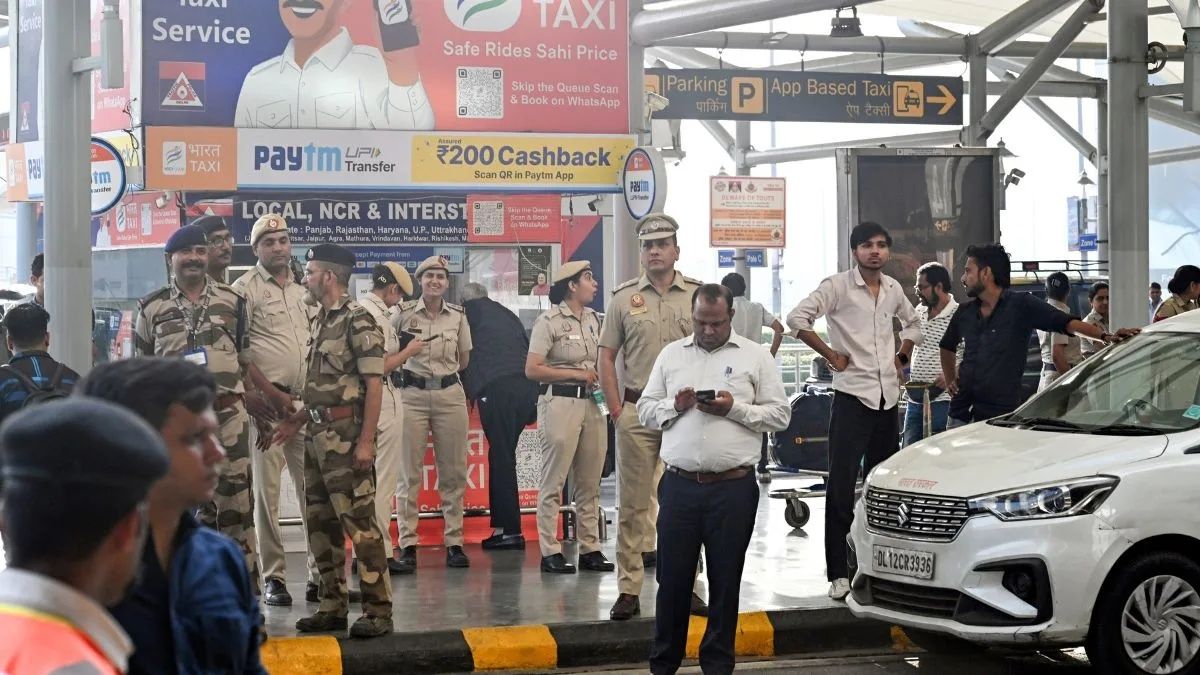
Indian security forces have successfully apprehended two suspected operatives of the banned Khalistan Zindabad Force upon their arrival at Delhi's Indira Gandhi International Airport, following their deportation from Malaysia in a coordinated operation with local authorities. The action represents a significant escalation in India's efforts to dismantle overseas terror networks that have been channelling resources and coordination to militant cells operating within Punjab, demonstrating how transnational criminal financing and organisational structures continue to pose security challenges across South and Southeast Asia.
Punjab's Director General of Police Gaurav Yadav confirmed that the pair—identified as Gurvinder Singh of Ambala and Manjit Singh of Patiala—were arrested as they disembarked, following an intelligence-driven investigation that revealed their alleged involvement in coordinating terror-related activities from Malaysian soil. The operation underscores the growing nexus between diaspora communities in Southeast Asia and militant organisations back home, a pattern that security agencies across the region have increasingly grappled with as international travel and financial systems become more sophisticated.
The deportation connects directly to a series of violent incidents that have rocked Punjab over recent months. Security agencies had been investigating a terror module suspected of planning attacks on critical infrastructure, including the state's railway network and the Dedicated Freight Corridor. This investigation gained momentum following an improvised explosive device blast that occurred near Sirhind in Fatehgarh Sahib district on January 23 this year, followed by a second bombing attempt near Shambhu in Patiala district on April 27, both of which authorities attribute to KZF-linked cells.
During the course of these investigations, police arrested multiple suspects and recovered an extensive arsenal that included an RPG launcher, sophisticated explosives, RDX quantities, hand grenades, automatic pistols, and ammunition. The sheer sophistication and scale of the seizures suggested a well-resourced operation backed by external funding sources rather than a localised group operating independently. This discovery prompted investigators to shift their focus toward tracing the financial architecture supporting these cells, leading them ultimately toward transnational networks.
Financial investigators subsequently uncovered evidence that suggested money destined for these terror modules was being transferred through foreign channels rather than sourced domestically. The digital and banking traces pointed investigators toward Malaysia, where Gurvinder Singh and Manjit Singh emerged as key nodes in what appeared to be a financial distribution network. According to police statements, the two men had allegedly been instrumental in arranging monetary support for KZF operatives working within Punjab, acting as intermediaries between overseas handlers and ground-level terrorists.
The broader investigation has revealed what authorities describe as an international ecosystem of handlers, financiers, and facilitators distributed across multiple countries but coordinating closely to support prohibited organisations. Yadav indicated that the accused individuals maintained overseas accounts and manipulated financial channels to funnel resources to banned outfits with the explicit aim of destabilising peace and security across Punjab. This international network structure mirrors patterns observed in other terror financing cases across the region, where diaspora networks and sympathetic financiers abroad play crucial roles in sustaining militant activities.
For Malaysian readers, the incident highlights how Southeast Asian nations continue to serve as transit points and operational bases for individuals linked to foreign terror organisations, despite strict laws against harbouring militants. The Royal Malaysia Police's cooperation in executing the deportation reflects the country's commitment to counter-terror protocols, yet the case also demonstrates the persistent challenge of identifying and monitoring individuals engaged in clandestine financial and logistical support activities that may not involve direct violence on local soil.
Following their arrival in Delhi, the two accused were presented before a court in Patiala, which subsequently ordered police custody for interrogation purposes. The questioning phase is expected to yield further intelligence regarding their contacts, operational methods, and the broader network structure. Investigators are particularly focused on identifying additional associates and uncovering the complete chain of individuals involved in the conspiracy, from overseas handlers down to operational cells within Punjab.
The case also raises questions about the effectiveness of international banking oversight and the challenges intelligence agencies face in tracking illicit financial flows. Hawala networks, cryptocurrency transfers, and informal value transfer systems can obscure the origins and destinations of funds, making it difficult for financial intelligence units to detect suspicious patterns. The successful tracking of flows in this case involved cooperation between Indian financial investigators and Malaysian authorities, suggesting that improved bilateral intelligence sharing and financial coordination mechanisms may be necessary to combat such networks more effectively.
Security officials have reiterated their commitment to dismantling the entire infrastructure of terror support, not merely capturing individual operatives. This approach reflects an understanding that arresting foot soldiers or mid-level coordinators provides only temporary disruption unless the broader ecosystem—which includes financiers, recruiters, safe-house operators, and logistics coordinators—is systematically dismantled. The investigation into Gurvinder Singh and Manjit Singh is therefore likely to extend far beyond their interrogation, potentially implicating networks across multiple countries and jurisdictions.
The deportation and arrest also signal the intensifying security focus on Punjab, a state that has historically been vulnerable to extremist violence and that continues to attract international militant attention. While the state has experienced relative peace in recent years compared to the 1980s and 1990s, periodic terror plots and the resurgence of activity by organisations such as KZF remind policymakers that underlying conditions and transnational support networks can reignite conflict if not actively disrupted. The involvement of Malaysia and Indian authorities in this operation demonstrates how counter-terrorism has become a genuinely international endeavour, requiring coordination across borders and jurisdictions to be effective.

