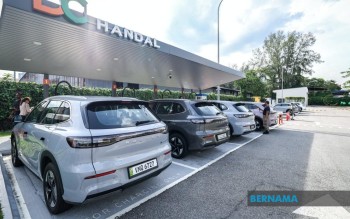
Malaysia's government has chosen a hands-off approach to electric vehicle charging pricing, allowing private sector operators to determine rates according to their own business strategies rather than adhering to government-mandated price ceilings. The Ministry of Investment, Trade and Industry responded to a parliamentary inquiry by clarifying that no regulatory pricing framework governs the commercial rates charged by public EV charging station operators nationwide, a stance designed to encourage robust competition and sustained private investment in the burgeoning charging infrastructure sector.
This deliberate policy decision reflects a broader ideological commitment to market mechanisms over state intervention. By refraining from imposing price controls, the government aims to create conditions where competing operators have flexibility to recover their infrastructure investment costs, maintain operational efficiency, and generate returns that justify ongoing capital expenditure. The rationale rests on the assumption that competition among multiple operators will naturally constrain excessive pricing, while uniform price regulation could discourage new entrants and slow network development.
The scope of Malaysia's EV charging infrastructure has expanded considerably in recent years. As of May 31, 2026, the country had deployed 6,416 public EV chargers across various locations and formats. Direct current fast chargers, which enable rapid vehicle recharging suitable for highway travel and urban commuting, account for 2,143 installations representing one-third of the total network. The remaining two-thirds comprise alternating current chargers, slower but more suitable for residential and workplace settings where vehicles typically remain stationary for extended periods.
Geographic distribution reveals substantial regional imbalances in charging infrastructure availability. Peninsular Malaysia dominates the landscape with 6,176 chargers, equivalent to 96 percent of the national total. This concentration reflects both population density and vehicle ownership patterns, but leaves Sarawak and Sabah significantly underserved with only 208 and 32 chargers respectively. For Malaysian drivers in East Malaysia, this geographic gap presents a tangible challenge to adopting electric vehicles, particularly for longer journeys, and suggests that market forces alone may be insufficient to address infrastructure equity across diverse regions.
While pricing remains unregulated, the government maintains oversight through multiple regulatory dimensions aimed at safeguarding public safety and technical standards. Charging facility developers and operators must comply with requirements established by MITI, the Energy Commission, and local municipal authorities. These regulations govern installation safety, electrical standards, grid integration protocols, and environmental compliance rather than commercial pricing decisions. This bifurcated approach attempts to balance operational safety with commercial freedom.
The government has established institutional coordination mechanisms to ensure the EV ecosystem develops cohesively across multiple policy domains. The National EV Task Force Meeting, chaired by MITI, serves as the primary coordination platform for sectoral development, while a higher-level National EV Steering Committee chaired by the deputy prime minister addresses strategic policy matters. These bodies enable cross-ministerial alignment on technical standards, infrastructure deployment, industry growth targets, and regulatory development without fragmented decision-making across competing agencies.
The pricing question took on particular significance following Senator Robert Lau Hui Yew's parliamentary inquiry, which sought clarity on whether Malaysian authorities intended to introduce licensing requirements, government oversight, or price regulation for charging operators. The government's comprehensive written response essentially confirmed that none of these mechanisms would be implemented, instead emphasizing reliance on market competition and operator discretion. This response will likely influence expectations among investors evaluating the attractiveness of Malaysia's EV charging sector relative to regional competitors.
The government simultaneously acknowledges ongoing collaborative work with key stakeholders including the Energy Commission and Tenaga Nasional Bhd regarding potential regulatory approaches to EV charging fees. This apparent paradox between stated commitment to market freedom and simultaneous regulatory development suggests either that discussions remain preliminary, or that government agencies are exploring frameworks that could be implemented without formal price controls. For investors and operators, this ambiguity creates some uncertainty about whether the current light-touch regulatory environment represents permanent policy or an interim position pending further stakeholder consultation.
Malaysia's approach stands in contrast to several international precedents where governments have intervened more directly in EV charging economics. Some jurisdictions have established price ceilings for fast-charging to ensure affordability for mass adoption, while others have mandated transparency in pricing structures. By pursuing a more libertarian market model, Malaysia is betting that profit incentives will drive network expansion faster than government-directed deployment and that competitive pressures will prevent operators from exploiting early adopters lacking charging alternatives.
For Malaysian consumers, this policy framework means that charging prices will likely vary significantly across different operators, locations, and times of day depending on local competitive dynamics and individual business models. Early adopters in urban areas with multiple competing operators may benefit from competitive pricing, while those in less densely populated regions may face higher effective costs due to limited alternatives. This distributional consequence raises questions about whether market-driven development adequately addresses equity concerns in EV adoption.
The expansion trajectory of Malaysia's charging network will become an important test case for market-driven infrastructure development in a developing Asian economy. If private investment flows robustly and charging accessibility improves across diverse geographic and socioeconomic segments, the approach will validate the government's market philosophy. Conversely, if network expansion stalls in lower-profit areas or pricing becomes prohibitively high for mass-market adoption, pressure may emerge for government intervention despite current policy commitments.
Regional implications deserve consideration as well. Malaysia's permissive approach contrasts with regulatory frameworks emerging elsewhere in Southeast Asia, and the outcomes will likely influence EV charging policy discussions throughout the region. Thailand, Indonesia, and Vietnam are simultaneously developing their own charging infrastructures and regulatory strategies, and Malaysia's experience with market-based approaches may either encourage imitation or serve as a cautionary example depending on deployment success and affordability outcomes over the coming years.

