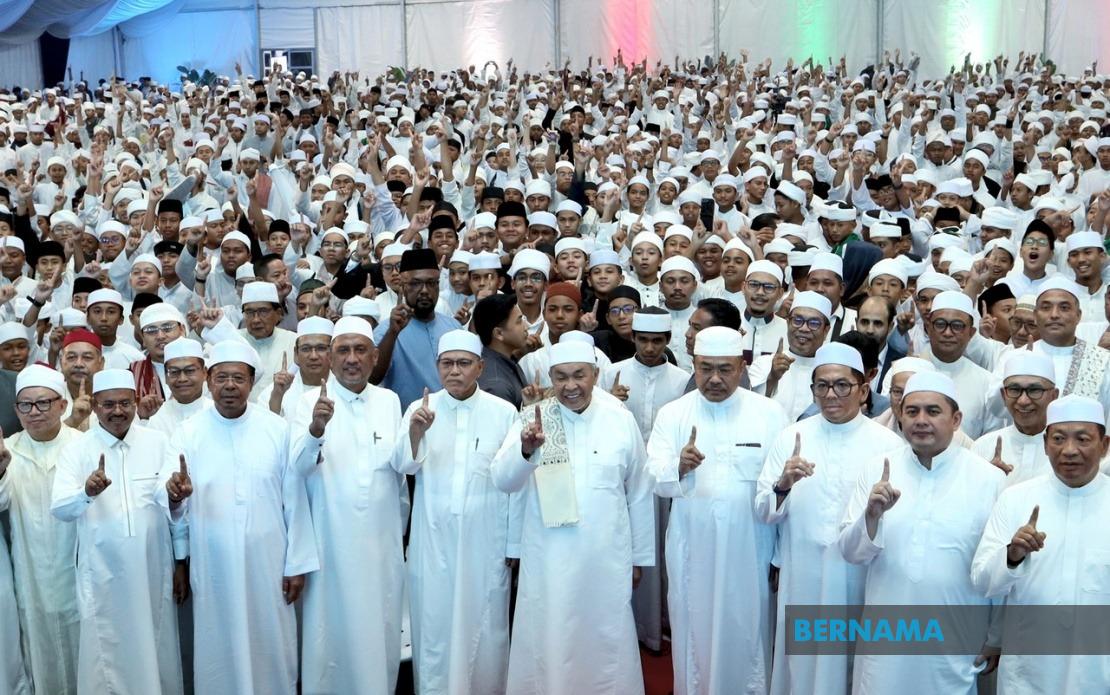
Malaysia has taken a significant structural step in elevating Quranic memorisation education by approving the creation of a National Tahfiz Council, a move aimed at bringing consistency and legitimacy to tahfiz institutions across the country. Deputy Prime Minister Datuk Seri Dr Ahmad Zahid Hamidi announced the Cabinet's approval at the Pahang State Huffaz Gathering 2026 in Kuantan, where he revealed he will chair the new council. The initiative represents a recognition by federal authorities that tahfiz education, previously operating largely outside mainstream educational frameworks, requires formal institutional oversight and standardisation to ensure quality and recognised credentials for students.
The establishment of this council carries profound implications for thousands of Malaysian students pursuing Quranic memorisation. Currently, huffaz completing their studies face significant barriers in transitioning to tertiary education or professional employment, as their credentials often lack formal recognition within Malaysia's national education structure. The new council directly addresses this disconnect by seeking to position tahfiz as a legitimate and integrated educational pathway rather than a parallel or supplementary system. This shift could fundamentally transform how families and students view Islamic education, moving it from a primarily religious pursuit to one with tangible academic and career outcomes.
Deputy Prime Minister Ahmad Zahid articulated an ambitious vision for what the council should accomplish: enabling tahfiz students to progress seamlessly from madrasah education through to university study, and ultimately into professional careers with internationally recognised qualifications. His emphasis on combining memorisation with practical skills development signals a departure from traditional models focused solely on Quranic retention. This modern approach seeks to equip huffaz not just with religious knowledge but with technical competencies relevant to contemporary labour markets, potentially opening diverse career pathways for graduates of these institutions.
Pahang has emerged as a model for structured tahfiz education development within Malaysia. The state has pioneered early childhood initiatives such as Tadika Tahfiz Negeri Pahang, which aims to cultivate interest in Quranic study from kindergarten age, creating a continuous educational pipeline. According to Ahmad Zahid, Pahang demonstrates how tahfiz education can be developed into a comprehensive knowledge system spanning early childhood through international-level study. This state-level success provides valuable proof of concept that tahfiz education, when properly structured and resourced, can achieve the ambitions now being enshrined nationally through the new council.
The Malaysian government is simultaneously implementing the National Tahfiz Policy 2.0, which introduces several critical structural initiatives to support this formalisation. These include the development of TVET (Technical and Vocational Education and Training) pathways specifically designed for tahfiz students, the creation of the Malaysian Tahfiz Certificate 2.0 to provide nationally standardised credentials, and the establishment of graded hafazan certification to assess Quranic memorisation levels consistently. Additionally, the government has introduced the Huffaz Financing Scheme to address financial barriers to tahfiz education, recognising that cost considerations often deter families from pursuing this educational path for their children.
The memorandum of understanding signed between Yayasan Pahang, the Community Development Department (KEMAS), and Majlis Amanah Rakyat (MARA) represents a practical manifestation of this policy framework. By bringing together government agencies responsible for community development, indigenous economic advancement, and local foundation work, the agreement creates institutional partnerships designed to strengthen tahfiz education infrastructure while simultaneously expanding skills development opportunities. This collaborative approach suggests that the government intends the National Tahfiz Council to function within a broader ecosystem of supporting agencies and initiatives rather than as an isolated bureaucratic entity.
From a Southeast Asian perspective, Malaysia's institutionalisation of tahfiz education carries regional significance. Other Muslim-majority nations in the region also grapple with balancing Islamic education preservation with modern skills development and economic integration. Malaysia's efforts to create formal recognition standards and professional pathways could serve as a model or point of reference for neighbouring countries considering similar reforms. The Malaysian Tahfiz Recognition Standard, in particular, may eventually facilitate regional recognition agreements if other ASEAN nations adopt compatible frameworks.
The integration of tahfiz education into Malaysia's formal education system addresses longstanding concerns about educational equity and opportunity. Historically, tahfiz students have faced implicit discrimination in employment and higher education contexts, with employers and universities viewing such credentials as outside standard qualification frameworks. By bringing tahfiz under formal government oversight and accreditation, the National Tahfiz Council aims to elevate its status and ensure huffaz possess certified, nationally recognised credentials comparable to other educational streams. This legitimisation could have profound effects on social mobility for families in communities where tahfiz education is traditionally prioritised.
The council's establishment also reflects Malaysia's broader policy direction under the current administration. Prime Minister Datuk Seri Anwar Ibrahim's decision to assign Deputy Prime Minister Ahmad Zahid as chair indicates high-level political commitment to the initiative. This placement suggests that tahfiz education policy will remain a significant focus within Cabinet-level discussions, rather than being delegated to lower-tier ministerial portfolios. Such positioning typically signals that the government views this portfolio as strategically important within its overall governance agenda.
Looking forward, the success of the National Tahfiz Council will depend on several implementation factors. The council must effectively coordinate between religious authorities, education ministries, vocational training institutions, and higher education providers to ensure the promised seamless transitions between educational levels actually materialise. It must also navigate the delicate balance between standardisation and preserving the religious and cultural distinctiveness that makes tahfiz education meaningful to its communities. If the council achieves these aims, it could transform tahfiz from a marginalised educational stream into a mainstream pathway offering genuine competitive advantage in Malaysia's knowledge economy while maintaining Islamic educational values.

