Malaysia's education system is bracing for one of its most substantial structural changes in decades. The Ministry of Education has announced an ambitious infrastructure and human resources expansion to accommodate a dual Year One intake in 2027, when six-year-old children will enter formal schooling alongside the traditional seven-year-old cohort. The combined effort represents a fundamental reorganisation of primary education entry points that will reshape enrolment patterns and classroom management nationwide.
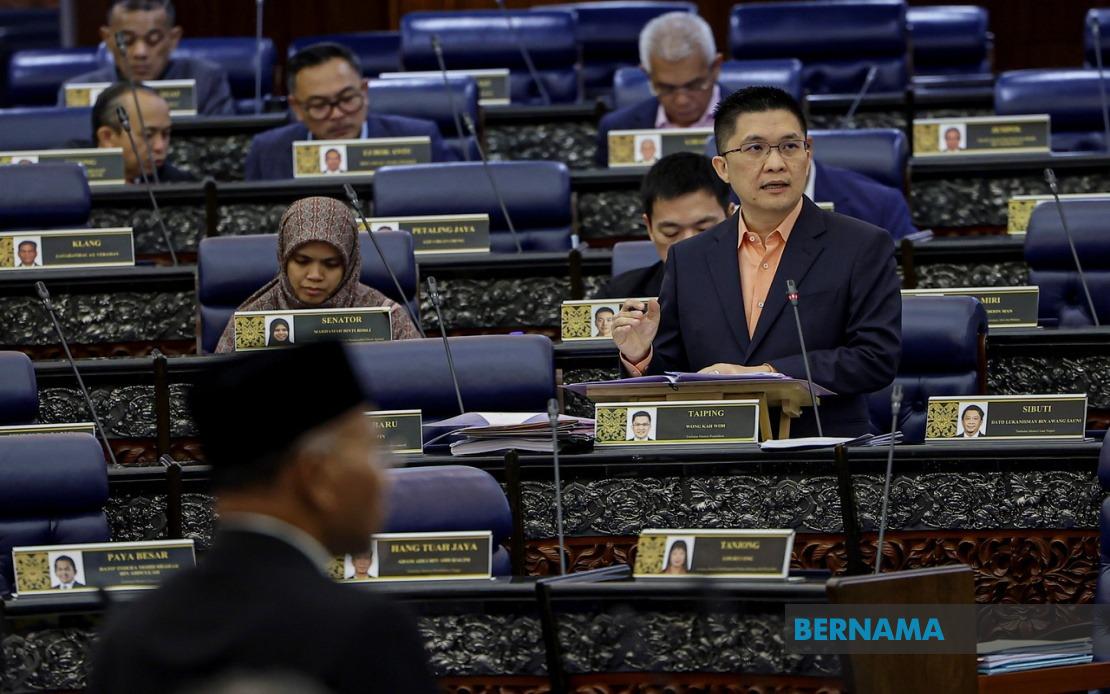
Deputy Education Minister Wong Kah Woh revealed during parliamentary proceedings that the ministry has already fielded 478,419 Year One registration applications for the 2027 academic session. This figure comprises 73,386 applications from six-year-olds and 405,033 from seven-year-olds, representing a substantial 12.07 per cent surge compared to 2026 enrolment figures, which involved only the seven-year-old cohort. The registration volume underscores both strong parental demand for earlier schooling entry and the scale of logistical challenges the ministry must navigate.
To manage this unprecedented cohort expansion, the MOE is embarking on aggressive classroom construction across 838 schools nationwide. The authority plans to build 2,596 new classrooms utilising the Industrialised Building System (IBS) modular construction method, a modern approach that enables rapid assembly and deployment of educational facilities. Wong indicated that these construction projects are scheduled for completion within the current financial year, demonstrating the ministry's commitment to having physical infrastructure ready before the 2027 intake begins. This accelerated timeline underscores the urgency with which authorities view the transition.
Staffing represents an equally critical component of the preparation strategy. The ministry intends to recruit 3,150 contract of service teachers to supplement existing personnel and manage the increased student population. Beyond COS appointments, Wong outlined plans to activate reserve candidates from the Education Service Commission (SPP) to bolster teaching ranks and address potential gaps in coverage across different states. This multi-tiered recruitment approach recognises that conventional staffing channels alone may prove insufficient to meet the simultaneous demands of accommodating two age cohorts in Year One classrooms.
The government is also tackling the foundational readiness question that underpins the entire initiative. Parents are being offered discretionary authority to determine whether their six-year-old children possess adequate developmental maturity to enter Year One or should remain in pre-school for an additional year. This flexible approach acknowledges the individual developmental trajectories of young learners and seeks to avoid forced early entry that might compromise academic progress. The ministry recognises that chronological age does not uniformly correlate with psychological and cognitive readiness for formal learning.
In tandem with primary school preparations, the MOE has significantly expanded pre-school capacity to ensure a smoother transition pathway. The ministry has added 350 new pre-school classes in the current year, compared with an average of approximately 150 classes annually in previous periods. This three-fold increase directly supports the government's stated objective of expanding early childhood education access, particularly for lower-income families classified as B40 whose financial constraints prevent private kindergarten enrolment. Enhanced pre-school availability serves both developmental and equity objectives simultaneously.
The transition to dual-year-group intake has generated legitimate concerns regarding the sustainability and future viability of Malaysia's private kindergarten sector. These institutions face structural headwinds as one age cohort will be absorbed into the public school system, potentially reducing their traditional client base. The MOE is actively engaging with private education stakeholders to understand implications and explore potential adaptations, demonstrating recognition that the policy shift extends beyond government education into the broader early childhood ecosystem.
Teacher training emerges as a critical preparatory domain requiring sustained focus and investment. Wong acknowledged that the curriculum delivery to six-year-olds necessitates pedagogical approaches, skill sets, and professional competencies distinct from those traditionally deployed for seven-year-old learners. The ministry is therefore reinforcing professional development programmes to equip educators with age-appropriate instructional methodologies, classroom management strategies tailored to younger pupils, and developmental psychology frameworks. These training initiatives operate alongside the numerical expansion of teaching positions.
The 2027 school curriculum itself is undergoing deliberate restructuring to align with learner developmental stages. Wong confirmed that the curriculum architecture being finalised for 2027 implementation will be calibrated to six-year-old developmental levels and cognitive capacities, rather than simply replicating existing Year One frameworks. This curricular recalibration extends beyond subject content to encompass teaching pace, assessment approaches, and social-emotional learning components deemed appropriate for entry-level primary learners. The ministry recognises that effective simultaneous intake of two cohorts requires pedagogically sound age-differentiation.
Transition support programmes constitute another cornerstone of the preparation strategy. Wong emphasised that Year One transition initiatives will be deployed comprehensively to ease adjustment challenges, particularly for the younger cohort unfamiliar with formal classroom structures and institutional routines. These programmes typically encompass orientation activities, graduated exposure to school environments, parental engagement components, and developmental monitoring to identify pupils requiring additional support. Effective transition programming significantly influences long-term academic success and psychological wellbeing during the critical primary school entry period.
The MOE's projections extend across both national and state levels, indicating sophisticated capacity planning that accounts for regional demographic variation and infrastructure disparities. Wong referenced the ministry's five-year teacher requirement forecasts, suggesting that the 3,150 COS recruitment target reflects evidence-based calculation rather than arbitrary staffing decisions. This granular, state-level planning approach acknowledges that educational infrastructure and demographic distribution vary substantially across Malaysian states, requiring differentiated implementation strategies.
For Malaysian education stakeholders, the 2027 transition marks a pivotal moment requiring coordinated action across multiple institutional levels. Schools must simultaneously manage physical expansion, staff recruitment and training, curriculum implementation, and pupil transition support. State education departments face resource allocation pressures. Private kindergarten operators must strategically adapt business models. Teachers nationwide must embrace professional development requirements. Parents must make informed decisions about their children's readiness. The systemic complexity of this transition demands sustained political commitment and adequate resource allocation throughout the implementation period.

