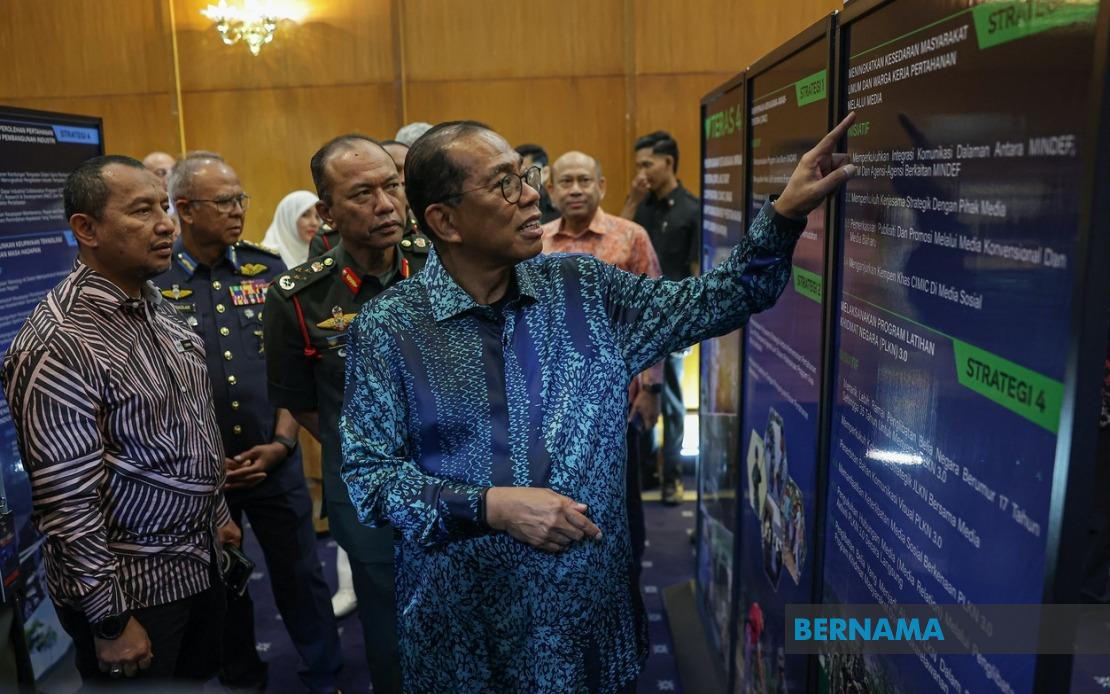
Malaysia has taken a significant step in modernising its defence framework with the launch of two comprehensive planning documents aimed at fortifying the nation's security posture through 2030. The Defence Ministry introduced the National Defence Strategic Plan (PSPN) and the Defence Capacity Blueprint (RTKP) 2026-2030 on June 25, marking a deliberate attempt to align Malaysia's military capabilities with the complexities of the contemporary security environment. Defence Minister Datuk Seri Mohamed Khaled Nordin characterised these initiatives as essential complements to the existing Defence White Paper, enabling the country to maintain strategic flexibility in response to rapidly shifting global dynamics.
The impetus for this strategic overhaul stems from a sobering assessment of the current geopolitical landscape. The international system is experiencing unprecedented levels of uncertainty, with regional tensions, great power competition, and technological disruption converging to create novel security challenges. The Defence Ministry's analysis identified artificial intelligence and automation as particularly disruptive technologies that necessitate fundamental shifts in how armed forces plan, train, and operate. Beyond traditional military threats, Malaysia and its Southeast Asian neighbours face an expanding array of non-traditional dangers—from cyber attacks and maritime piracy to transnational terrorism and environmental degradation—that demand integrated national responses.
The PSPN represents the strategic vision component of this defence overhaul, built upon seven foundational pillars that collectively define Malaysia's defence ambitions. These pillars encompass the operational readiness of the Malaysian Armed Forces, signalling an emphasis on maintaining combat-effective units capable of rapid deployment. Enhancement of defence capabilities constitutes another pillar, reflecting recognition that existing military hardware and systems require modernisation to match evolving threats. The welfare provisions for military personnel and veterans constitute a third pillar, acknowledging that force sustainability depends on maintaining morale and well-being across the armed forces community. The remaining pillars address defence technology and innovation, underscoring Malaysia's commitment to leveraging cutting-edge advancements in military applications, alongside other strategic dimensions that position the armed forces as instruments of national security.
While the PSPN articulates where Malaysia intends to direct its defence efforts, the RTKP addresses the practical question of how the nation will actually achieve these objectives. Minister Mohamed Khaled emphasised this distinction, explaining that capacity building forms the linchpin connecting strategic aspiration to operational reality. The blueprint identifies four critical domains requiring systematic development: financial resources, human capital, technological expertise, and inter-agency coordination mechanisms. This comprehensive approach recognises that modern defence challenges rarely fall neatly within any single ministry's remit, necessitating horizontal coordination across government bureaucracies and engagement with the private sector, academic institutions, and civil society organisations.
The capacity framework articulated in the RTKP extends beyond conventional military parameters. It encompasses leadership development, professional military competencies, research capabilities, and innovation ecosystems—recognising that technological superiority increasingly depends on sustained investment in knowledge creation rather than merely acquiring equipment. Financial sustainability emerges as a critical consideration, with the blueprint implicitly acknowledging that defence modernisation requires consistent budgetary commitment over extended timeframes. The emphasis on inter-agency coordination reflects lessons learned from security challenges that transcend traditional defence sector boundaries, whether cybersecurity threats targeting critical national infrastructure or hybrid warfare operations blending conventional military action with disinformation campaigns.
The government's stated commitment to a whole-of-government and whole-of-society approach represents a conceptual shift with significant practical implications. This framework moves beyond the historical pattern of treating defence primarily as a military ministry function, instead positioning national security as a collective societal responsibility. Such an approach requires buy-in from economic ministries managing defence industrial development, interior ministries addressing internal security, communications authorities combating information warfare, and civilian authorities ensuring resilient infrastructure. For Malaysia, a maritime nation with significant maritime boundaries and economic interests in busy sea lanes, this integrated approach carries particular weight in addressing piracy, smuggling, and maritime boundary disputes.
The Defence Ministry's recent and anticipated hardware acquisitions illustrate the concrete application of these strategic frameworks. Malaysia received three ANKA Medium Altitude Long Endurance Unmanned Aircraft Systems in March, which are now operational at Labuan Air Base. These systems significantly extend Malaysia's aerial reconnaissance and surveillance capabilities, particularly valuable for monitoring the extensive maritime domain and responding to non-traditional security threats. The planned acquisition of FA-50M light combat aircraft, maritime patrol aircraft, and additional Littoral Mission Ships reflects a deliberate force structure evolution designed to address specific capability gaps. The phased approach to these acquisitions—spreading them according to schedule rather than attempting simultaneous procurement—suggests realistic assessment of Malaysia's defence budget constraints and industrial absorption capacity.
For Malaysia and the broader Southeast Asian region, these strategic documents arrive at a particularly consequential moment. The South China Sea remains a flashpoint for great power competition, with multiple claimants pursuing conflicting territorial assertions and militarisation accelerating across the region. Malaysia's position as a significant regional maritime power with substantial economic interests in regional sea lanes necessitates credible defence capabilities to deter coercion and maintain freedom of navigation. The emphasis on technological modernisation and capacity building reflects understanding that regional military competition increasingly favours technologically advanced forces capable of rapid decision-making and coordinated operations.
The Defence Ministry's articulation of geopolitical uncertainty and technological disruption demonstrates awareness of how global trends intersect with Malaysia's specific security environment. Artificial intelligence applications in military contexts—from autonomous systems to predictive analytics and cyber operations—require both operational adaptation and workforce reskilling. The reference to increasingly complex non-traditional threats implicitly encompasses cyber attacks against critical national infrastructure, biological threats, transnational terrorism, and organised crime, all of which have affected Malaysia in recent years. The mid-term review process that preceded these documents suggests deliberate strategic assessment rather than merely routine bureaucratic planning.
The Defence Capacity Blueprint's emphasis on coordination mechanisms and governance frameworks addresses a persistent challenge in Malaysian defence planning: translating strategic intent into sustained institutional action. Government agencies frequently struggle to maintain focus on long-term strategic objectives amidst competing demands and leadership transitions. By institutionalising capacity-building efforts and establishing coordination mechanisms, the blueprint attempts to create structures that can survive normal bureaucratic disruptions. This represents an important refinement in Malaysian defence management, moving beyond occasional strategic planning exercises toward systematic capacity development.
For civilian analysts and policymakers monitoring Malaysia's security trajectory, these documents signal continuity with long-standing defence priorities while incorporating contemporary threat assessments. The explicit acknowledgement of artificial intelligence and automation as security challenges places Malaysia among regional nations actively grappling with technological disruption's military implications. The whole-of-society framework, while ambitious, reflects growing international recognition that security challenges increasingly require civilian-military collaboration and whole-government approaches. Malaysia's implementation success will depend on sustained political commitment, adequate resource allocation, and effective coordination across institutions—challenges that have proven demanding for previous strategic initiatives throughout the region.

