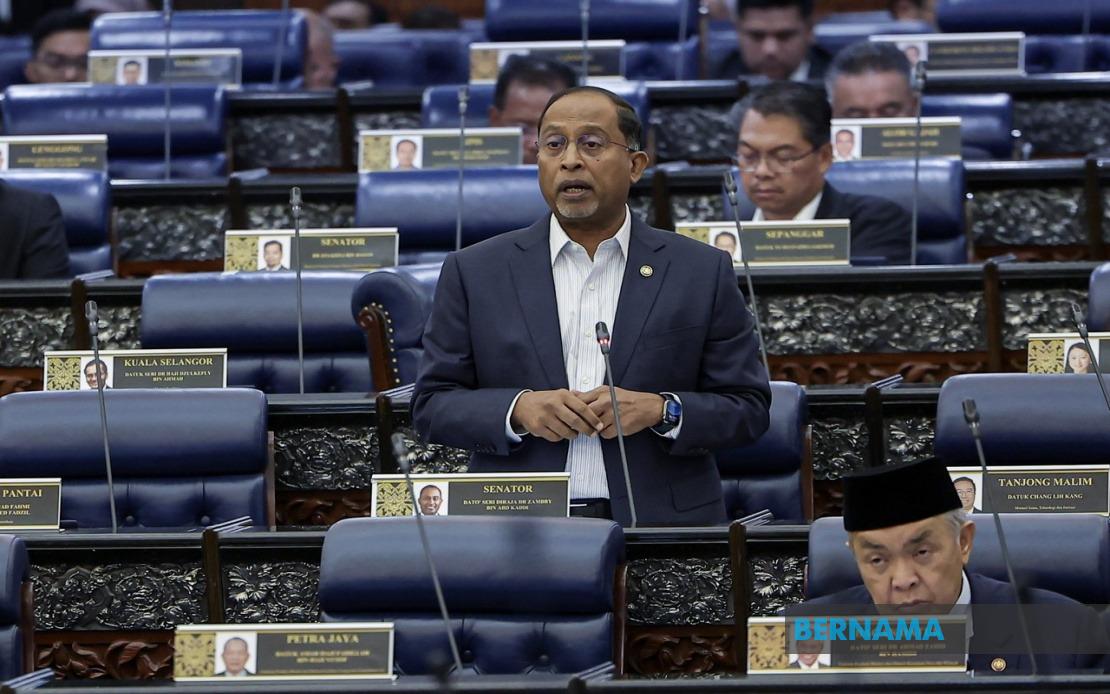
Malaysia's higher education sector is undergoing a fundamental strategic shift in how it measures research success, with the government now prioritising real-world commercial outcomes over academic publications. Higher Education Minister Datuk Seri Dr Zambry Abd Kadir revealed this significant change in direction during parliamentary proceedings, signalling a comprehensive restructuring of how public universities approach research funding and development priorities. The recalibration represents a deliberate response to what officials acknowledge as a persistent gap between Malaysia's research capacity and its ability to translate discoveries into marketable products and services.
The ministry's new impact-driven methodology addresses a critical weakness in the nation's innovation ecosystem—namely, the disconnect between academic research outputs and industry adoption. Rather than measuring success primarily through publication counts in peer-reviewed journals, MOHE now evaluates research initiatives based on their potential to deliver tangible economic benefits and solve real problems for both industrial partners and society more broadly. This represents a significant departure from traditional academic incentive structures, where researchers have historically been rewarded for publishing volume rather than demonstrating practical application of their findings.
Zambry emphasised that the government has deliberately restructured its approach to foster deeper, more productive relationships between higher education institutions and the business sector. The reorientation includes deliberate ecosystem improvements designed to facilitate knowledge transfer, reduce bureaucratic friction between academic and commercial partners, and create clearer pathways for innovations to move from laboratory settings into market-ready products. This ecosystem approach acknowledges that successful commercialisation requires more than brilliant research—it demands institutional support, investor connections, and business acumen that universities traditionally lack.
The evidence of this shift's early success is quantifiable. Over the three-year period spanning 2022 to 2024, public universities have successfully commercialised more than 200 products derived from their research activities. Additionally, research institutions licensed 286 distinct technologies and knowledge assets to industry partners during the same timeframe. While these figures demonstrate meaningful progress, they also highlight the scale of the opportunity ahead, given Malaysia's substantial research investments and the ambitious targets set by government agencies to position the nation as a leading innovation economy in Southeast Asia.
The government has concentrated its research strengthening efforts on five designated research universities, tasking them with developing world-class expertise in strategically important domains. These focus areas—food security, green technology, artificial intelligence, and advanced engineering—reflect Malaysia's economic priorities and regional comparative advantages. By concentrating resources on these sectors rather than spreading investments thinly across all disciplines, the ministry aims to build genuine competitive advantage and attract both international collaboration and investment interest.
To operationalise this transformation, MOHE has introduced several institutional mechanisms designed to bridge the university-industry divide. The Malaysian Laboratories for Academia-Business Collaboration (MyLAB) programme creates dedicated spaces and structures for joint research initiatives, while the Industry Matching Grant scheme provides financial incentives for universities to partner with commercial entities on research projects. The Public-Private Research Network (PPRN) further formalises collaborative structures and reduces reliance on government funding alone, encouraging universities to develop commercially sustainable research models that respond to market demand rather than government directives.
These mechanisms address a fundamental challenge facing developing innovation ecosystems: the risk of creating research outputs that, however intellectually rigorous, fail to attract commercial investment or industry application. By building in market validation requirements from the outset and creating revenue-sharing models, MOHE aims to align academic incentives with commercial viability, encouraging researchers to consider scalability, manufacturing feasibility, and customer needs from the earliest stages of project conception.
The Malaysian Research Assessment framework provides the measurement infrastructure for this new approach, enabling the ministry to track whether research funding is delivering impact-based outcomes rather than merely publication metrics. This shift in evaluation criteria has cascading effects throughout the system, influencing how universities allocate internal resources, how they structure researcher compensation and promotion pathways, and how they recruit talent from both academic and industrial backgrounds.
Looking ahead, MOHE has scheduled the University Research, Innovation and Investment Summit for September, positioning it as a critical moment for catalysing connections between academic researchers, commercial enterprises, and investment capital. By bringing these constituencies together in a structured setting, the summit aims to identify promising research areas with commercial potential, facilitate early-stage investment discussions, and demonstrate to international investors that Malaysia possesses both robust research capabilities and increasingly sophisticated mechanisms for translating those capabilities into viable commercial ventures.
For Malaysia's innovation economy, this strategic reorientation addresses a long-standing competitive vulnerability. While the nation invests substantially in research and higher education, historical patterns have seen many discoveries migrate offshore where stronger commercialisation ecosystems and venture capital availability exist. By deliberately reconstructing the institutional landscape to reward and facilitate commercialisation, the government aims to retain intellectual property within Malaysia and develop local entrepreneurial capacity capable of competing globally in technology-intensive sectors.
The shift also carries implications for Malaysian researchers and aspiring entrepreneurs. Students and academics considering research careers now face different incentive structures and career pathways than previously existed. Universities increasingly value industry partnerships and commercialisation experience alongside traditional academic credentials, creating new opportunities for researchers who possess both technical depth and commercial awareness. For ambitious researchers with entrepreneurial inclinations, the changing institutional landscape offers expanded possibilities for launching ventures directly from university research programmes.
Regionally, Malaysia's experience may prove instructive for other Southeast Asian nations grappling with similar innovation ecosystem challenges. Thailand, Vietnam, and Indonesia face comparable difficulties in translating research investments into commercial outcomes, suggesting that the mechanisms MOHE is implementing could potentially offer lessons or even templates for peer nations seeking to enhance their technological competitiveness. Success in commercialisation could position Malaysia as a knowledge leader within ASEAN on innovation governance and research-to-market translation.
The ultimate test of this strategic reorientation will emerge over the coming years as commercialisation metrics accumulate and investors assess whether Malaysian universities can sustain competitive advantages in key technology domains. Early indicators are encouraging, but scaling current achievements into a self-sustaining innovation ecosystem will require sustained commitment from policymakers, continued investment, and cultural shifts within academic institutions that privilege applied outcomes alongside fundamental discovery.

