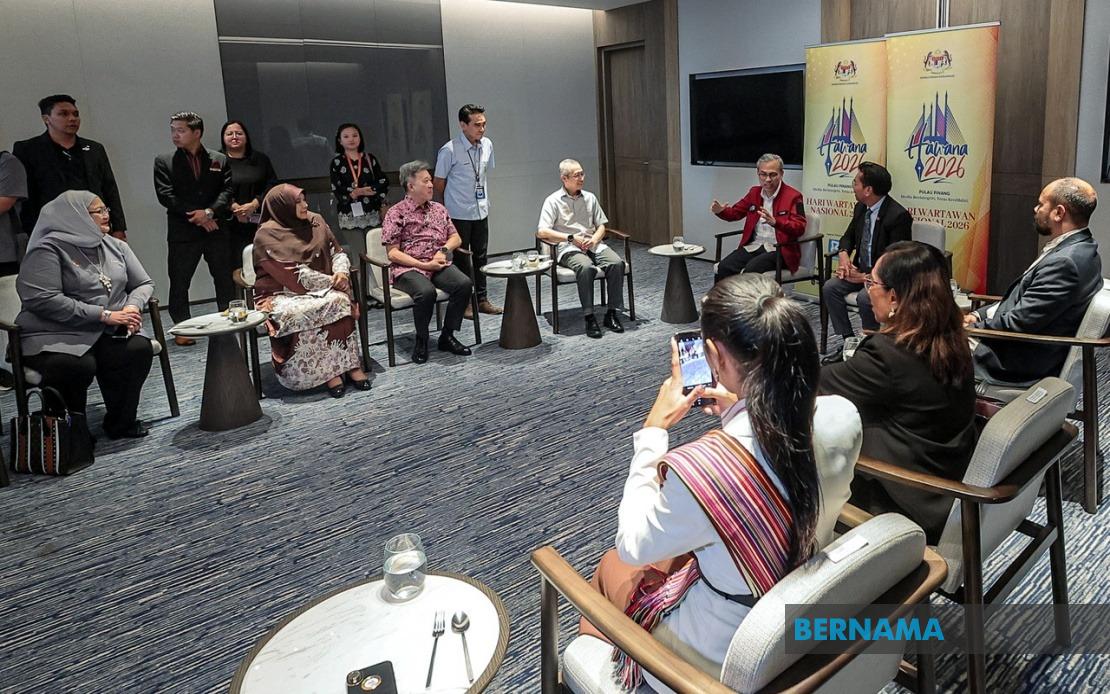
Malaysia is moving to deepen its media cooperation with Timor-Leste through a series of institutional partnerships and knowledge-sharing initiatives, according to Communications Minister Datuk Fahmi Fadzil. The announcement came during a bilateral meeting in Butterworth on June 20 between Fahmi and a visiting Timor-Leste delegation led by Secretary of State for Social Communication Expedito Loro Dias Ximenes. The engagement represents part of a broader regional strategy to strengthen ties between Southeast Asian media organisations at a time when both countries face international scrutiny over press freedom standards.
The proposed cooperation framework focuses on leveraging Malaysia's established media infrastructure to support Timor-Leste's developing journalism sector. Fahmi indicated that state broadcaster Radio Televisyen Malaysia and the Malaysian National News Agency Bernama would serve as the primary institutional anchors for this collaboration. Beyond institutional partnerships, the minister outlined a concrete training component, suggesting that the Tun Abdul Razak Broadcasting and Information Institute—Malaysia's principal broadcaster training facility—could host professional development programmes for Timor-Leste journalists seeking to enhance their skills and international best practices.
The Timor-Leste delegation itself carries significant media policy credentials. President of the country's national news agency TATOLI, Noemio Mateus Soares Falcao, joined Ximenes alongside deputy president Madalena DE JCP Carlos, signalling serious institutional commitment from Dili's side to advancing these media relationships. This composition underscores that discussions extended beyond diplomatic pleasantries to encompass substantive collaboration between the two countries' principal news gathering and dissemination bodies.
Central to the bilateral discussion was a frank exchange about each nation's performance in the World Press Freedom Index, the annual ranking compiled by international watchdog Reporters Without Borders. Timor-Leste occupies an exceptionally strong regional position, ranking first in Southeast Asia and 30th globally out of 180 countries assessed. This standing represents a remarkable achievement for a nation with a relatively recent independent media landscape, having only restored full sovereignty in 2002 following the departure of Indonesian forces.
Malaysia's position in the same index presents a more complicated picture. While the country ranks second in Southeast Asia—a respectable showing regionally—it trails Timor-Leste's superior international ranking. Fahmi acknowledged this gap frankly, noting that Malaysia had improved its standing substantially over the preceding three to four years under the MADANI Government, a period spanning from late 2022 onwards. However, he indicated that further progress remained achievable and desirable, suggesting the government views press freedom metrics as an ongoing policy objective rather than a settled matter.
The minister's candid assessment of Malaysia's press freedom trajectory carries strategic importance. The MADANI administration, led by Prime Minister Datuk Seri Anwar Ibrahim, has positioned itself as committed to democratic reforms and institutional strengthening. By acknowledging room for improvement in press freedom rankings, Fahmi has positioned the government as self-critical and reform-minded, potentially countering narratives that link Malaysia's media environment to regulatory constraints that critics associate with previous administrations. This rhetorical move frames enhanced press freedom as a MADANI-era priority distinct from earlier periods.
The bilateral engagement occurred during the sixth edition of HAWANA, a significant regional media gathering held at the PICCA Convention Centre in Butterworth. The conference assembled approximately 1,000 journalists, media managers, and communications professionals from across Malaysia and internationally, operating under the thematic framework of 'Media Integrity Strengthens Credibility'. Prime Minister Anwar Ibrahim was scheduled to officially open proceedings at 3 pm on the same day, indicating the event's prominence within the government's public communications calendar.
The timing of the Timor-Leste delegation's visit to HAWANA reflects broader Southeast Asian patterns in which media practitioners increasingly engage in professional networking and policy dialogue across borders. For Timor-Leste, participation in regional conferences provides opportunities to benchmark its press freedom achievements, exchange experiences with counterparts facing similar post-conflict media development challenges, and access professional training unavailable domestically. For Malaysia, hosting such delegations reinforces its positioning as a regional media hub with institutional capacity to support neighbouring countries' journalism development.
The proposed journalist training component through IPPTAR addresses practical capacity gaps that Timor-Leste's media sector faces despite its impressive freedom rankings. Strong legal protections for press freedom do not automatically translate into universal professional standards, investigative capacity, or ethical frameworks. Malaysian experience in running broadcast training programmes could provide valuable methodologies and technical instruction, particularly in broadcast journalism areas where Timor-Leste's RTM equivalent may benefit from peer learning and curriculum exchange.
Malaysia's approach to this partnership reflects evolving Southeast Asian diplomacy, wherein soft power derives partly from institutional and professional expertise rather than purely economic or military dimensions. By positioning Bernama, RTM, and IPPTAR as regional assets available for capacity-building partnerships, Malaysia strengthens bilateral relationships while reinforcing its profile as a communications and media development centre within ASEAN. This strategy proves particularly valuable given the region's growing emphasis on digital media literacy, misinformation countermeasures, and professional journalism standards amid rapid technology evolution.
The higher-level Malaysian officials present at the meeting—including Communications Ministry secretary-general Datuk Abdul Halim Hamzah, Bernama chairman Datuk Seri Wong Chun Wai, and Broadcasting director-general Ashwad Ismail—underscored institutional seriousness and decision-making authority. Their attendance signalled that proposed cooperation would not remain rhetorical but would be translated into concrete programming and resource allocation. For Malaysian media organisations, such partnerships can enhance international standing, facilitate cultural exchange, and provide professional development opportunities for Malaysian journalists themselves through reverse mentoring relationships.
The broader significance of this engagement extends to regional press freedom dynamics. Timor-Leste's ranking superiority, despite being a younger democracy with fewer institutional resources than Malaysia, carries implications for how both countries frame their media governance narratives. Timor-Leste can position itself as a model of post-conflict media development and democratic consolidation, while Malaysia must demonstrate that federal sophistication and economic development can translate into enhanced press freedom metrics. By engaging Timor-Leste in institutional partnership rather than adopting a patronising posture, Malaysia signals recognition of the smaller nation's achievements while creating frameworks for mutual learning and professional exchange that benefit both parties.

