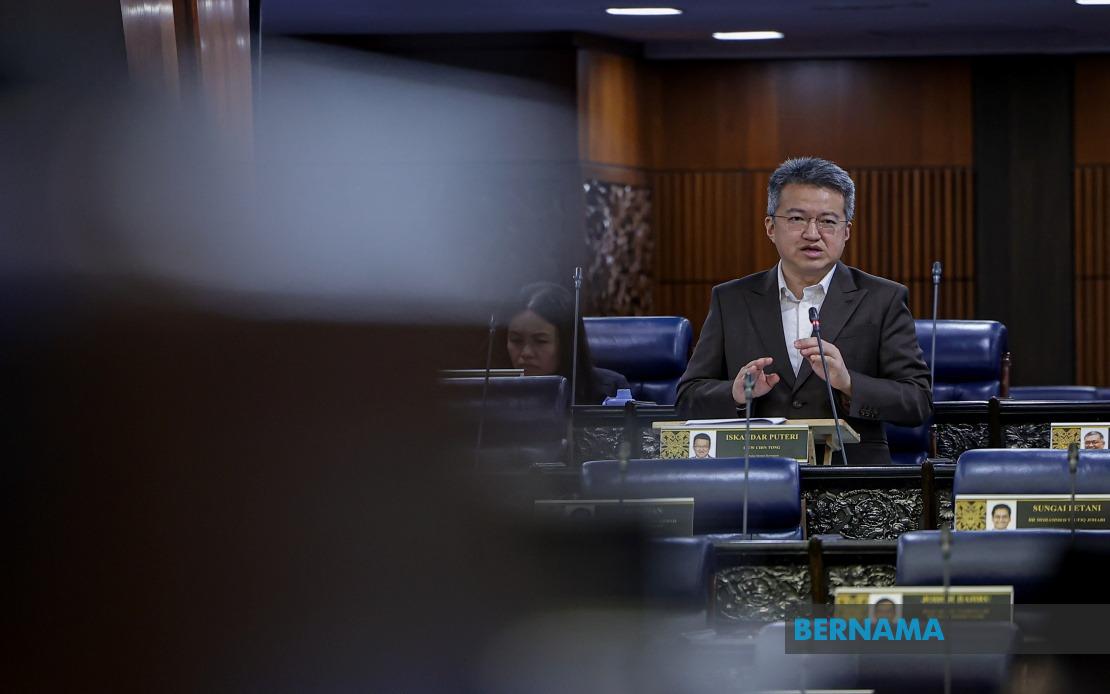
Malaysia's government is pushing forward with significant institutional reforms aimed at preventing future financial scandals like the 1Malaysia Development Berhad (1MDB) crisis that tarnished the nation's reputation and drained public coffers. Deputy Finance Minister Liew Chin Tong told Parliament that Prime Minister Datuk Seri Anwar Ibrahim's administration has introduced a comprehensive package of governance strengthening measures to restore both domestic and international confidence in Malaysia's public institutions and financial management practices.
The 1MDB scandal represents one of the most damaging episodes in Malaysia's modern financial history, involving massive misappropriation of state investment funds and attracting intense scrutiny from overseas regulators and law enforcement agencies. The fallout extended far beyond the immediate financial loss, undermining perceptions of Malaysia as a reliable investment destination and casting doubt on the integrity of government institutions. Liew acknowledged in Parliament that this reputational damage has created persistent challenges for efforts to attract foreign capital and maintain confidence among international investors in Malaysia's economic governance framework.
The MADANI Government's response has centred on legislative and administrative overhauls designed to create multiple safeguards against abuse of public resources. Liew highlighted the Public Finance and Fiscal Responsibility Act 2023 as a cornerstone of this reform agenda, establishing enforceable discipline over how the government manages, allocates and accounts for public money. This legislation represents a fundamental shift toward greater transparency and accountability in fiscal administration, moving beyond ad hoc compliance to create binding legal requirements for sound financial stewardship across all government agencies and departments.
Another critical reform involves expanding the powers and scope of Malaysia's Auditor-General's office through amendments to the Audit Act. The revised framework embraces what officials term a "follow the public money" approach, enabling auditors to trace and scrutinise the use of government funds across a far wider range of programmes, projects and entities than previously possible. This represents a substantial strengthening of parliamentary and public oversight mechanisms, allowing more comprehensive examination of how ministries and agencies deploy taxpayer resources and whether expenditure aligns with stated public objectives.
Beyond legislative changes, the government is actively reforming governance structures affecting state-owned enterprises, a sector where the 1MDB disaster originated. The administration is drafting a new Government Procurement Bill to establish clearer standards and stronger competitive processes for how public institutions acquire goods and services, reducing opportunities for nepotistic or corrupt practices in government spending. These procurement reforms, paired with broader SOE governance revisions, aim to create structural impediments to the kind of opacity and patronage that characterised 1MDB's operations under previous administrations.
The financial toll of the 1MDB scandal continues to weigh heavily on the national budget nearly a decade after the crisis erupted. Malaysian taxpayers have borne RM18.7 billion in costs since 2017 to honour financial obligations stemming from 1MDB's operations and debt. This burden intensified after the MADANI Government assumed office in March 2023, when it faced the urgent necessity of redeeming USD3 billion in government-guaranteed bonds issued during the previous regime. That single redemption required diverting RM13 billion from the development budget, representing approximately 13.1 per cent of the entire development allocation for that fiscal year, demonstrating how 1MDB's legacy continues constraining the government's ability to fund infrastructure, healthcare and education programmes.
Liew's parliamentary responses indicate that Malaysia's international investment climate has begun recovering despite lingering reputational damage from the 1MDB era. The government points to record foreign and domestic investment approvals and strengthened trade performance as evidence that governance reforms are gradually restoring investor confidence. Additionally, Malaysia's position in global competitiveness rankings has improved, suggesting that international assessments of the country's institutional quality and business environment have shifted positively following implementation of reform measures.
The timing and content of these reforms reflect a deliberate strategic choice by the MADANI Government to differentiate its tenure from the previous administration's governance record. By visibly implementing structural changes that address the vulnerabilities exposed by 1MDB, the government seeks to signal to both foreign and domestic stakeholders that Malaysia has learned from the scandal and institutionalised mechanisms to prevent recurrence. This approach recognises that reputational damage from massive corruption requires more than rhetorical commitment to reform; it demands tangible, legally binding changes that demonstrate genuine transformation in how public resources are managed and overseen.
For Malaysian businesses and the broader Southeast Asian region, these governance improvements hold practical significance beyond symbolic value. More robust public finance management and auditing systems reduce fiscal volatility and create more predictable operating environments for investors planning long-term commitments to Malaysian operations. Reduced risk of large-scale government financial mismanagement also supports currency stability and reduces pressure on the nation's balance of payments, factors that affect import and export competitiveness across the region.
However, meaningful reform ultimately depends on implementation quality and political will to enforce new rules consistently. The legislative framework and institutional mechanisms announced represent necessary but not sufficient conditions for preventing future scandals. Equally critical are commitment from senior officials to uphold governance standards, whistleblower protections enabling staff to report irregularities, and consistent application of sanctions when officials violate regulations. Malaysia's experience with 1MDB underscores how sophisticated fraud can persist within existing institutional structures if leadership prioritises short-term political or personal interests over public accountability.
The government's focus on governance strengthening also reflects awareness that Malaysia must compete with other Southeast Asian nations for investment capital and international business partnerships. Singapore, Indonesia and Thailand have all undergone their own governance and corruption crises in recent years, but the sophistication and scale of the 1MDB scandal created particular reputational damage for Malaysia. By demonstrating measurable progress in institutional reform, the MADANI Government attempts to position Malaysia as having confronted its governance failures and emerged with stronger systems, a narrative potentially attractive to prudent international investors evaluating long-term regional commitments.

