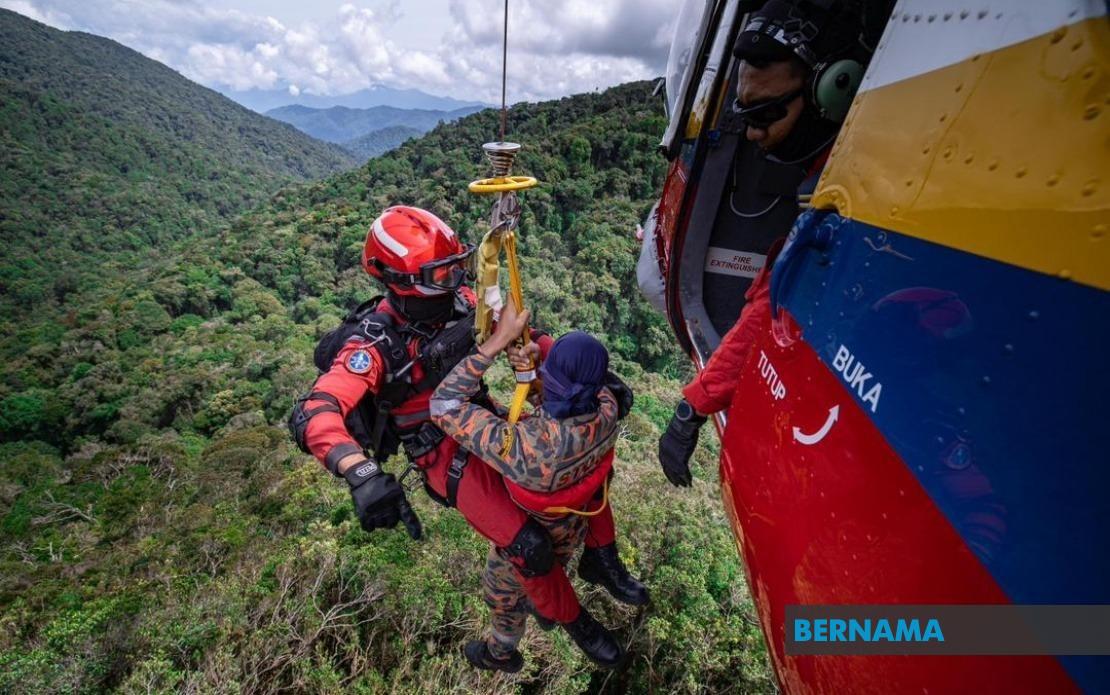
The growing enthusiasm for hiking across Malaysia masks a serious safety challenge. Between 2021 and 2025, the nation recorded 1,059 accidents connected to hiking activities, with 63 people losing their lives and 87 sustaining injuries, Deputy Minister of Natural Resources and Environmental Sustainability Syed Ibrahim Syed Noh disclosed during parliamentary proceedings on June 23. These figures, sourced from the Fire and Rescue Department of Malaysia, underscore the urgent need to bolster protective protocols as recreational hiking continues to surge in popularity throughout the country's forests and protected areas.
The escalating toll reflects a broader tension in Malaysia's outdoor recreation landscape. While hiking has become an increasingly accessible and popular leisure activity among urban and rural populations alike, the corresponding infrastructure and safety frameworks have struggled to keep pace. Syed Ibrahim's parliamentary statement acknowledged this gap by highlighting how the rising numbers demand systematic intervention at both policy and operational levels. The data becomes particularly significant when contextualised within Southeast Asia's growing outdoor tourism sector, where Malaysia positions itself as a premier hiking destination. The accident figures suggest that attracting more visitors to natural reserves requires proportional investment in safety mechanisms rather than marketing alone.
In response to these concerning statistics, the Peninsular Malaysia Forestry Department has moved to establish more robust safety protocols. Working alongside the United Nations Development Programme, JPSM developed the Mountain Risk Assessment and Management Guideline, or MoGRAM, as a standardised technical framework for identifying and mitigating hazards. This guideline serves multiple purposes: it provides hiking trail operators with evidence-based risk evaluation methodologies, helps determine appropriate visitor numbers for different trails based on carrying capacity, and establishes consistent safety benchmarks across forest reserves. The adoption of MoGRAM represents a shift towards data-driven management rather than ad-hoc responses to individual incidents.
Certified mountain guides have emerged as a cornerstone of this safety overhaul. The forestry department has mandated the engagement of Forestry Mountain Guides in 189 high-risk hiking zones nationwide. These qualified professionals undergo rigorous training to support hikers at every stage of their journey—from pre-trip planning and on-trail supervision to emergency response and evacuation. The government has invested substantially in developing this workforce, with 2,322 individuals from local and indigenous communities having completed certification through the MGP skills development programme. This approach simultaneously addresses safety concerns and creates economic opportunities within rural and indigenous communities, particularly those living adjacent to protected forests.
Technology is playing an increasingly pivotal role in Malaysia's hiking safety transformation. The forestry ministry is collaborating with the Malaysian Space Agency to develop a sophisticated hiking trail management system leveraging geospatial technology, geographic information systems, and remote sensing capabilities. This integrated platform will map and monitor all hiking trails with precision, centralise critical trail information in a single accessible database, and fundamentally enhance search and rescue operations through advanced spatial analysis. Such technological infrastructure proves invaluable during emergencies, when accurate topographical data and hiker location records can compress response times from hours to minutes.
The proposed national digital hiking registration system represents perhaps the most significant institutional change. Currently, hiking registrations in Permanent Reserved Forests occur through fragmented approaches—some manual, others online—administered by individual state forestry departments according to their jurisdictions. This decentralised arrangement, while respecting federalism principles, creates information gaps that complicate safety monitoring and emergency response coordination. A unified national digital log would systematically record hiker movements, enable rapid identification of missing persons through integrated databases, and provide rescue teams with comprehensive movement patterns and last-known locations. Syed Ibrahim emphasised that such centralisation could substantially accelerate emergency tracing protocols and improve search and rescue effectiveness across state boundaries.
The certification and continuous development of mountain guides extends beyond basic safety competencies. Training curricula encompass hiking safety protocols, comprehensive risk management strategies, first aid and medical emergency response, wilderness survival techniques, and advanced search and rescue methodologies. This multifaceted approach reflects an understanding that guide competency directly correlates with accident prevention. By institutionalising these training standards and conducting programmes regularly, the government seeks to create a professionalised guide sector capable of preventing incidents before they occur rather than merely responding after crises unfold.
For Malaysian hikers and outdoor enthusiasts, these developments carry substantial practical implications. The expansion of certified guides means enhanced supervision on popular trails, particularly at high-risk locations prone to weather-related incidents, navigation challenges, or terrain hazards. The digital registration system will likely introduce pre-hike requirements including mandatory check-in protocols and estimated return time specifications, similar to systems used in other countries with established hiking cultures. While potentially adding administrative steps to the hiking experience, these measures reflect international best practices and significantly improve rescue coordination when emergencies occur.
The initiative also addresses a critical demographic reality. Malaysia's hiking community spans diverse experience levels, from casual day-trippers to serious mountaineers, with varying familiarity with wilderness environments. Foreign tourists increasingly visit Malaysian forests, potentially lacking knowledge of local conditions and hazards. The certified guide system helps standardise safety communication and environmental knowledge across this heterogeneous population. Additionally, indigenous communities' involvement as certified guides preserves traditional ecological knowledge while formalising it within modern safety frameworks—creating a synergy between customary forest expertise and contemporary risk management science.
Regional implications extend beyond Malaysia's borders. As other Southeast Asian nations face similar hiking industry growth and safety challenges, Malaysia's systematic approach offers a replicable model. The combination of technical guidelines, professional guide certification, community engagement, and digital infrastructure demonstrates how developing nations can address recreational safety through targeted policy without prohibitively expensive implementation. This positions Malaysia as a regional leader in balancing tourism promotion with visitor protection—a particularly relevant distinction as the broader region experiences explosive growth in adventure tourism seeking authentic wilderness experiences.
The government's acknowledgment of hiking risks through these multifaceted interventions signals a commitment to transforming reactive crisis management into proactive prevention. The 1,059 accidents and 63 deaths, while sobering, have catalysed institutional change that extends beyond emergency response to encompass trail design, visitor education, professional development, and technological infrastructure. For Malaysian communities living near protected forests, the guide certification programme creates sustainable livelihoods; for hikers, it enhances protection; for the government, it demonstrates evidence-based policymaking. Sustaining this momentum requires consistent funding, inter-agency coordination, and continuous programme evaluation to ensure that hiking, which brings both economic and recreational benefits to the nation, occurs within progressively safer parameters.

