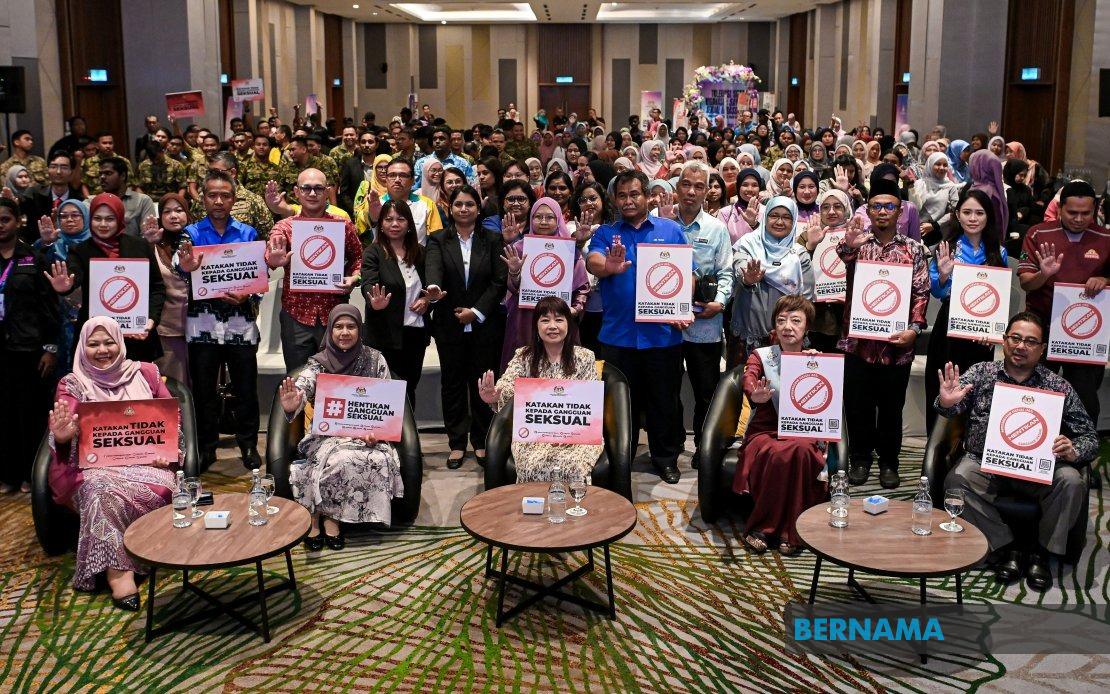
Malaysia has documented 388 instances of sexual harassment during the opening five months of 2024, signalling an ongoing challenge that stretches across workplaces and home environments, according to Deputy Minister of Women, Family and Community Development Lim Hui Ying. Speaking in Port Dickson on June 18, the minister disclosed data from the Royal Malaysia Police indicating that reported cases have climbed significantly over recent years, jumping from 477 recorded incidents in 2022 to 1,038 last year—a more than doubling of the figures within a single year.
The sharp increase in reported cases warrants careful interpretation, as Lim cautioned against assuming the figures necessarily indicate a proportional rise in actual harassment occurring across Malaysian society. Rather, she argued, the climb reflects a measurable shift in public consciousness and victim empowerment, with individuals increasingly prepared to overcome the psychological and social barriers that historically discouraged disclosure. This reframing aligns with international trends showing that heightened awareness campaigns and evolving legal frameworks frequently correlate with more complaints rather than more incidents, as victims gain confidence that their allegations will be taken seriously.
The geographic and relational patterns of harassment reveal a concentrated problem within professional and domestic spheres. According to Lim's assessment, the majority of documented cases involve workplace settings where power imbalances and proximity create conditions enabling misconduct. Equally significant is the involvement of individuals with family connections to victims—a finding that underscores how sexual harassment frequently occurs within networks of trust, complicating the decision to report. Many victims remain trapped between conflicting pressures: the need for justice against the fear of damaging careers, severing family bonds, or triggering social stigma, particularly in more conservative communities across Malaysia.
While sexual harassment predominantly affects women, Lim stressed that men also experience these violations, though at substantially lower rates. The reluctance of male victims to come forward likely reflects additional barriers of shame and masculine socialization patterns that discourage men from acknowledging vulnerability or seeking support. She called upon employers, colleagues, and family members to actively create environments where victims of either gender feel safe disclosing incidents without judgment or retaliation—a cultural shift that requires buy-in from multiple stakeholders rather than government action alone.
The Tribunal for Anti-Sexual Harassment (TAGS), a specialized mechanism established to provide expedited justice, has demonstrated measurable effectiveness in its initial months of operation. As of mid-June, the tribunal had received 100 complaints, with 82 cases resolved within 60 days of the first hearing. This track record represents substantial progress in accelerating access to justice, historically a constraint in harassment cases that often languish in conventional court systems. The tribunal's success suggests that dedicated institutional frameworks tailored to harassment disputes can meaningfully reduce the trauma and delay victims endure throughout protracted legal proceedings.
Beyond individual case resolution, Malaysia's government has begun integrating sexual harassment prevention into broader women's security and development initiatives. Through the Women's Development Department, the Ministry is rolling out advocacy campaigns aligned with the National Action Plan 2025–2030, which situates women's safety and participation within the framework of national security and socioeconomic development. This linkage reflects contemporary understanding that gender-based violence undermines national cohesion and human capital, positioning harassment prevention as a collective responsibility rather than solely a women's issue.
Lim emphasized that sexual harassment constitutes a grave form of misconduct that erodes victims' dignity, emotional stability, and life quality—damage that extends far beyond the immediate incident. The normalization of harassment within any workplace, institution, or community signals a cultural failure with cascading consequences. Unchecked harassment frequently escalates into more serious forms of violence, destabilizing families and fragmenting social harmony. Early intervention and community accountability therefore represent preventive investments rather than merely responsive measures.
Building sustainable change demands distributed responsibility across all sectors of society. Parents, teachers, employers, colleagues, and students collectively bear the burden of cultivating zero tolerance toward harassment through education, modeling, and accountability. Lim argued that early intervention—teaching children about bodily autonomy and consent, training managers on harassment prevention, and empowering bystanders to challenge inappropriate behavior—creates cultural bulwarks against normalization. The courage to speak up and the willingness to support those who do must be continuously reinforced through institutional policies and social messaging.
The government has structured support services to ensure accessible help for victims navigating harassment and its aftermath. Talian Kasih 15999, a 24-hour counselling and psychosocial support hotline, provides immediate assistance to distressed individuals regardless of the hour. Complementing this is a network of local social support centres offering longer-term interventions including trauma counselling, legal guidance, and community reintegration support. These integrated pathways acknowledge that victims require multidisciplinary assistance addressing emotional, legal, and practical dimensions of harassment recovery. The availability of services across multiple channels—telephone, in-person, online—lowers barriers to access, particularly for those with mobility constraints, childcare responsibilities, or safety concerns about being observed seeking help.