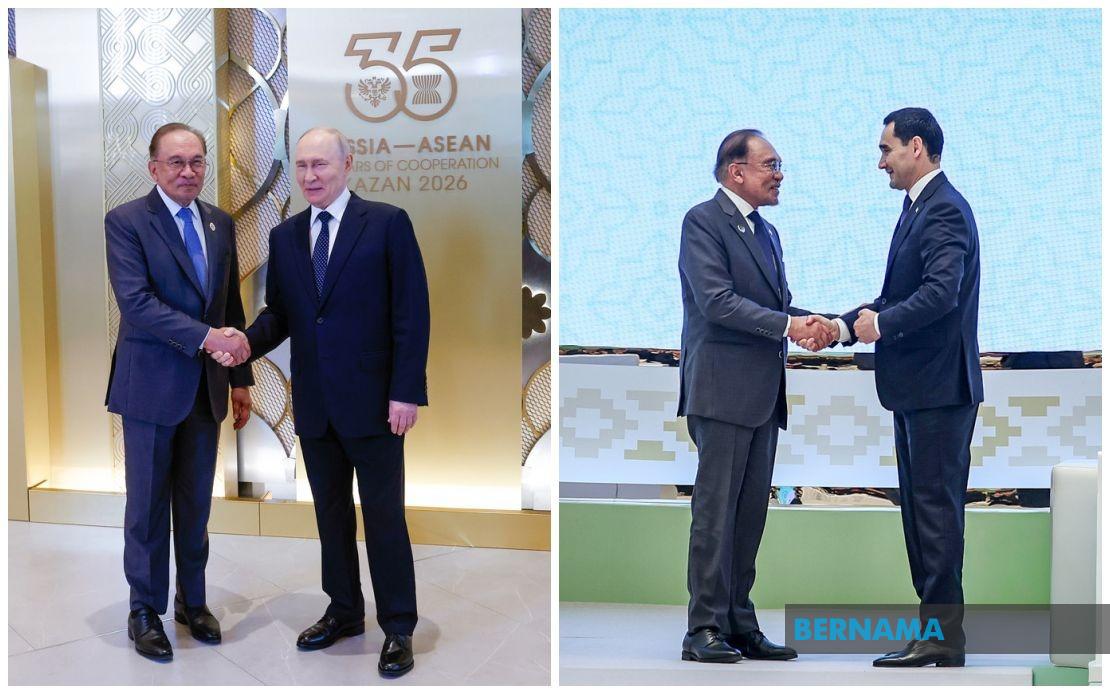
Prime Minister Datuk Seri Anwar Ibrahim's recent diplomatic missions to Russia and Turkmenistan are being lauded by his cabinet as watershed moments for Malaysia's energy security and international standing. The two-nation tour has produced concrete agreements that government officials believe will reshape Malaysia's long-term economic outlook, particularly in the energy sector which remains vital to maintaining domestic price stability and attracting foreign investment.
The most immediate dividend from the Russia visit centres on energy supplies. Housing and Local Government Minister Nga Kor Ming highlighted that Moscow has committed to providing Malaysia with crude oil over the span of two decades, a timeframe that stands in stark contrast to the typical annual or seasonal arrangements that have historically governed petroleum trade. This extended commitment provides Malaysia with predictable supply channels and insulates the nation from volatile spot-market pricing, allowing the government to maintain its subsidy programme for RON95 petrol at RM1.99 per litre without the perpetual budgetary strain that short-term procurement creates.
The strategic logic underpinning this agreement aligns with the MADANI Government's articulated energy policy. By diversifying away from traditional suppliers and locking in long-term contracts at negotiated prices, Malaysia reduces its exposure to geopolitical disruptions and price shocks. For an economy where fuel costs cascade through manufacturing, logistics, and consumer spending, this stability translates into broader macroeconomic benefits. The subsidy regime, which many economists criticise as fiscally unsustainable, becomes more manageable when underpinned by predictable import costs rather than volatile international benchmarks.
Equally significant is the breakthrough regarding Petronas and Turkmenistan's gas sector. The Malaysian state-owned energy giant has been appointed to operate one of the world's largest gas fields in Turkmenistan, a country sitting atop some of the planet's most substantial natural gas reserves. Human Resources Minister Datuk Seri R. Ramanan characterised this development as validation of Malaysian corporate competence on the global stage. Petronas currently ranks 139th among Fortune Global 500 companies, and successful management of a mega-scale Turkmenistan project could potentially propel it into the top 100, amplifying Malaysia's soft power and corporate prestige simultaneously.
The assignment itself carries profound implications for Malaysia's technology and industrial sectors. Turkmenistan's gas fields demand cutting-edge extraction, liquefaction, and transportation infrastructure. As operator, Petronas will necessarily draw upon Malaysian engineering expertise, potentially spawning supply chains and service industries that extend far beyond the energy sector itself. This cascading effect—wherein a single large contract generates employment and skill development across multiple disciplines—represents the kind of economic multiplier that policymakers actively cultivate.
Moreover, the Turkmenistan arrangement addresses a structural vulnerability in Malaysia's own development trajectory. The nation has positioned itself as a hub for liquefied natural gas trading and processing, yet lacks sufficient indigenous gas reserves to sustain this role indefinitely. By securing operational control of Turkmenistan's reserves, Malaysia creates alternative sources for its downstream LNG infrastructure, ensuring that processing facilities and related industries remain viable and competitive in global markets. This forward-looking dimension suggests that the agreements reached extend beyond immediate revenue generation into long-term industrial sustainability.
The diplomatic choreography of these visits warrants attention as well. Both Kazan in Russia's Republic of Tatarstan and Turkmenistan represent deliberate choices to engage with energy-exporting regions rather than merely transacting with capital-city governments. This approach signals Malaysian willingness to work directly with subnational actors and non-traditional partners, potentially opening additional collaborative pathways that bilateral frameworks alone might not facilitate. For Malaysian businesses seeking to penetrate Central Asian markets, the precedent established by the Prime Minister's direct engagement with regional authorities creates openings that the private sector can subsequently exploit.
Anwar's own framing of these achievements emphasised the international confidence reposed in Malaysia—its political stability, institutional capability, and the professionalism of its homegrown enterprises. This rhetorical positioning matters because it influences foreign investor perceptions. Energy projects of this magnitude require long-term commitment and substantial capital deployment; host governments must believe that their Malaysian counterparts will reliably deliver over decades. By positioning Petronas and the Malaysian state as credible, professional operators, Anwar has essentially marketed Malaysia as a trustworthy economic partner to a global audience beyond Turkmenistan and Russia alone.
The bilateral agreements also encompass broader cooperation frameworks spanning trade, investment, and technology transfer. These ancillary dimensions often prove more valuable than the primary contract itself, as they establish institutional relationships and precedents that subsequent ventures can build upon. Malaysian firms in sectors ranging from infrastructure to telecommunications may find doors opening in Turkmenistan and Russia specifically because official channels have been opened and political relationships established at the highest levels.
Critiques might note that the sourcing of Russian energy amid international sanctions carries geopolitical complexity. However, from Malaysia's perspective, engaging Moscow on commercial grounds fits within the nation's traditional non-aligned posture and its emphasis on pursuing bilateral partnerships unburdened by ideological alignment. This pragmatic approach—transacting with whichever counterparty offers advantageous terms—reflects how smaller regional powers navigate great-power contestation.
For Malaysian consumers, the immediate benefit materialises through sustained fuel price stability. For Malaysian industry, the energy security dividend reduces operational risk and planning uncertainty. For Petronas and allied companies, the Turkmenistan assignment represents a generation-spanning opportunity to prove capability at the grandest scale. Collectively, these outcomes suggest that Anwar's diplomatic missions have produced tangible dividends that extend well beyond symbolic gestures, furnishing Malaysia with concrete strategic advantages in an increasingly competitive global energy market.

