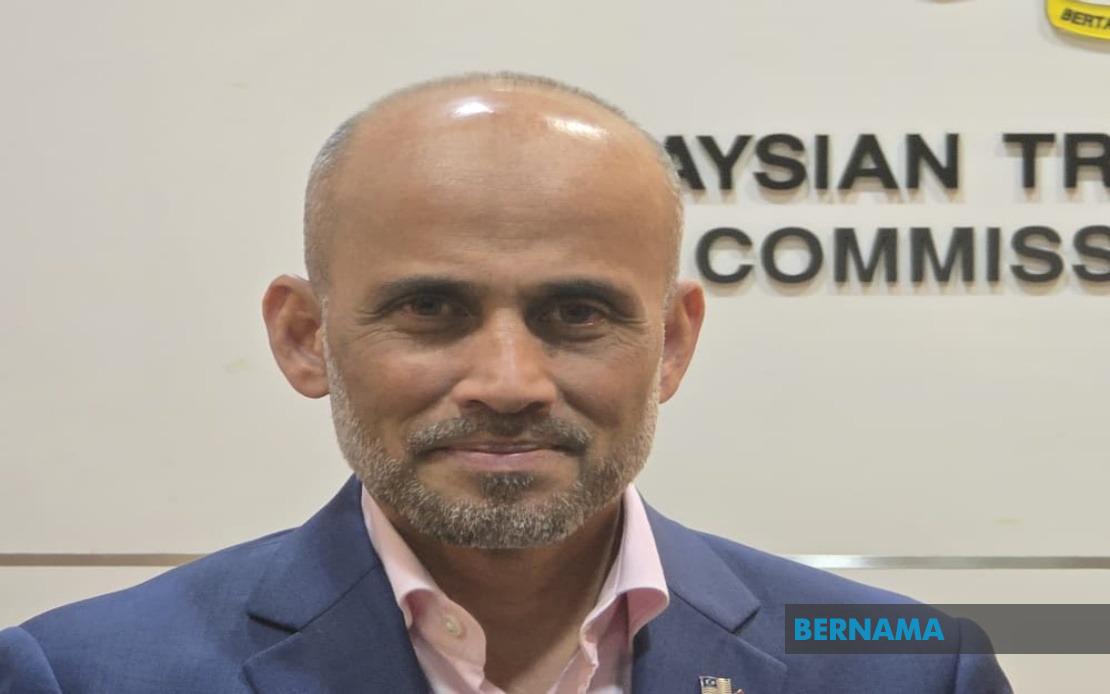
The partnership between Malaysia and Singapore has solidified considerably in recent years through sustained cooperation on regional challenges, according to Datuk Dr Azfar Mohamad Mustafar, who is concluding his tenure as Malaysia's High Commissioner to Singapore. Speaking ahead of his transition to a new posting as Malaysia's High Commissioner to the United Kingdom effective July 1, Azfar reflected on a five-year period marked by navigating both pandemic disruptions and shifting global geopolitical dynamics, characterising the relationship as one that has proven resilient through shared commitment to addressing mutual concerns.
Azfar's posting in Singapore commenced in June 2021, placing him directly amid the acute phases of the COVID-19 crisis when border management and travel restrictions fundamentally disrupted the established rhythms of cross-border commerce and employment. The closure of land borders to contain viral transmission created cascading complications for the tens of thousands of Malaysians whose daily commute to Singapore for employment, business meetings, and service provision forms a critical artery of bilateral economic activity. Managing consular complications arising from sudden mobility restrictions required rapid diplomatic coordination and novel problem-solving approaches, as the High Commissioner's office encountered unprecedented demand for documentation, repatriation assistance, and welfare support during lockdown periods.
Beyond immediate pandemic management, Azfar's five-year tenure underscores a deliberate Malaysian strategy to position Singapore within a broader framework of strategic partnership that transcends routine diplomatic courtesy. By characterising his efforts as laying groundwork for future collaboration, Azfar acknowledged the foundational nature of his work without overstating its achievements, a diplomatic posture reflecting the nuanced negotiation of bilateral relations between nations whose geographical proximity and economic integration create both opportunity and friction.
The economic dimension of Malaysia-Singapore ties has demonstrated notable recuperative capacity following pandemic-induced disruptions. Trade volumes have rebounded to pre-crisis levels, and Singapore maintains its position among Malaysia's most significant trading partners, a status reflecting decades of integrated supply chains and complementary industrial specialisation. The city-state's continued prominence as a source of foreign direct investment into Malaysia underscores confidence in domestic markets and regulatory frameworks, particularly as Malaysia positions itself to attract capital flowing through Singapore's financial corridors.
A pivotal development reshaping bilateral investment prospects is the Johor-Singapore Special Economic Zone, a cross-border initiative designed to facilitate integrated manufacturing, logistics, and technology operations spanning both territories. This framework, still in nascent phases of realisation, promises to unlock efficiency gains through seamless regulatory coordination and streamlined customs procedures. Azfar explicitly highlighted expectations that Singaporean capital deployment into Johor will accelerate as zone infrastructure matures and operational protocols become established, signalling Malaysian confidence that geopolitical and economic integration can proceed despite historical territorial sensitivities.
Regional institutional cooperation through ASEAN provides a secondary theatre for Malaysia-Singapore collaboration that extends beyond bilateral channels. Singapore's assumption of the ASEAN chairmanship in 2025 marks an opportunity for both nations to advance shared regional priorities, with Malaysia indicating explicit willingness to provide diplomatic support. Economic integration among ASEAN member states emerges as a focal point, reflecting broader recognition that the region's prosperity and strategic autonomy depend upon deepening intra-regional trade, investment harmonisation, and coordinated industrial policies capable of competing against larger Asian powers.
The ASEAN Power Grid initiative represents a particularly significant collaborative focus, addressing long-standing energy infrastructure deficiencies that have constrained development across Southeast Asia. By coordinating electricity generation, transmission, and distribution across borders, member states can optimise renewable energy deployment, reduce transmission losses, and enhance energy security. Malaysia and Singapore's participation signals commitment to infrastructural modernisation that transcends immediate bilateral benefits, positioning both as architects of broader regional development.
Azfar's diplomatic career trajectory, commencing in 1996 as an Administrative and Diplomatic Officer and subsequently spanning postings including his ambassadorship to France between 2018 and 2021, reflects the extensive experience informing his Singapore tenure. His appointment to the United Kingdom represents a lateral career progression rather than advancement, suggesting that diplomatic service spanning multiple geographies and economic systems constitutes the valued trajectory within Malaysia's Foreign Ministry hierarchy.
The outgoing High Commissioner's assessment that Malaysia-Singapore relations possess momentum despite global uncertainties merits careful interpretation. Persistent challenges including maritime boundary demarcation disputes, water agreements subject to periodic renegotiation, and competing development visions for shared water resources remain largely unresolved, suggesting that diplomatic acknowledgement of strong bilateral relations coexists with substantive unfinished business. Nonetheless, the successful navigation of pandemic-era disruptions and the emergence of jointly beneficial economic frameworks indicate that institutional mechanisms for managing differences remain functional even when underlying structural tensions persist.
For Malaysian stakeholders including businesses operating across borders, investors seeking Singaporean capital partnership, and workers commuting daily across the Causeway, the characterisation of strengthened bilateral relations translates into practical implications. Streamlined consular processes, predictable regulatory environments, and sustained commitment to economic integration provide foundation for commercial and employment continuity. Simultaneously, the incoming High Commissioner will inherit both the institutional relationships Azfar cultivated and the unresolved issues requiring sustained diplomatic engagement, suggesting that Malaysia-Singapore ties will continue their established pattern of balancing strategic cooperation with management of persistent structural differences.

