The Malaysian government has committed to comprehensive restructuring of Lembaga Tabung Haji following a detailed inquiry into the pilgrimage fund's financial crisis, with new regulatory frameworks and management safeguards taking centre stage during an extended parliamentary sitting in August. The overhaul aims to prevent a recurrence of the circumstances that nearly brought the institution to collapse and triggered significant government intervention through emergency bailout measures.
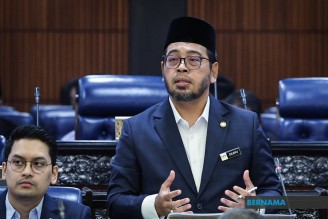
During a special 10-hour session in Dewan Rakyat, Minister in the Prime Minister's Department (Religious Affairs) Dr Zulkifli Hasan detailed how legislative amendments to the Tabung Haji Act 1955 will operationalise recommendations from the Royal Commission of Inquiry. A dedicated task force, chaired by Tabung Haji chairman Tan Sri Abdul Rashid Hussain and including Bank Negara Governor Datuk Seri Abdul Rasheed Ghaffour and Securities Commission chairman Datuk Mohammad Faiz Azmi, has examined the inquiry's findings and shaped the institutional response.
Central to the reform blueprint is a division of supervisory responsibility that will separate investment management from pilgrimage operations. The Securities Commission will henceforth regulate Tabung Haji's investment portfolio and fund management, while the Minister in the Prime Minister's Department (Religious Affairs) will retain oversight of hajj-related services. This bifurcated approach preserves Tabung Haji as a unified entity while establishing clearer accountability boundaries and preventing regulatory ambiguity that may have contributed to previous governance failures.
The magnitude of Tabung Haji's predicament became evident through disclosures concerning accumulated losses approximating RM13 billion, along with calculations indicating potential government liability exposure reaching RM74.5 billion had panic withdrawals spiraled out of control in 2018. Finance Minister II Datuk Seri Amir Hamzah Azizan noted that seven of fourteen troubled investments sustained total losses, with particular concern arising from Tabung Haji's entanglement with the Putrajaya Perdana investment vehicle that indirectly linked the institution to the 1Malaysia Development Bhd controversy. These figures underscore the systemic risks that unregulated investment practices and inadequate oversight mechanisms created within Malaysia's largest Islamic financial institution.
Proposed amendments to the Tabung Haji Act will fundamentally alter governance arrangements by legally prohibiting active politicians from serving on the institution's board of directors. This provision directly addresses historical vulnerabilities where political appointments may have compromised independent judgment and fiduciary responsibility. Additional protections include mandating that profit distributions, known as hibah payments, derive exclusively from audited financial accounts rather than projections or optimistic forecasts, ensuring depositors receive dividends reflecting actual rather than anticipated performance. All institutional decisions will henceforth be evaluated through a singular lens: whether actions serve the interests of the Muslim community.
Parliamentary debate encompassed broader regulatory architecture discussions extending beyond Tabung Haji's specific circumstances. MP Aminolhuda Hassan from Sri Gading put forward a structural proposal for establishing a unified regulator governing major non-bank financial institutions, encompassing entities including the Employees Provident Fund, Permodalan Nasional Bhd, the Retirement Fund Incorporated, and the Armed Forces Fund Board. Currently, Malaysia lacks a single supervisory authority responsible for prudential oversight, systemic risk evaluation, and governance monitoring across the non-bank financial sector, creating coordination challenges and potential regulatory gaps that may affect the stability of Malaysia's broader savings and investment ecosystem.
Bentong MP Young Syefura Othman raised concerns regarding Tabung Haji's operational sustainability, specifically highlighting the institution's dependence on income from UJSB sukuk instruments, which the Royal Commission documented as representing nearly 26 per cent of annual revenue. This concentration risk exposes the institution to income volatility should sukuk market conditions deteriorate or investment returns decline, necessitating diversification strategies that Finance Ministry officials must articulate and implement to ensure long-term financial resilience.
The Royal Commission of Inquiry report, released publicly on July 29 after being presented to the Yang di-Pertuan Agong on August 30, 2022, comprises 211 pages of detailed findings concerning institutional weaknesses spanning the 2014-2020 period. The inquiry's 25 recommendations addressed systemic governance deficiencies, investment control procedures, and management accountability mechanisms. As of late July, Tabung Haji had already implemented 75 per cent of these recommendations, demonstrating institutional responsiveness and the administration's determination to translate inquiry findings into concrete operational changes.
The government's transparent acknowledgment of painful financial realities, coupled with Finance Minister Amir Hamzah's explicit commitment to accountability without favoritism or political protection, signals a decisive break from previous patterns where institutional crises were occasionally managed through opacity rather than public acknowledgment. Investigations will proceed comprehensively, with no leniency extended toward parties adjudged culpable, establishing precedent for institutional accountability that extends beyond Tabung Haji to influence governance standards across Malaysia's public agencies and statutory bodies.
For Malaysian depositors and pilgrims, these reforms carry profound implications. The Securities Commission's investment oversight introduces professional institutional management aligned with regulated investment standards, while the prohibition on active political board participation diminishes risks of decision-making driven by factional interests rather than fiduciary duty. Enhanced disclosure requirements and audited dividend calculations provide greater transparency regarding returns and fund performance, enabling informed financial planning among the institution's 9 million depositors who depend on Tabung Haji savings for their hajj aspirations and retirement needs.
The broader Southeast Asian context positions these reforms within regional trends toward strengthened financial regulation and governance. As Islamic finance institutions expand across the region, Malaysia's experience with Tabung Haji's crisis and subsequent regulatory response provides instructive lessons regarding the intersection of religious financial institutions, state oversight, and systemic stability. The establishment of clearer supervisory boundaries and politically independent governance structures represents institutional maturation within Malaysia's Islamic financial ecosystem.

