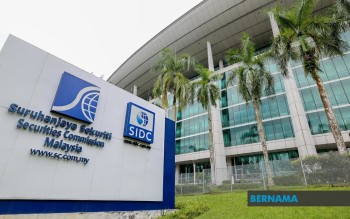
Malaysia is stepping up efforts to attract Russian investors into its Islamic finance sector, signalling an ambitious pivot towards untapped markets in Eastern Europe and Central Asia. The government and Securities Commission Malaysia have mapped out a strategic roadmap that extends beyond traditional Islamic finance hubs, with plans to establish deeper financial bridges with Russia and neighbouring regions. This initiative reflects a calculated move to diversify Malaysia's investor base while simultaneously positioning the country as an intellectual centre for shariah-compliant financial innovation.
At the heart of this strategy lies a commitment to build a comprehensive Islamic finance ecosystem tailored to international demand. The Securities Commission has taken the lead in orchestrating cross-border initiatives designed to assess market appetite and regulatory readiness in Central Asia. Crucially, the commission is planning an exploratory mission to the region in 2026 or 2027, a timeframe that underscores the deliberate pace of this expansion effort. Rather than rushing into markets with untested demand, Malaysian authorities are conducting foundational groundwork to ensure sustainable partnerships and long-term investor confidence.
The timing of this initiative aligns with expressed interest from senior Russian officials. In May 2025, the Head of the Republic of Tatarstan signalled openness to adopting Malaysia's Islamic finance development model, a significant diplomatic signal that translates into tangible commercial opportunities. This endorsement from a major Russian regional leader carries weight, suggesting that the appetite for shariah-compliant financial infrastructure extends beyond financial institutions into the corridors of political decision-making. For Malaysia, this opens doors to influence how Islamic finance takes root in a region historically underserved by such services.
Beyond attracting foreign investment, Malaysia sees substantial revenue potential in exporting its accumulated expertise. The country has spent decades cultivating deep knowledge in shariah advisory services, Islamic product design, and financial regulation tailored to religious principles. Tatarstan's interest creates opportunities for Malaysian consultancies, training providers and capacity-building firms to establish footholds in the Russian market. This export of services represents a parallel revenue stream that complements traditional capital inflows, transforming Malaysia into a knowledge supplier rather than merely a destination for funds.
Diplomacy has already paved the way for these commercial ambitions. The Securities Commission has held bilateral meetings with the Central Bank of Russia and the Saint Petersburg International Mercantile Exchange in 2023 and 2025, establishing communication channels and exploring regulatory compatibility. These discussions form the groundwork upon which future financial linkages will be built. Such engagement suggests that both sides recognize the mutual benefit of closer ties, with Russia seeking Islamic finance expertise and Malaysia eager to access new capital sources and market opportunities.
The Securities Commission is embedding these Russian initiatives within a broader regional masterplan. The Capital Market Masterplan 2026-2030 provides the overarching framework, with Russia and Central Asia emerging as priority markets within a wider internationalisation agenda. This structured approach indicates that Malaysian authorities are not pursuing isolated deals but rather constructing a coherent strategy to enhance the country's global competitive standing. The masterplan emphasises regulatory strengthening, product innovation and expanded international partnerships, with Russian engagement representing one crucial pillar among several.
Regulatory clarity and investor protection remain central to Malaysia's pitch. The government has explicitly stated its openness to Russian investment, contingent upon compliance with domestic laws and international standards. This measured stance guards against reputational risk while signalling that Malaysia will not compromise on governance standards to attract capital. For Russian investors concerned about regulatory stability, this commitment to international norms provides reassurance that their commitments will rest on solid legal foundations.
The Islamic finance dimension adds a distinctive appeal in the context of Russia-Malaysia relations. Tatarstan, as a predominantly Muslim region within the Russian Federation, represents a natural constituency for shariah-compliant financial products and services. By developing Islamic finance infrastructure accessible to Russian investors and institutions, Malaysia taps into both geographic proximity concerns and religious affinity. This convergence of commercial incentive and cultural alignment makes the Russian market particularly attractive compared to other emerging investment sources.
Malaysia's invocation of Maqasid al-Shariah—the broader objectives of Islamic law emphasising justice, sustainability and public welfare—demonstrates that this expansion strategy transcends mere profit maximisation. By framing the initiative in terms of ethical finance and inclusive growth, Malaysian policymakers signal commitment to principles that extend beyond shareholder returns. This philosophical grounding may prove especially appealing to Russian stakeholders seeking financial partners whose values align with broader development and social objectives.
The practical implications for Malaysian institutions are substantial. Banks, asset managers, fintech firms and consultancies stand to benefit from preferential positioning as Russia develops its Islamic finance capabilities. Early movers who establish relationships with Russian counterparts and develop familiarity with local regulatory environments will capture disproportionate share of emerging opportunities. Simultaneously, Malaysian financial regulators gain valuable experience in cross-border Islamic finance operations, enhancing their credibility as global standard-setters.
For Southeast Asia more broadly, Malaysia's Russian outreach signals a shift in regional financial diplomacy. Rather than competing solely for attention from traditional Western investors or Chinese capital, the region is actively cultivating relationships with non-traditional sources. This diversification reduces regional financial dependency and strengthens bargaining power with all investors. Other ASEAN economies observing Malaysia's strategy may consider similar approaches toward untapped investor pools in Eastern Europe, Central Asia or the Middle East.
The 2026-2027 exploratory timeline suggests Malaysia expects concrete progress within the next two years. Whether this materialises depends on geopolitical factors, international sanctions regimes and market conditions beyond Malaysia's control. Nevertheless, the groundwork being laid through diplomatic channels and regulatory cooperation positions the country to capitalise on any opening. By the time the exploratory mission arrives in Central Asia, Malaysian institutions and authorities will have invested substantial effort in relationship-building and knowledge accumulation, maximising the probability of translating interest into investment flows.

