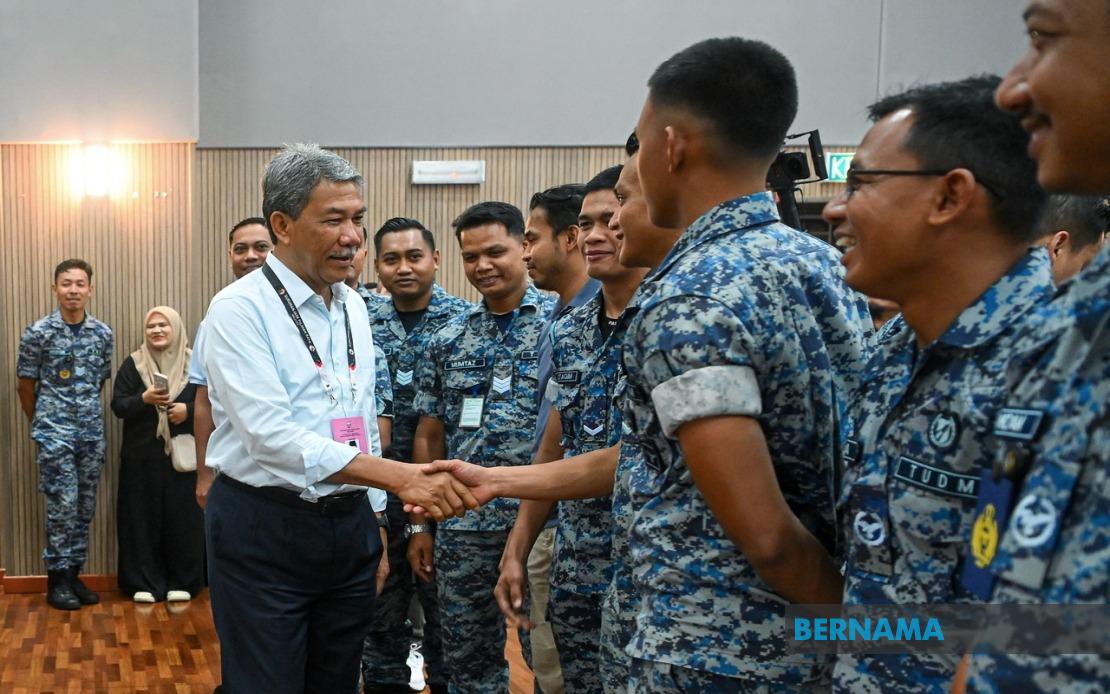
Malaysia's Foreign Minister Datuk Seri Mohamad Hasan has issued a stark warning to the United Nations High Commissioner for Refugees, signalling that the government may ask the international organisation to leave the country if it refuses to tighten controls over refugee documentation. Speaking after observing early voting at the Sendayan Air Base in Seremban on July 28, Mohamad articulated growing frustrations within the Cabinet about the perceived ease with which individuals obtain UNHCR refugee cards, arguing that the current system inadvertently facilitates rather than restricts refugee arrivals to Malaysian shores.
The Foreign Minister's ultimatum reflects mounting pressure within government circles to overhaul how Malaysia manages its refugee population, particularly the Rohingya community who have arrived in significant numbers over the past decade. Mohamad characterised the UNHCR office presence as a "magnet" drawing asylum seekers to Malaysia, suggesting that without meaningful reform of the vetting process, the humanitarian burden on the country will only intensify. This framing signals a significant toughening of Malaysia's stance towards refugee intake and international cooperation mechanisms that the government now views as insufficiently rigorous.
Central to the dispute is Malaysia's insistence on implementing a joint screening mechanism whereby both UNHCR officials and local Home Ministry authorities jointly assess applicants before any documentation is issued. Currently, according to Mohamad, the process lacks standardised operating procedures and relies heavily on online applications submitted before applicants even arrive in Malaysia. This arrangement, he contends, effectively bypasses meaningful security vetting and allows individuals to obtain cards upon landing with minimal verification that they genuinely qualify for refugee status under international law.
The issue has escalated within Malaysia's highest policy-making forums. Deputy Prime Minister Datuk Seri Dr Ahmad Zahid Hamidi has taken up the matter in Cabinet Committee meetings, directing that a Host Country Agreement be expedited to establish clearer guidelines and more stringent controls governing UNHCR card issuance. This formal elevation of the dispute suggests the government intends to restructure its relationship with UNHCR through binding legal instruments rather than relying on informal understandings that officials believe have proven inadequate.
Mohamad's criticism of the current application process illuminates how dramatically the system differs from international best practices in refugee vetting. He described a scenario where an applicant located in Myanmar completes an online application, travels to Malaysia, and receives a UNHCR card directly upon arrival, all without meaningful screening by Malaysian authorities. This streamlined approach, designed by UNHCR to facilitate legitimate asylum seekers' access to protection, has inadvertently created what Malaysian officials perceive as a security vulnerability and an open invitation to those seeking to circumvent normal immigration controls.
The timing of these tensions reflects broader Southeast Asian anxieties about managing regional displacement crises without adequate international burden-sharing. Malaysia has hosted hundreds of thousands of refugees and asylum seekers, absorbing costs in social services, education, and security monitoring that strain public resources in ways that developed nations have avoided. The government's frustration centres partly on the perception that UNHCR presence legitimises Malaysia as a destination without UNHCR providing commensurate operational or financial support for managing the consequences of its office's very existence.
Recent events have underscored operational challenges inherent in the current system. Hundreds of Rohingya were recently documented camping outside the UNHCR office on Jalan Bukit Petaling in Kuala Lumpur before being transferred to the Kuala Lumpur police headquarters for documentation and identity verification. These scenes illustrate the administrative strain created by the gap between applications processed and authorities' capacity to conduct thorough screening, effectively allowing queue management to occur in public spaces rather than through orderly procedures.
The Foreign Minister's threat to reconsider UNHCR's presence should be understood as a negotiating position rather than imminent policy, yet it reflects genuine determination to reshape the relationship. Malaysia requires UNHCR's coordination role in managing refugee populations while fearing that its very presence encourages further arrivals. This paradox—needing cooperation with the UN body while viewing it as part of the problem—creates pressure for fundamental reform of the Host Country Agreement that currently governs UNHCR operations.
For Malaysia, achieving stricter joint screening would accomplish multiple objectives. It would satisfy security concerns by ensuring trained Home Ministry personnel assess applications before issuance, it would slow the pace of new refugee card issuance through more rigorous vetting, and it would shift operational responsibility more equitably between UNHCR and Malaysian authorities. The government appears willing to maintain refugee protection mechanisms but only under conditions ensuring that humanitarian considerations are balanced against security and resource constraints that Malaysia must bear.
The standoff also reflects deeper anxieties about sovereignty and burden-sharing in an era of accelerating displacement. Malaysia views itself as disproportionately bearing costs of hosting refugees while international bodies like UNHCR benefit from having offices in Southeast Asia that manage crises originating elsewhere. Without concrete agreements establishing shared responsibility, the government signals it may prefer to close the UNHCR office rather than indefinitely tolerate what it perceives as asymmetrical burden distribution.

