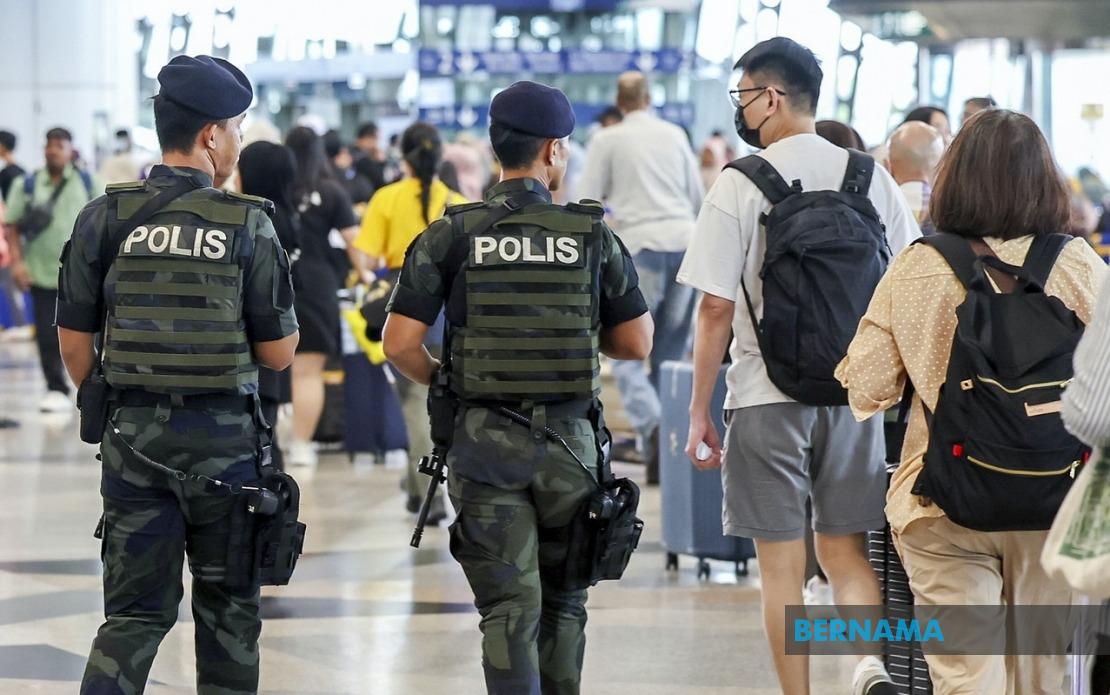
The Malaysian government has announced plans to reinforce airport security by embedding Royal Malaysia Police personnel directly within aviation security operations, responding to a significant security breach involving a Malaysian pilot arrested by Indonesian authorities. Communications Minister Datuk Seri Fahmi Fadzil disclosed the government's immediate response measures at his weekly press briefing in Putrajaya, following a Cabinet discussion that examined the incident and evaluated systemic vulnerabilities across Malaysia's aviation sector.
The arrest of the 39-year-old pilot at Jakarta's Soekarno-Hatta International Airport exposed substantial gaps in existing security protocols. Indonesian authorities discovered 15 packages containing over 70,000 capsules of ecstasy and methamphetamine during terminal screening operations, with authorities estimating the street value of the contraband at approximately RM45 million based on prevailing market rates in Indonesia. The scale and nature of the attempted smuggling operation prompted high-level government review and intervention.
A critical finding from the Cabinet's examination centres on the current management structure of Malaysia's Aviation Security (AVSEC) unit. The Home Ministry and Transport Ministry briefings revealed that AVSEC operations have been staffed by auxiliary police personnel rather than full-strength Royal Malaysia Police officers. This structural weakness has now been identified as requiring immediate rectification. The decision to deploy PDRM personnel represents recognition that enhanced oversight and professional security apparatus are necessary to prevent similar incidents at Malaysian airports.
Beyond the direct security deployment, the government has directed Malaysia Aviation Group to comprehensively revise its personnel vetting systems. Current protocols governing background screening and health assessments for pilots and co-pilots will face substantial review and likely overhaul. These procedural changes reflect concern that existing evaluation mechanisms may have failed to identify risk factors or behavioural indicators associated with the arrested pilot's alleged involvement in narcotics smuggling.
The Royal Malaysia Police and the Malaysian Border Control and Protection Agency (AKPS) have simultaneously received instructions to conduct systematic security audits across aviation facilities. These agencies are tasked with identifying potential exploitable weaknesses in both physical infrastructure and procedural frameworks that could facilitate similar smuggling attempts. The scope encompasses terminal design, cargo handling protocols, personnel access controls, and information systems that track passenger and staff movements through airport zones.
Fahmi indicated that while initial briefings have been provided, the government remains in an information-gathering phase regarding the full dimensions of the case. Because Indonesian authorities maintain active investigation status, Malaysian officials are deferring comprehensive analysis pending receipt of complete investigation reports. This cautious approach recognises that the pilot's involvement may extend beyond individual criminal action, potentially implicating broader networks requiring coordinated investigation between Malaysian and Indonesian law enforcement agencies.
The government has not yet committed to establishing a dedicated special investigation task force, pending thorough examination of evidence and investigative findings. However, Fahmi's remarks indicate serious consideration of this possibility, particularly regarding identification of any co-conspirators or organisational connections that may have facilitated the smuggling attempt. Officials have signalled that accountability and justice remain paramount considerations, with assurance that responsible parties will face legal consequences commensurate with the severity of the offences.
The incident carries significant implications for regional aviation security frameworks. Malaysia, as a major transportation hub serving Southeast Asia, depends on maintaining international confidence in airport safety systems. Drug trafficking through aviation channels represents a particular concern given the region's vulnerability to narcotics-related criminal activities and the critical importance of commercial aviation to economic connectivity. Indonesia's discovery of Malaysian national involvement amplifies the reputational stakes for Malaysian authorities and necessitates visibly robust corrective action.
The timing of the security enhancements reflects broader regional pressures. Southeast Asian nations face escalating drug trafficking operations utilising sophisticated methods and insider cooperation. The arrest demonstrates that security threats can originate from within aviation workforces rather than exclusively from external sources. This realisation has prompted recalibration of security philosophies, shifting from boundary-focused protection models toward more intensive internal oversight and personnel accountability structures.
For Malaysian aviation employees and the travelling public, the deployment of police personnel to AVSEC units signals enhanced screening intensity and reduced opportunities for security circumvention. While such measures may introduce minor processing delays during peak travel periods, government messaging emphasises that security integrity justifies operational adjustments. Malaysia Aviation Group's revised vetting procedures will similarly establish more rigorous standards for pilot recruitment and retention, potentially affecting employment opportunities but substantially reducing risks associated with compromised personnel.
The government's multi-agency response demonstrates coordinated institutional action across transport, home affairs, and law enforcement portfolios. This integrated approach acknowledges that aviation security transcends single-agency responsibility, requiring cooperation between police, customs, border management, and aviation operators. Subsequent coordination mechanisms between Malaysia and Indonesia may yield additional bilateral protocols addressing transnational aspects of aviation security threats.
Officials have indicated that comprehensive reforms extending beyond immediate deployment measures are under consideration. These may eventually encompass advanced baggage screening technology upgrades, expanded use of biometric personnel authentication systems, and enhanced intelligence-sharing mechanisms with regional and international aviation authorities. The incident has catalysed serious policy reflection regarding Malaysia's security posture relative to evolving transnational criminal methodologies.

