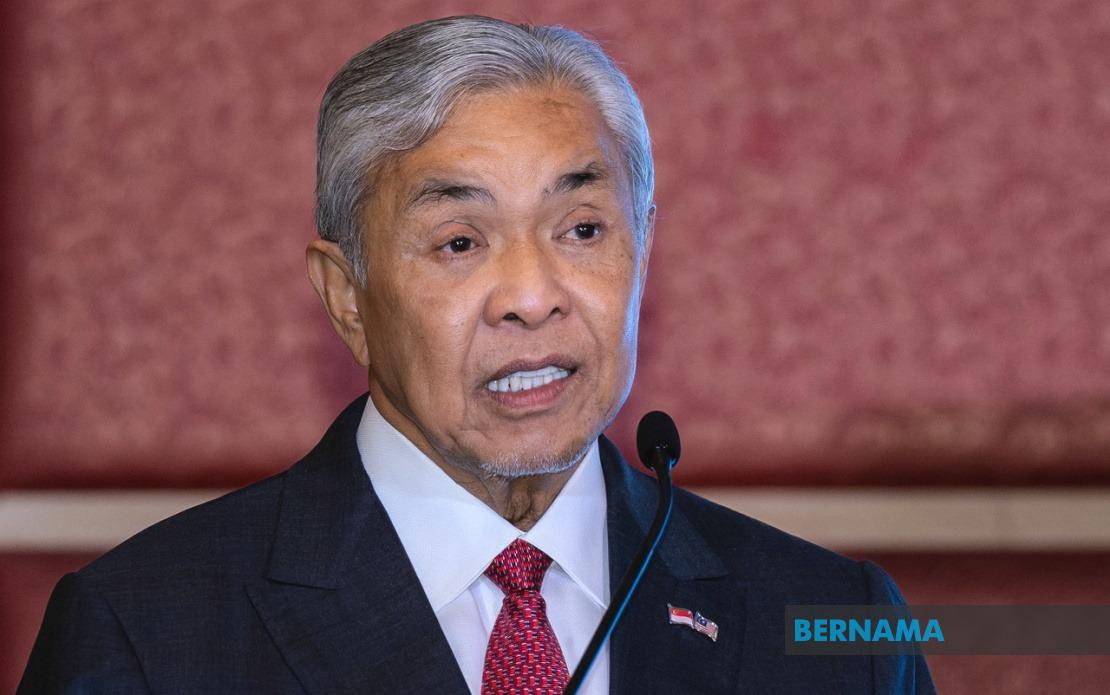
Malaysia is charting an independent course in refugee management, moving away from dependence on international organisations to establish domestic mechanisms that align with national security priorities. Deputy Prime Minister Datuk Seri Dr Ahmad Zahid Hamidi disclosed that the country would implement a comprehensive approach grounded in National Security Council (NSC) Directive No. 23, which Prime Minister Datuk Seri Anwar Ibrahim formally endorsed on June 14, 2023. This policy framework represents a significant shift in how Malaysia addresses the complex challenges posed by its substantial refugee population, which exceeds 126,000 registered Rohingya individuals alone.
The directive establishes a multifaceted approach centred on balancing humanitarian considerations with robust enforcement of national laws and protection of sovereignty. Ahmad Zahid, who doubles as Rural and Regional Development Minister, emphasised that the mechanism would prioritise efficient administration and strict enforcement while simultaneously coordinating policy matters related to welfare distribution and access to social services. This dual mandate reflects an acknowledgment that refugee management in Malaysia requires simultaneous attention to border security concerns and the practical realities of supporting populations already residing within the country.
A cornerstone of this framework involves extending selected services to refugees deemed eligible under Malaysia's criteria. Healthcare provision, educational access, and employment opportunities form part of the welfare package, though the scope and eligibility thresholds remain calibrated to ensure sustainability and prevent strain on domestic resources. This targeted approach differs markedly from blanket policies, instead attempting to channel assistance toward those most vulnerable whilst maintaining checks against exploitation or dependency.
The challenge of local complicity in undermining enforcement has emerged as a central concern in Malaysian refugee management. Ahmad Zahid specifically highlighted how government efforts face impediments from individuals within Malaysian communities who benefit financially from refugee presence, whether through rental income from accommodation arrangements or access to below-market labour costs. This candid acknowledgment of how economic incentives can compromise policy implementation suggests the government recognises that legal measures alone prove insufficient without addressing the economic drivers that motivate local residents to facilitate irregular refugee activities.
Implementing NSC Directive No. 23 demands unprecedented coordination across multiple government entities. The framework explicitly defines roles and responsibilities for each ministry and agency involved in refugee administration, ranging from immigration authorities to health and education departments. This structured delineation of duties aims to eliminate gaps and overlaps that have historically characterised Malaysia's approach, where refugees often fall between institutional remits or receive inconsistent treatment depending on which agency they encounter.
The Refugee Registration Document (DPP) system represents the operational vehicle through which this new mechanism functions. By establishing a formal registration process, Malaysia has moved beyond ad hoc management toward a documented approach that permits tracking, service delivery coordination, and enforcement actions. The existence of over 126,000 registered Rohingya refugees indicates substantial progress in bringing refugee populations into official purview, though the unknown number of unregistered individuals complicates the full picture.
For Malaysia and the broader Southeast Asian region, this independent framework carries significant implications. The country hosts one of the world's largest Rohingya populations outside Myanmar and Bangladesh, making its policy choices influential for regional stability and burden-sharing. By developing domestic capacity rather than deferring to international organisations, Malaysia reasserts sovereignty whilst simultaneously accepting responsibility for populations within its borders. This approach potentially reduces dependency on United Nations mechanisms, which have historically provided crucial support but which Malaysia has sometimes viewed with suspicion regarding immigration sovereignty.
The policy also reflects recognition that neighbouring states cannot simply transfer responsibility to international bodies indefinitely. As countries like Bangladesh face severe strain from hosting millions of refugees, Malaysia's commitment to managing its own populations signals a regional shift toward national solutions. However, this independence comes with obligations—the quality and consistency of Malaysia's implementation will determine whether such frameworks genuinely protect vulnerable persons or merely institutionalise exclusion.
The practical enforcement dimension poses particular challenges. Beyond internal coordination, Malaysia must address smuggling networks, documentation fraud, and the economic incentives that drive irregular migration. The emphasis on balanced enforcement suggests authorities will continue deportation and detention operations whilst attempting to reduce conditions that make Malaysia an attractive destination. This represents a difficult middle path, as harsh enforcement can generate humanitarian concerns whilst overly permissive policies risk encouraging further irregular arrivals.
The framework's success ultimately hinges on sustained political commitment and resource allocation. Refugee management demands continuous funding, staff training, and inter-agency cooperation across administrations. Shifts in government priorities or budgetary pressures could undermine implementation despite sound policy design. Additionally, the directive's effectiveness depends on regional cooperation—Malaysia cannot manage refugee flows independently when origin countries remain unstable and transit routes remain porous.
For Malaysian communities, this mechanism carries direct implications regarding employment competition, service provision, and social cohesion. The government's explicit acknowledgment of local economic incentives suggests awareness that public acceptance remains fragile. By attempting to regulate refugee integration more systematically, authorities hope to prevent the informal, uncontrolled processes that have sometimes triggered community backlash.
Looking forward, Malaysia's independent framework establishes a precedent that may influence how other middle-income Asian nations approach refugee management. If implemented effectively, it demonstrates that developing countries can establish functional domestic systems without surrendering to either international pressure or chaotic informality. Conversely, implementation failures could reinforce arguments for international intervention and burden-sharing mechanisms. The coming years will reveal whether Malaysia's self-reliant approach genuinely improves refugee protection and national security or merely substitutes one set of challenges for another.

