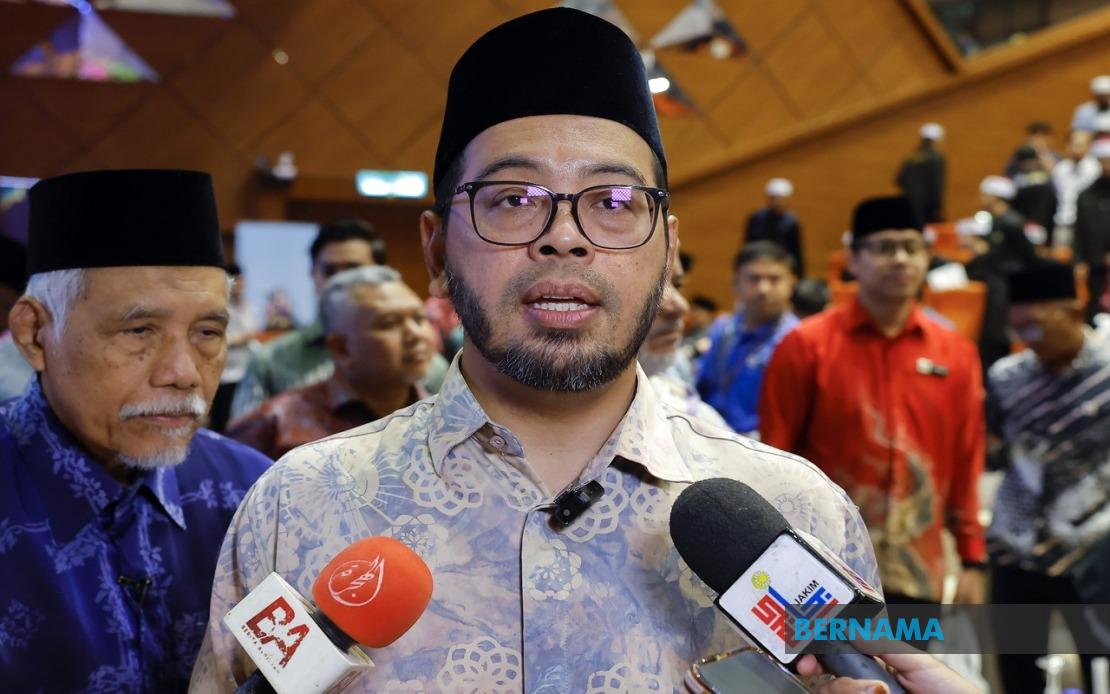
The Prime Minister's Department (Religious Affairs) has committed to a comprehensive overhaul of its youth engagement strategies, prompted by a significant royal intervention on the growing dangers posed by digital radicalism and false narratives. Minister in the Prime Minister's Department (Religious Affairs) Dr Zulkifli Hasan announced the commitment after officiating the National and International Tokoh Ma'al Hijrah Premier Lecture 1448/2026 in Putrajaya on June 18, signalling that the government intends to treat the Sultan of Perak, Sultan Nazrin Shah's, recent address as a foundational blueprint for future policy direction.
Sultan Nazrin Shah's intervention last Friday struck at the heart of Malaysia's contemporary challenge—the vulnerability of young people to extremist messaging and coordinated disinformation campaigns conducted primarily through social media platforms. The ruler emphasised that religious leaders, as custodians of moral authority and community trust, must assume a more visible and proactive role in guiding youth through these treacherous digital landscapes. This royal directive carries significant weight in Malaysia's political and religious framework, as sultans serve as patrons of Islam in their respective states and their pronouncements on religious matters are widely regarded as authoritative guidance.
The Sultan identified a constellation of interconnected threats confronting Malaysia's youth demographic. Beyond the immediate concern of extremism, his address acknowledged the broader context of global instability, including climate anxiety, geopolitical conflicts, economic precarity, and a deepening erosion of institutional trust. This sophisticated framing recognises that young Malaysians do not exist in isolation from international currents; they navigate a complex information ecosystem where legitimate concerns about planetary sustainability and economic justice can be weaponised by malicious actors to radicalise vulnerable individuals. The Sultan's acknowledgment of this structural vulnerability suggests an understanding that technological advancement has fundamentally altered the terrain on which religions and ideologies compete for the hearts and minds of the young.
Dr Zulkifli Hasan's response committed the Religious Affairs Ministry not merely to acknowledge the Sultan's concerns but to operationalise them through concrete programming and institutional reforms. He indicated that the department would absorb the royal messages into its strategic planning, essentially treating Sultan Nazrin Shah's address as an executive mandate that supersedes ordinary bureaucratic processes. This commitment signals a potential acceleration in the launch of youth-focused religious education and community engagement initiatives, suggesting that existing programmes may be deemed insufficient to address the scale and sophistication of contemporary digital threats.
The timing of this initiative holds particular resonance for Malaysia's regional position. Southeast Asia has become a significant theatre for online radicalisation campaigns, with extremist organisations operating sophisticated recruitment networks across multiple platforms and languages. Malaysia, as a Muslim-majority democracy with significant religious and ethnic diversity, occupies a particularly vulnerable position. The country has experienced tragic incidents of terrorism motivated by extremist ideology, making this issue not merely academic but deeply consequential for national security and social cohesion. By mobilising religious leadership networks to counter extremism narratives, the government recognises that state security apparatus alone cannot adequately address the ideological dimensions of this challenge.
The reference to the Tokoh Ma'al Hijrah lecture series provides institutional context for these efforts. Ma'al Hijrah celebrations in Malaysia traditionally serve as occasions for religious reflection and communal bonding, and converting such observances into platforms for addressing contemporary challenges represents a strategic integration of cultural and religious practice with policy objectives. This approach reflects a sophisticated understanding that young Malaysians are more likely to engage with religious and moral guidance when presented within familiar cultural frameworks rather than through top-down government pronouncements.
For Malaysian readers and observers, this development underscores a broader governmental recognition that the internet has become a primary battleground for influence over youth worldviews. The religious establishment's formal engagement with digital threats marks a departure from earlier approaches that sometimes treated religious guidance and technology policy as separate domains. By explicitly linking religious leadership with digital literacy and critical information consumption, the government acknowledges that immunity to extremist propaganda requires not just technical skills but also moral and spiritual grounding.
The implications for Malaysia extend beyond national borders. As Southeast Asia's largest economy and a crucial player in regional affairs, Malaysian approaches to youth radicalisation and digital extremism carry demonstration effects for neighbouring countries facing similar challenges. Indonesia, the Philippines, and Thailand all grapple with extremist recruitment networks, and successful Malaysian models for leveraging religious leadership against online radicalisation could inform regional counterterrorism and community resilience strategies.
However, the success of this initiative will depend critically on the quality of implementation and the authentic engagement of religious leaders with youth communities. Top-down directives from ministries often struggle to translate into meaningful change at grassroots levels, particularly among young people who may view state-sponsored religious messaging with suspicion. The Religious Affairs Ministry will need to ensure that religious leaders receive adequate training in digital literacy, contemporary extremist narratives, and youth psychology to make their engagement genuinely resonant rather than didactic.
The Sultan's call also implicitly acknowledges a gap in Malaysia's current approach to youth development. While the country has invested substantially in educational infrastructure and economic opportunities, explicit attention to the moral and spiritual formation of young people—particularly in response to digital-age challenges—appears to have lagged. This fresh governmental commitment suggests a recalibration of priorities, with religious and moral guidance repositioned as central to national youth policy rather than peripheral to it.
Moving forward, observers should watch for the concrete manifestation of these commitments. Whether the Religious Affairs Ministry launches new funding mechanisms for youth programmes, establishes training academies for religious leaders in digital engagement, or creates dedicated digital platforms for countering extremist narratives will reveal the seriousness of this initiative. The distance between a minister's public commitment and actual programme implementation in Malaysian governance often determines whether such initiatives effect meaningful change or remain aspirational statements.