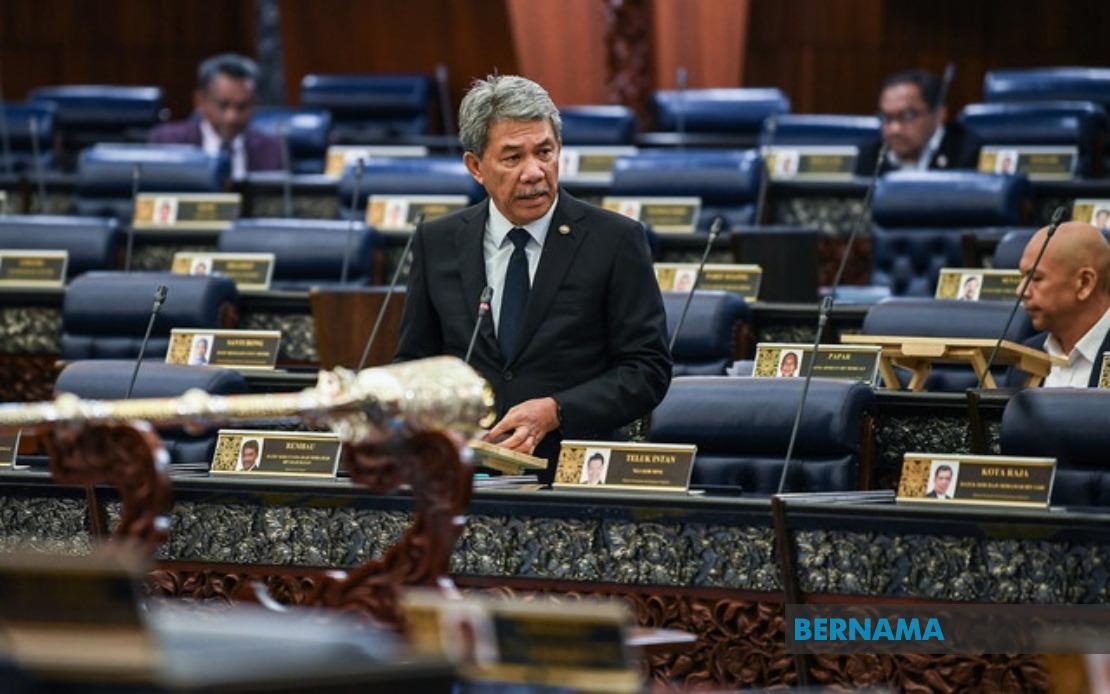
Malaysia intends to harness its diplomatic networks across multiple international forums to advance a comprehensive settlement of the escalating West Asia conflict, according to Foreign Minister Datuk Seri Mohamad Hasan. Speaking during parliamentary question time, he outlined a strategy encompassing the United Nations, the UN Security Council, the Organisation of Islamic Cooperation, BRICS and the Non-Aligned Movement—each offering distinct leverage and legitimacy in pursuit of regional stability.
The country has positioned itself among early endorsers of the memorandum of understanding signed between the United States and Iran last week, signalling Malaysia's commitment to facilitating dialogue between regional adversaries. This cautious optimism stems from the agreement's provisions for a 60-day negotiation window during which both nations will seek to ratify their commitments. The substance of these commitments extends to reconstruction investment in Iran's damaged infrastructure, valued at USD300 billion, plus the reopening of the Strait of Hormuz and the withdrawal of Israeli forces from Gaza, the West Bank and Lebanon—issues critical to regional commerce and security.
For Malaysia, the stakes extend beyond diplomatic principle. The closure of the Strait of Hormuz, a chokepoint through which vast quantities of global petroleum transit, has already triggered disruption to international supply chains. As a trading nation heavily reliant on stable maritime corridors and predictable energy markets, Malaysia faces tangible economic consequences if West Asian instability persists. This reality explains the Foreign Minister's emphasis on active monitoring of subsequent negotiations and Malaysia's commitment to provide moral support throughout the implementation phase.
Beyond multilateral forums, Malaysia has pursued bilateral engagement with nations central to the conflict. Mohamad disclosed that he personally contacted counterparts from Pakistan—which hosted the US-Iran talks—as well as officials from the United Arab Emirates and Saudi Arabia. These outreach efforts aim to consolidate diplomatic momentum and demonstrate that Malaysia stands ready to support any measures conducive to ending the conflict. Such bilateral diplomacy complements Malaysia's formal multilateral positions and reflects recognition that sustained peace requires buy-in from diverse stakeholder nations, particularly those with geographical and commercial ties to the region.
However, the Foreign Minister acknowledged that obstacles remain formidable. He characterised Israel's government as fundamentally resistant to the peace initiative, warning that it continues to threaten regional stability through military operations spanning Gaza, the West Bank, Lebanon and additional territories. This assessment reflects Malaysia's long-standing position on Palestinian statehood and opposition to Israeli military expansion—principles that inform its broader Middle East policy and resonate with its domestic Muslim-majority constituency.
A critical impediment to international pressure on Israel lies in the United States' veto authority within the UN Security Council. Mohamad stressed that American vetoes have protected Israel from Security Council sanctions and restrictions on 31 separate occasions, effectively neutralising resolutions that might constrain Israeli military conduct. This structural disadvantage in the Security Council framework underscores why Malaysia has invested considerable diplomatic effort in alternative forums such as the General Assembly, the OIC and NAM, where voting procedures do not grant permanent members unilateral blocking power. The General Assembly, whilst lacking enforcement mechanisms, can mobilise moral and political pressure through consensus-building.
Malaysia's multilayered approach reflects pragmatic acknowledgement that no single institution or bilateral relationship can resolve a conflict of such complexity. The OIC, through which Malaysia maintains robust engagement, provides a coalition of Muslim-majority states capable of articulating shared concerns about Palestinian rights and regional destabilisation. BRICS offers Malaysia a platform within a grouping that includes India, a fellow non-aligned nation with deep Middle East interests, plus Russia and China—both permanent Security Council members capable of offering counterbalance to Western diplomatic dominance. NAM, to which Malaysia has belonged since independence, preserves a historic mechanism for coordinating developing-world positions on matters of international peace and security.
The recent US-Iran engagement, whilst significant, represents merely one phase of a longer stabilisation process. The 60-day negotiation period provides a window for building confidence and establishing implementation mechanisms. Malaysia's strategy assumes that sustained international engagement throughout this critical window can encourage both the United States and Iran to commit fully to their obligations. Equally, Malaysia recognises that third parties—including Israel and its regional allies—may seek to sabotage negotiations by engineering fresh incidents or military provocations.
For Malaysia specifically, successful West Asia stabilisation carries implications beyond Middle East peace. A functioning Strait of Hormuz benefits Malaysian commerce directly; a region at war risks spillover effects including refugee movements, sectarian violence in Southeast Asia and constraints on Malaysia's own outreach within Muslim-majority nations. Malaysian peacekeeping contributions and humanitarian engagement in the region could expand substantially if major-power military rivalry diminishes. Conversely, prolonged conflict may force difficult choices between commercial interests in the West and rhetorical support for Palestinian causes—tensions that Malaysia's diplomatic community has navigated delicately for decades.
Moving forward, the effectiveness of Malaysia's approach will depend partly on factors beyond its control: the willingness of the United States and Iran to sustain engagement despite domestic political pressures, Israel's strategic calculations regarding military operations, and the coordination capacity of broader international coalitions. Yet by articulating a clear commitment to multi-platform diplomacy and maintaining active engagement across bilateral and multilateral channels, Malaysia has positioned itself as a constructive voice in a region of vital significance to Malaysian interests and Southeast Asian stability.

