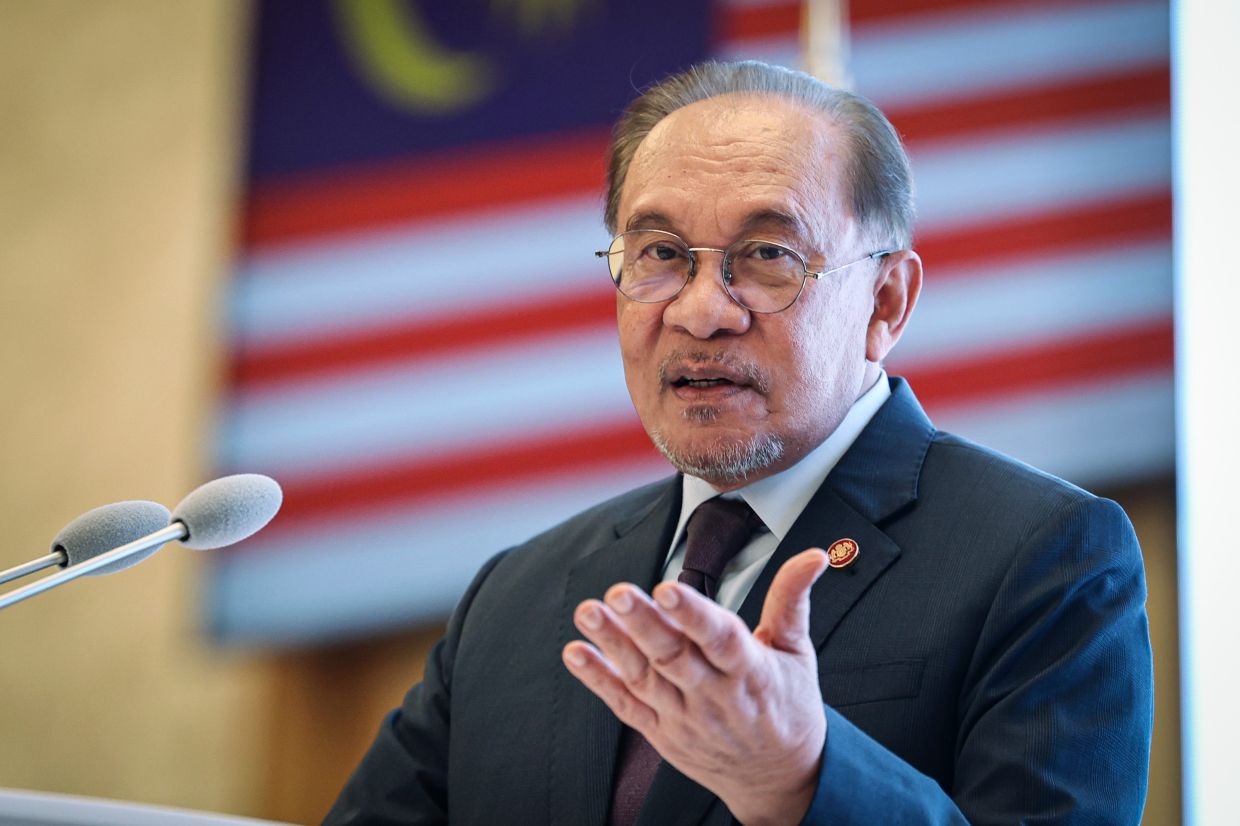
Prime Minister Datuk Seri Anwar Ibrahim has committed to sustained diplomatic engagement with the United States to address tariffs recently imposed on Malaysia, signalling that Kuala Lumpur will not accept the trade restrictions as final if negotiations yield insufficient protections for national economic interests. Speaking during a defence ministry programme at the Army Basic Training Centre in Port Dickson, Anwar acknowledged the government's receipt of the latest tariff schedule from Washington while emphasizing that further talks remain essential to safeguard Malaysia's commercial standing.
The renewed tariff measures stem from what American trade authorities characterize as Malaysia's failure to adequately enforce prohibitions against importing products manufactured through forced labour practices. The United States Trade Representative, Ambassador Jamieson Greer, initiated these tariffs under Section 301 of the Trade Act of 1974 following a comprehensive investigation into labour enforcement practices across 60 economies worldwide. The action represents a broader American policy effort to combat supply chain exploitation and coercive labour practices in global manufacturing, a concern that has gained prominence as multinational corporations face increasing pressure to demonstrate ethical sourcing standards.
Malaysia finds itself grouped alongside Cambodia and Indonesia at the lower end of the tariff scale, with all three nations subject to a 10 per cent duty rate on affected imports. This positioning, while representing the minimum threshold under the new American framework, still carries significant implications for Malaysian exporters and domestic industries reliant on US market access. The broader group of affected nations faces a steeper 12.5 per cent duty rate, meaning Malaysia's relative positioning reflects some degree of compliance acknowledgement from Washington, though clearly insufficient to avoid punitive measures entirely.
Minister of Investment, Trade and Industry Datuk Seri Johari Abdul Ghani is leading the negotiation effort on behalf of Malaysia, with Anwar expressing cautious optimism about the trajectory of these discussions. The Prime Minister's public assurance that the government remains "relieved" by the comparative moderation of Malaysia's tariff rate, however, should be understood as diplomatic framing rather than acceptance of the status quo. The underlying message conveyed to international audiences is that Malaysia recognizes both the seriousness of forced labour concerns and the potential for achieving more favourable terms through continued professional engagement with American counterparts.
The forced labour issue has become an increasingly prominent component of international trade policy, particularly as Western governments and corporations respond to consumer and civil society demands for greater supply chain transparency and ethical accountability. For Malaysia, which maintains substantial manufacturing and export sectors, demonstrating credible enforcement mechanisms against labour exploitation carries both reputational and economic weight. The country's ability to show concrete improvements in labour standard enforcement could yield tangible benefits in terms of tariff reduction or removal, making the negotiation outcome consequential for multiple industries including electronics, textiles, and agricultural products.
Beyond the punitive tariff structure, the American framework also extends a compensatory element that warrants Malaysian attention. The USTR announcement indicates that Malaysia qualifies for consideration under a tariff-rate quota arrangement, which could allow improved access for imports containing American cotton and textile inputs. This mechanism essentially incentivizes Malaysian manufacturers to increase their sourcing from United States suppliers, creating a counterbalance to the restrictive tariffs while simultaneously encouraging greater integration with American supply chains. For Malaysian textile and apparel producers, this presents both an opportunity and a strategic choice about supply chain reconfiguration.
The government's negotiation strategy appears to rest upon demonstrating measurable progress in labour enforcement rather than disputing the underlying premise of the investigation or the appropriateness of American scrutiny. This pragmatic approach reflects recognition that developed economies, particularly the United States, have established labour standards compliance as a non-negotiable dimension of modern trade relationships. Malaysia's challenge lies in translating commitments into visible, verifiable improvements that satisfy American officials while managing the domestic costs of enhanced labour law enforcement.
From a Southeast Asian perspective, Malaysia's experience foreshadows potential complications for other regional economies facing similar investigations or trade pressures. The differentiated tariff rates imposed across the 60 affected nations signal that the United States will reward comparative compliance efforts while penalizing persistent shortcomings. This creates an implicit competitive dynamic wherein individual countries have incentive to improve labour enforcement practices ahead of their neighbours, potentially elevating standards across the region more broadly, albeit through external pressure rather than organic policy evolution.
The involvement of senior military and defence officials at the Port Dickson event, while ostensibly related to the Semarak Kenegaraan programme's patriotic themes, underscores the whole-of-government approach Malaysia is adopting toward this trade challenge. Such high-level coordination suggests that trade negotiations are being elevated beyond conventional commerce ministry channels, reflecting recognition that tariff disputes carry broader implications for national economic resilience and international standing.
Moving forward, the trajectory of Malaysian-American discussions on this matter will likely establish precedent for how Kuala Lumpur manages similar trade disputes with other developed economies pursuing labour standard enforcement through tariff mechanisms. Success in achieving tariff reduction or elimination would strengthen Malaysia's negotiating position in future disputes, while continued failure to demonstrate adequate enforcement improvements could invite escalation or more restrictive measures. The coming months will prove critical in determining whether Malaysia's negotiation efforts succeed in converting technical compliance improvements into tangible trade relief.

